SOCAL RAGDOLLS JOURNAL
Ragdoll Kitten Feeding Basics: Building a Gentle Food Transition Plan
A practical, gentle approach to ragdoll kitten feeding: keep the food consistent when your kitten comes home, switch foods gradually, and know which signs deserve a call to your veterinarian.
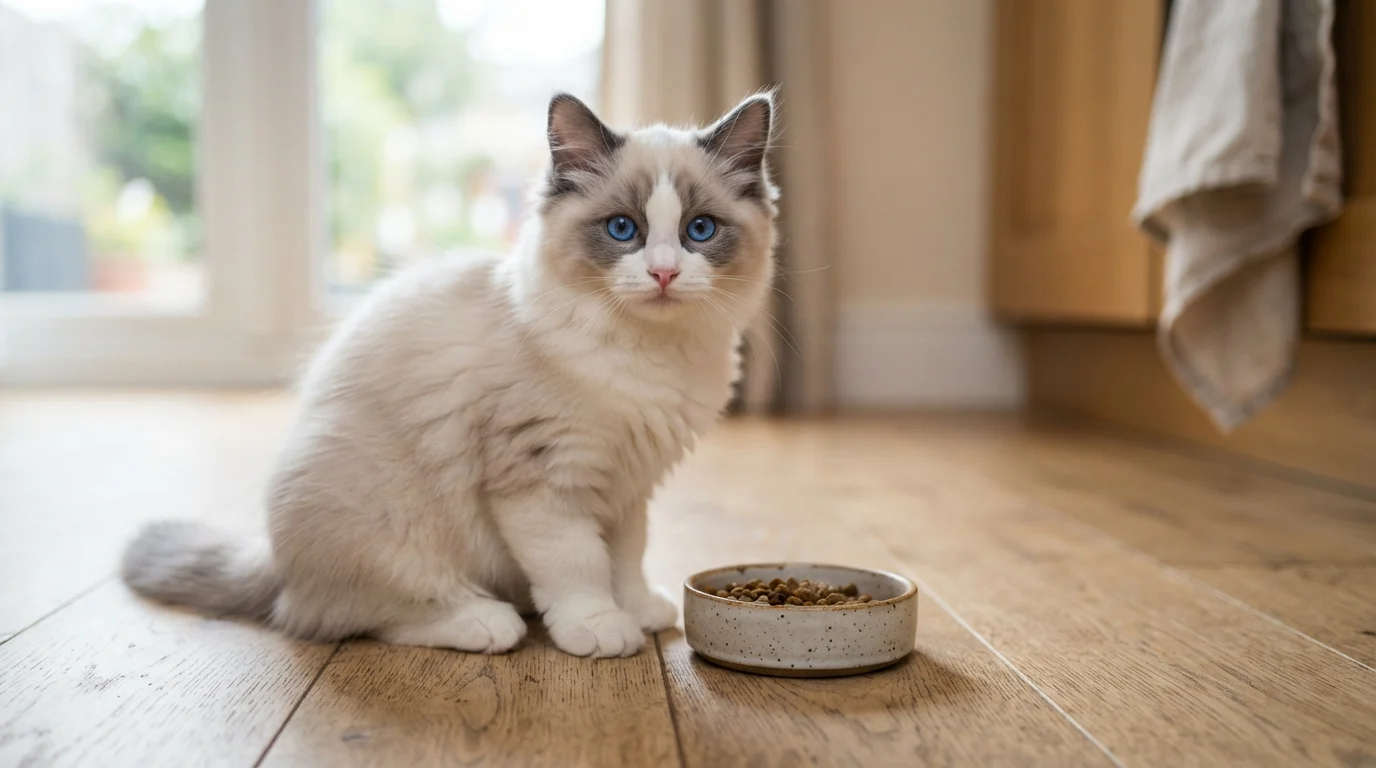
The first few days with a new kitten are full of small, tender decisions, and few matter as much as what goes in the food bowl. Ragdoll kitten feeding doesn’t need to be complicated, but it does reward patience. Kittens have small, sensitive digestive systems, and a sudden change in food, on top of the stress of a new home, can easily lead to an upset tummy or a kitten who simply won’t eat.
This walkthrough covers how to keep things steady when your kitten arrives, how to switch foods gradually if you decide to, and which warning signs are worth a call to your veterinarian. It deliberately skips brand recommendations and universal portion sizes, because the right choices depend on your individual kitten and your vet’s guidance.
Start by Keeping Things the Same
The most useful thing you can do on day one is not change the food. Your kitten is leaving their mother, littermates, and the only home they’ve known. New smells, sounds, and faces already ask a lot of them. Familiar food is one thing that can stay constant.
Before pickup, ask the breeder or cattery exactly what your kitten has been eating: the specific food, whether it’s wet, dry, or a mix, and how often meals are served. Write it down. If you’re working with SoCal Ragdolls, you can ask these questions through the contact page. It’s also a good item to add to your list of questions to ask a Ragdoll breeder.
Then buy that same food before your kitten comes home, so you aren’t scrambling on day one. If it turns out the food isn’t one you want long term, you can plan a gradual change later, once your kitten has settled in.
Why consistency matters so much at first
A kitten’s gut bacteria adapt to what they regularly eat. A sudden swap can lead to loose stools, gas, or vomiting. A new home is stressful on its own, and stress can also reduce appetite. Changing the food at the same time stacks two variables on top of each other, which makes it hard to tell what’s causing a problem if one appears.
Setting Up a Calm Feeding Routine
Kittens thrive on predictability. A simple routine helps your kitten feel safe and helps you notice changes in appetite quickly.
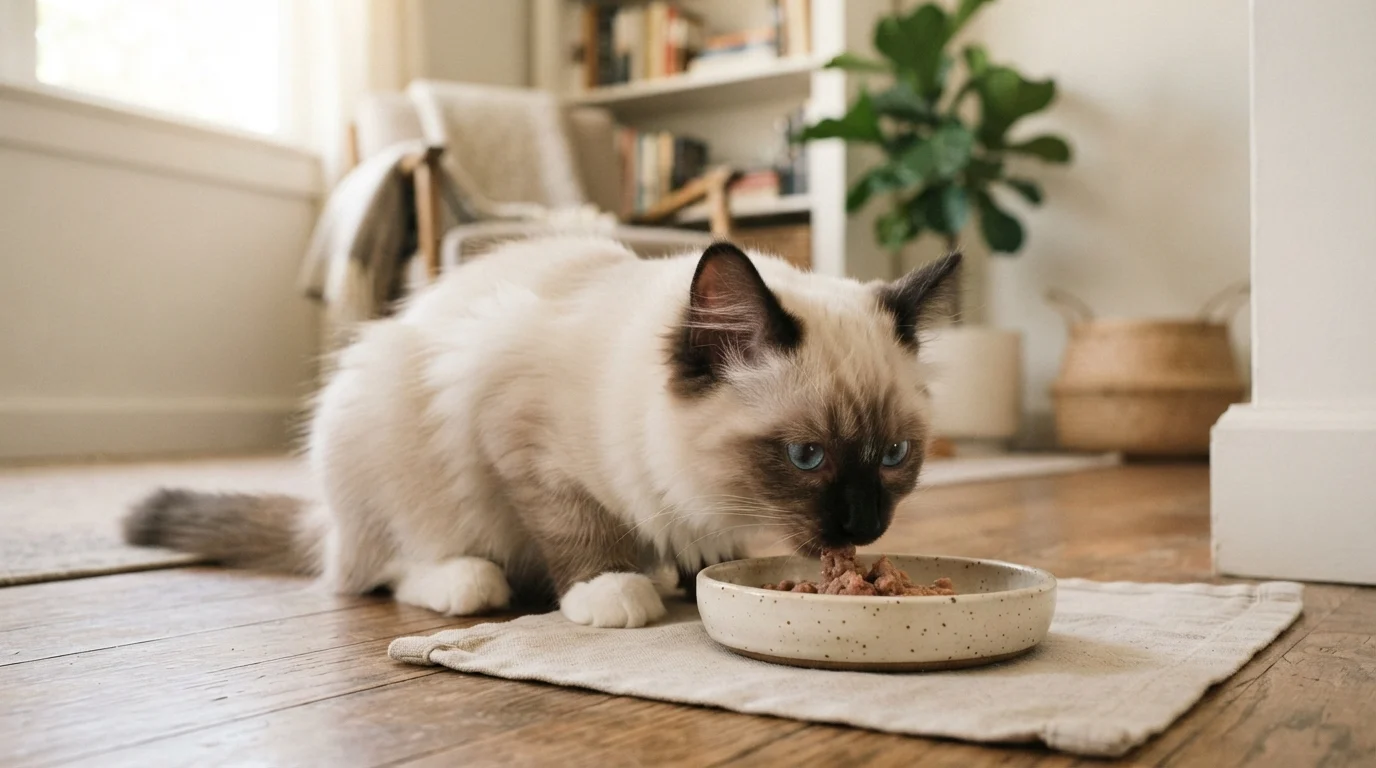
- Choose a quiet spot. Place the food in a low-traffic area away from the litter box, loud appliances, and doorways.
- Use shallow dishes. Small, wide, shallow bowls are easier for a kitten to reach into comfortably. Many cats also seem to prefer dishes that don’t press against their whiskers, though preferences vary.
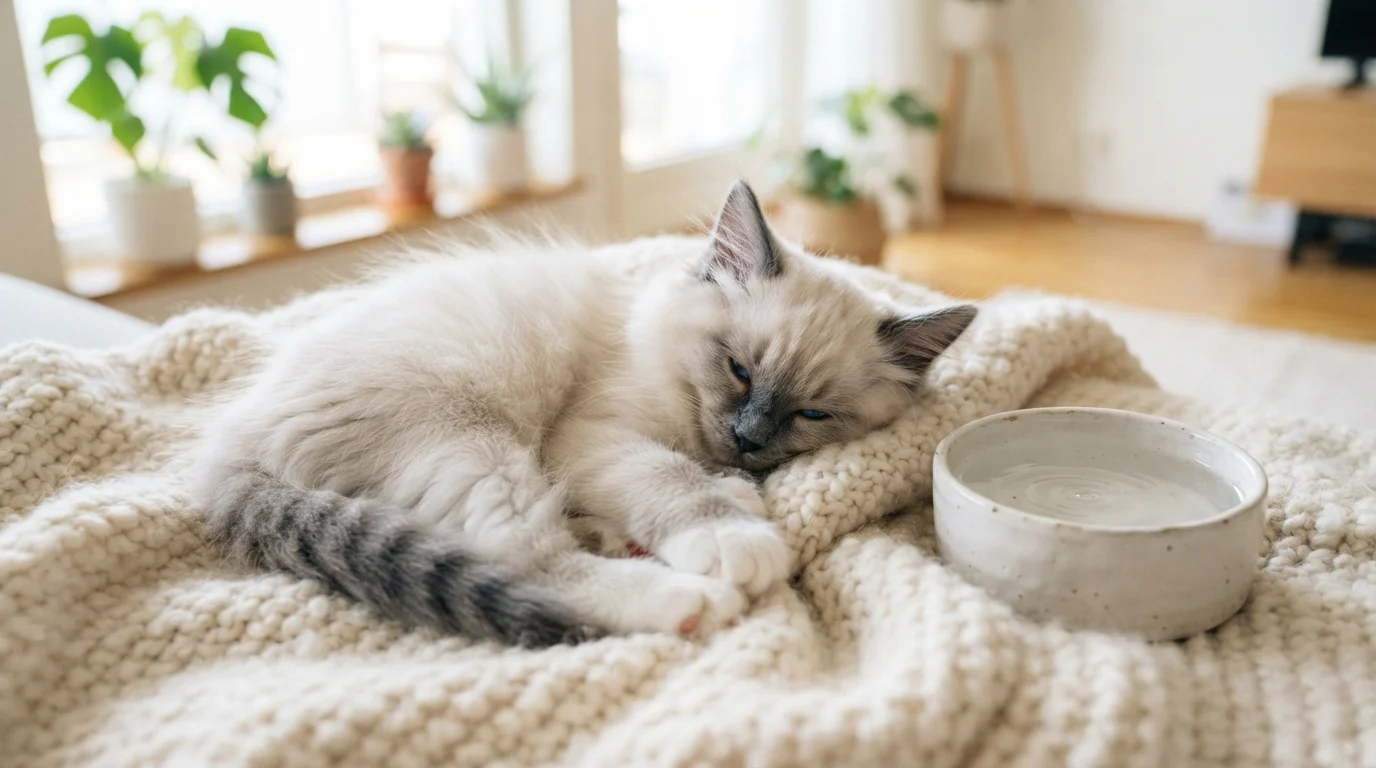
- Keep fresh water nearby. Wash bowls regularly and refill water daily, or more often.
- Stick to a schedule. Follow the meal frequency the breeder used at first, and ask your veterinarian how it should change as your kitten grows.
- Remove uneaten wet food. Wet food shouldn’t sit out for long, particularly during warm weather. Southern California warmth can make this more pressing, especially in homes without cooling.
If you’re still gathering supplies, our supply checklist for Ragdoll kittens covers bowls, litter, and other essentials, and the room-by-room home preparation guide can help you pick a good feeding spot.
Expect a Little Hesitation
It’s common for a newly arrived kitten to eat less than usual for the first day or so. Everything is unfamiliar, and some kittens are too curious or nervous to focus on a meal. Giving your kitten a small, quiet room to start with often helps. You can read more about what to expect in how long it takes a Ragdoll kitten to settle into a new home.
Watch, but don’t hover. Sit nearby, speak softly, and let your kitten come to the bowl at their own pace. Interest in food that fades into a full refusal, however, is a different matter, and we’ll cover that below.
How to Transition to a New Food Gradually
At some point you may want to change your kitten’s food. Maybe the original isn’t easy to find, maybe your veterinarian suggests a different option, or maybe you simply want to pick something that fits your household. Whatever the reason, the safest approach is to go slowly.
A gentle transition plan
Here is a common, conservative way to approach it. Treat the timing as flexible rather than a rigid rule.
- Wait until your kitten is settled. Ideally, your kitten is eating reliably, using the litter box normally, and acting comfortable before you start.
- Begin with a small amount of the new food. Mix a small portion of the new food into the familiar food at a meal.
- Increase the new food gradually. Over several days, adjust the proportions so the new food makes up more and more of each meal while the old food decreases.
- Watch stools and appetite. Normal-looking stools, steady interest in meals, and good energy are reassuring signs.
- Slow down or pause if needed. If stools soften or your kitten seems less interested, return to the previous step and give their system more time.
Many people stretch the process over a week or even longer. A kitten who has a sensitive stomach, or who is picky, may need an even slower pace. There’s no prize for finishing quickly.
Changing the type of food versus the brand
Switching from one wet food to another is one kind of change. Moving from wet to dry, or the reverse, is a bigger shift in texture and composition. Either way, the same gradual mixing principle applies. If you’re unsure how to approach a larger change, your veterinarian can help you plan it.
Avoid changing several things at once
Try not to introduce a new food, new treats, and table scraps all in the same week. If something upsets your kitten’s stomach, you won’t know which change was responsible. Keep treats minimal and plain while you work through a transition, and ask your vet which treats suit a growing kitten.
Portions, Growth, and Your Vet’s Role
You’ll notice this article doesn’t give a universal portion size. That’s intentional. The right amount depends on the specific food, your kitten’s age, weight, activity, and body condition. Packaging guidelines can offer a starting point, but your veterinarian is the best source for how much and how often your individual kitten should eat.
Ragdolls are a larger, slower-maturing breed, and kittens grow at their own rate. If you’re curious about what normal development looks like, see our overview of how Ragdoll kittens grow. Because growth varies from kitten to kitten, avoid comparing yours to another kitten’s size or appetite, and bring questions to your vet’s weight checks instead.
Kitten-appropriate food matters too. Kittens have different nutritional needs from adult cats, so ask your veterinarian when and how to move to an adult diet rather than guessing based on age alone.
Signs That Call for a Vet
Mild, brief changes in appetite or a single soft stool during a big move can happen. But kittens are small and can become unwell quickly, so it’s better to call early than to wait and hope. Contact your veterinarian promptly if you notice any of the following:
- Your kitten refuses food for a full day, or eats noticeably less over more than a day or so.
- Diarrhea that continues, or stools that are watery, bloody, or very frequent.
- Repeated vomiting.
- Unusual tiredness, weakness, hiding, or lack of interest in play.
- Signs of dehydration, such as dry-feeling gums or low energy.
- A swollen or painful-looking belly.
- Straining in the litter box or any difficulty passing stool or urine.
Some of these, particularly lethargy, repeated vomiting, or not eating at all, can be urgent in a young kitten. If you’re ever unsure, call your vet or an emergency clinic and describe what you’re seeing. Don’t try home remedies or give any medication without veterinary direction.
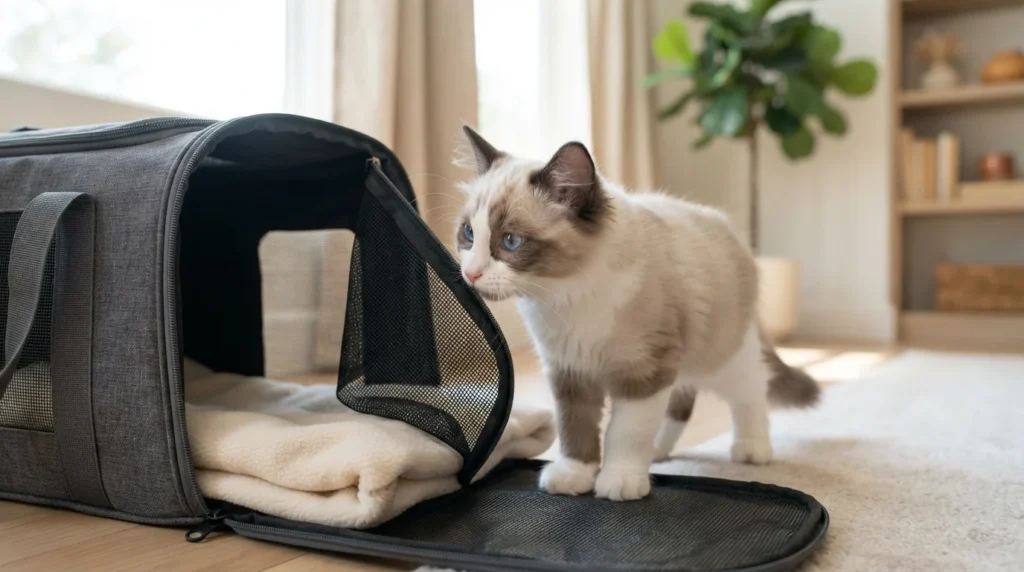
It also helps to have your kitten’s first vet appointment planned early. If the carrier isn’t a familiar place yet, our guide on getting a kitten used to a carrier can make that first trip easier.
Feeding in a Multi-Pet Home
If you already have a resident cat or dog, feeding time needs some thought. Feed your kitten separately so they can eat in peace, and so a dog doesn’t help itself to kitten food or the other way around. Different diets for different animals are another reason to keep bowls apart. For broader guidance, see how to introduce a Ragdoll kitten to an older cat or resident dog.
Small Habits That Make a Big Difference
- Keep a simple log for the first couple of weeks noting what your kitten ate, how much interest they showed, and their stools. It makes vet conversations much easier.
- Store opened food as the manufacturer directs, and check expiration dates.
- Avoid keeping toxic items within reach. Some common household plants and foods are unsafe for cats; our list of toxic plants for Ragdoll cats is worth a read.
- Be consistent with who feeds the kitten, so portions don’t double up when several family members are helping.
Good nutrition also shows up in other ways over time, including coat condition. If you’re curious how diet, grooming, and coat health fit together, see these Ragdoll grooming tips.
Bringing It All Together
Ragdoll kitten feeding comes down to a few patient habits: learn what your kitten has been eating, keep it the same through the first days at home, change foods slowly if and when you need to, and lean on your veterinarian for portions and for any concerns about appetite or digestion. A kitten who settles into a calm, predictable mealtime routine is usually a kitten who settles into the rest of life with you more easily too.
If you’re still deciding on a kitten, you can browse the Available Kittens page to see current listings, or read more in our articles for prospective owners. Families across Southern California, including the greater Los Angeles area, are welcome to contact SoCal Ragdolls with questions about preparing for a kitten, including what they’re eating before coming home. Kittens are not released to their new homes before 12 weeks of age, which gives you time to plan, shop, and set up that first feeding routine thoughtfully.
Frequently asked questions
How long should a food transition take for a Ragdoll kitten?
Many owners blend the new food into the old over about a week or longer, increasing the new portion slowly. A kitten with a sensitive stomach may need a slower pace. Your veterinarian can advise on timing for your individual kitten.
Should I change my Ragdoll kitten's food as soon as I bring them home?
Usually it's easier on a kitten to keep the same food at first, since the move already brings a lot of change. Once your kitten is eating and settling well, you can switch gradually if you choose to. Ask your breeder what they've been feeding.
When should I call the vet about my kitten's eating?
Contact a veterinarian if your kitten refuses meals, has ongoing diarrhea or vomiting, seems unusually tired, or shows signs of dehydration. Kittens are small and can decline quickly, so prompt advice is wise when appetite or digestion changes.