SOCAL RAGDOLLS JOURNAL
How Ragdoll Kittens Grow: Size, Coat, and Behavior Milestones From Weeks to Years
A timeline of Ragdoll kitten growth stages, from the first weeks through full maturity, covering size, slow coat and color changes, and behavior, with reminders that every kitten develops at its own pace.
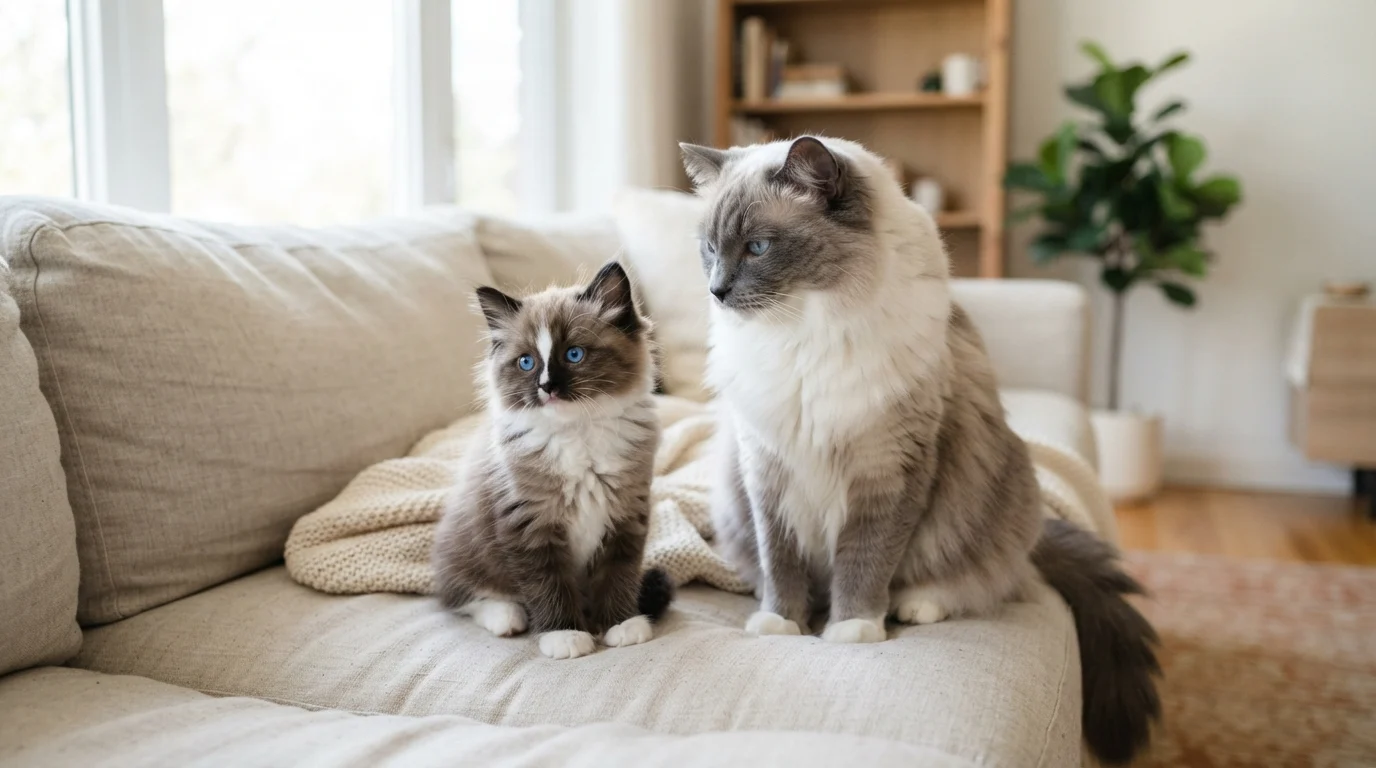
Anyone who has looked at a Ragdoll kitten photo and then at a grown Ragdoll may have wondered whether they’re the same breed. A tiny, pale, slightly scruffy kitten and a plush, deeply pointed adult with a full coat can look remarkably different, and the journey between them takes longer than most people expect. Understanding Ragdoll kitten growth stages helps you set realistic expectations, spot what’s normal, and enjoy each phase instead of waiting for the next one.
One caution before the timeline: every kitten grows at its own pace. Genetics, gender, nutrition, and simple individual variation all play a part, so the ages below are general patterns, not promises. Think of them as a map, not a schedule.
Why Ragdolls Take Longer to Mature
Ragdolls are a large, slow-developing breed. Many cats reach adult behavior in a year or two, but Ragdolls commonly keep developing physically, and in coat and color, for around three to four years. That’s one reason a two-year-old Ragdoll can still look a little like a teenager in the body, even if the face looks grown.
This slow pace is also why comparing your kitten to someone else’s, or to a number on a chart, rarely tells you much. A steady, healthy trajectory matters more than hitting a specific weight on a specific week.
Birth to 4 Weeks: Pale Beginnings
Ragdoll kittens are typically born white or very light, with their color points appearing gradually. This surprises many first-time observers. The darker shading on the ears, face, legs, and tail develops over the first weeks, and the eventual pattern, such as seal bicolor or blue bicolor, becomes easier to recognize as it emerges.
In these early weeks, kittens depend entirely on their mother. Eyes open at around one to two weeks and are blue, which is a hallmark of the breed. Movement begins as wobbly crawling, then progresses to unsteady walking. Kittens this age are not ready for handling by strangers or for any kind of separation from their mother.
4 to 8 Weeks: Play, Curiosity, and Early Socialization
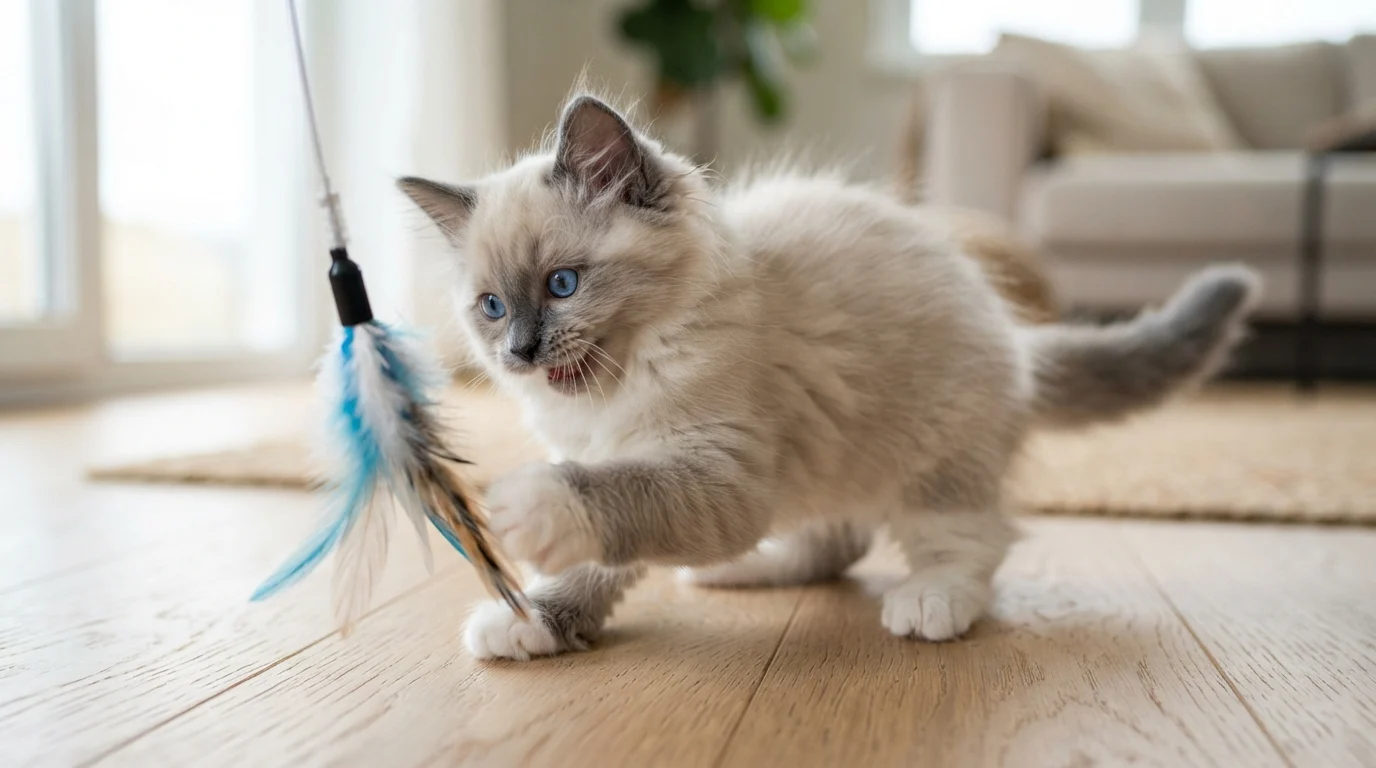
This is when personality starts to peek through. Kittens begin to play, pounce on littermates, explore their surroundings, and start learning to use a litter box. They also begin transitioning toward solid food, guided by their mother and the breeder.
Gentle, positive exposure to everyday household sounds and careful human handling during this window helps kittens grow into confident cats. It’s a good reason to ask any breeder how kittens are raised before they go home. Our guide on what to ask a Ragdoll breeder covers questions worth raising.
Coat at this stage
The coat is short, soft, and fluffy, more like down than the silky fur of an adult. Color points are visible but often lighter than they’ll eventually become. Bicolor kittens usually show their white markings clearly early on, including the white face blaze and mitts.
8 to 12 Weeks: Getting Ready for a New Home
By this stage, kittens are usually eating solid food, using the litter box, and playing energetically. They sleep a lot, in bursts, between bouts of surprising speed.
SoCal Ragdolls does not release kittens to their new homes before 12 weeks of age. That time with their mother and littermates matters for social learning, such as how hard to bite during play and how to read other cats. If you’re planning ahead, our article on preparing your home for a Ragdoll kitten is a useful starting point.
3 to 6 Months: The Fast-Growing Stage
Once a kitten is home, the growth that’s most visible is often in length and leg proportions. Many Ragdoll kittens go through stretches where they look long and lanky, with a body that seems to have outpaced the coat. Appetite may climb, and play becomes more athletic.
Expect some changes during this time:
- Teething: baby teeth are replaced by adult teeth, so chewing and mouthing may increase. Provide safe toys.
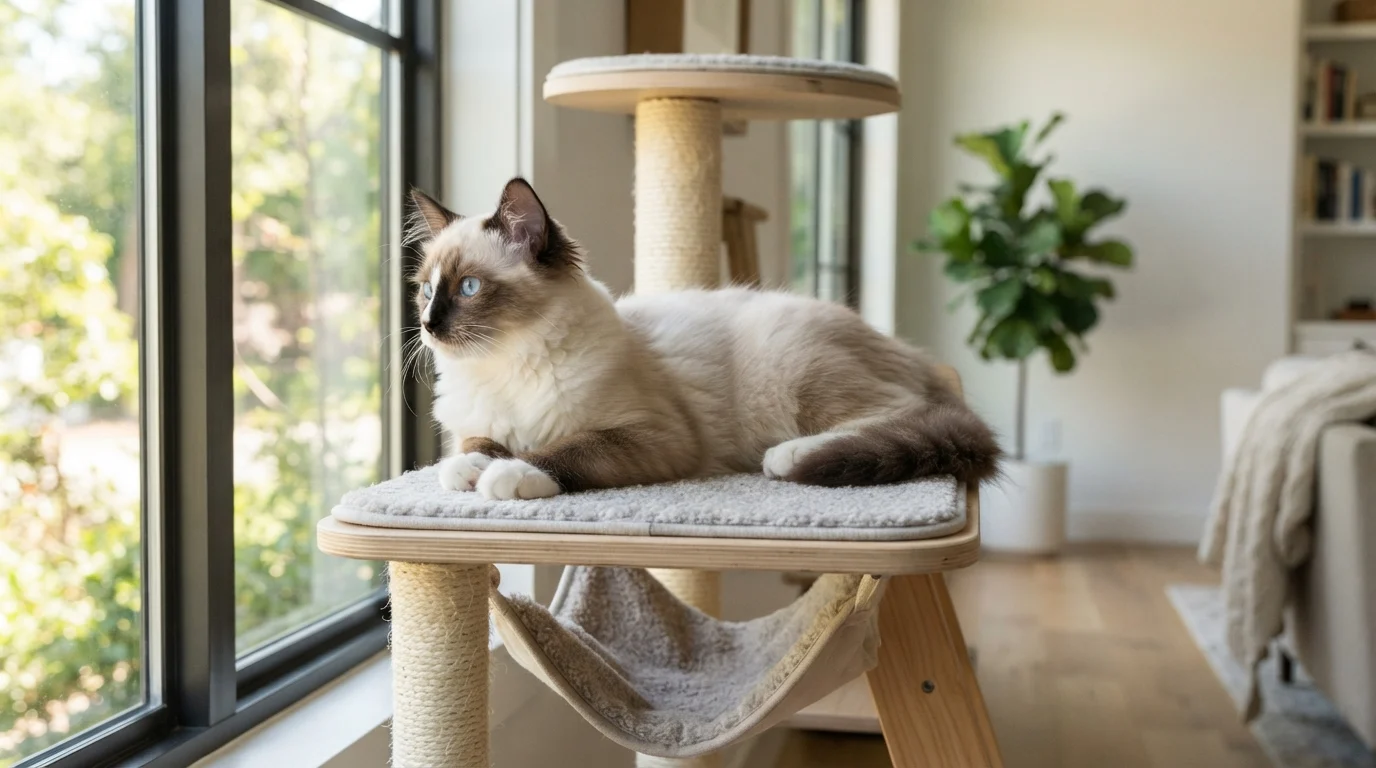
- Energy bursts: sudden sprints and climbing are typical. A tall cat tree and daily interactive play help.
- Settling in: some kittens adapt in days and others take weeks. See how long it takes a Ragdoll kitten to settle in.
Feeding, vaccination, and spay or neuter timing should be planned with your veterinarian, who can tailor recommendations to your kitten rather than relying on a generic chart.
6 to 12 Months: Adolescence
Adolescent Ragdolls can look a bit awkward, with a growing frame, a changing coat, and sometimes a patchy transition from kitten fluff to the longer adult coat. Grooming becomes more important, since the new fur can tangle, especially behind the ears, under the legs, and around the belly. Our Ragdoll grooming tips explain how to keep up with it gently.
Behavior may also shift. Some kittens test boundaries, get busier at night, or become more vocal. Consistent routines, plenty of play, and patience usually go a long way. If you have other pets, this can also be a good time to revisit introductions with a resident cat or dog as your kitten gains confidence and size.
1 to 2 Years: Filling Out
By the first birthday, many Ragdolls look nearly grown, but there’s usually more to come. Chest, shoulders, and overall body mass often continue to fill in. The face begins to look more mature, and the coat grows fuller, with the characteristic plush ruff around the neck becoming more prominent in many cats.
Temperament tends to mellow gradually. Many Ragdolls are known for being gentle and people-oriented, though personality varies and no trait can be guaranteed. If affection is on your mind, you may like our piece on Ragdoll temperament.
2 to 4 Years: Full Coat and Full Color
This is when the breed’s slow-maturing reputation shows. Color often deepens significantly, and the coat reaches its full length and density. Males are often noticeably larger than females, but there’s a wide range among healthy cats, and weight alone shouldn’t be your yardstick.
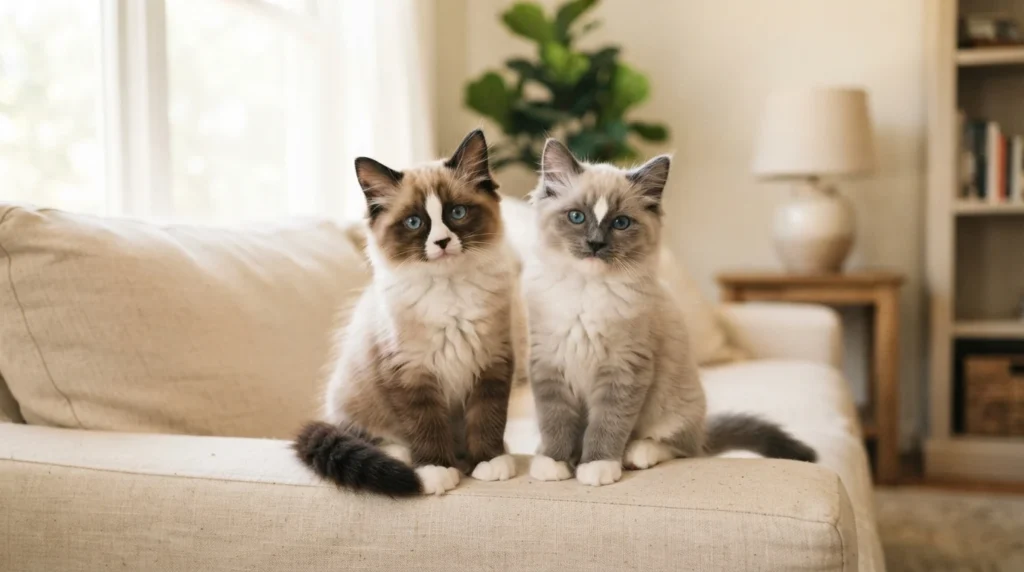
Because Ragdoll coats continue to evolve, the color a kitten shows at 8 weeks is only part of the story. A blue bicolor or seal bicolor kitten may look lighter or different as an adult. To see how the possibilities vary, browse our overview of Ragdoll colors and patterns.
Warm Weather, Indoor Life, and Growth
Growing Ragdolls do best as indoor cats, where their long coats and friendly nature are protected from many outdoor hazards. In Southern California, heat can be a factor for thick-coated adults, so see our tips on keeping a Ragdoll comfortable in heat waves.
When to Talk to Your Veterinarian
Variation is normal, but some signs deserve professional attention. Contact your veterinarian if your kitten seems unusually lethargic, stops eating, has ongoing vomiting or diarrhea, breathes with difficulty, or isn’t gaining weight as expected. Sudden or severe symptoms should be treated as urgent. Routine checkups are the best way to track healthy growth over time.
Enjoying the Whole Journey
The first year of a Ragdoll’s life goes quickly, but the years of maturing afterward are just as rewarding. Expect a pale newborn, a lanky adolescent, and eventually a plush, deeply colored adult, with plenty of personality along the way.
If you’re considering a kitten, you can view profiles on our Available Kittens page, learn about the family at SoCal Ragdolls, or contact us with questions about how kittens develop and what to expect when one joins your home.
Frequently asked questions
At what age do Ragdoll kittens stop growing?
Ragdolls mature more slowly than many breeds. Most keep filling out and developing coat and color for roughly three to four years, though the pace varies by individual. Your veterinarian can help you judge whether your kitten's growth looks healthy.
Do Ragdoll kittens change color as they grow?
Yes, Ragdoll coats typically darken and develop gradually as kittens mature. Kittens are usually born white or very pale, with color points appearing over the following weeks and continuing to deepen for years. Exact changes vary between cats.
When can a Ragdoll kitten go to a new home?
SoCal Ragdolls does not release kittens to their new homes before 12 weeks of age. This allows time for early development and socialization with their mother and littermates before the move.