SOCAL RAGDOLLS JOURNAL
Toxic Plants for Ragdoll Cats: 12 Common Plants to Avoid
Protect your Ragdoll from common toxic plants, including lilies, sago palms, oleander, pothos, philodendron, tulips, daffodils, aloe, and more.
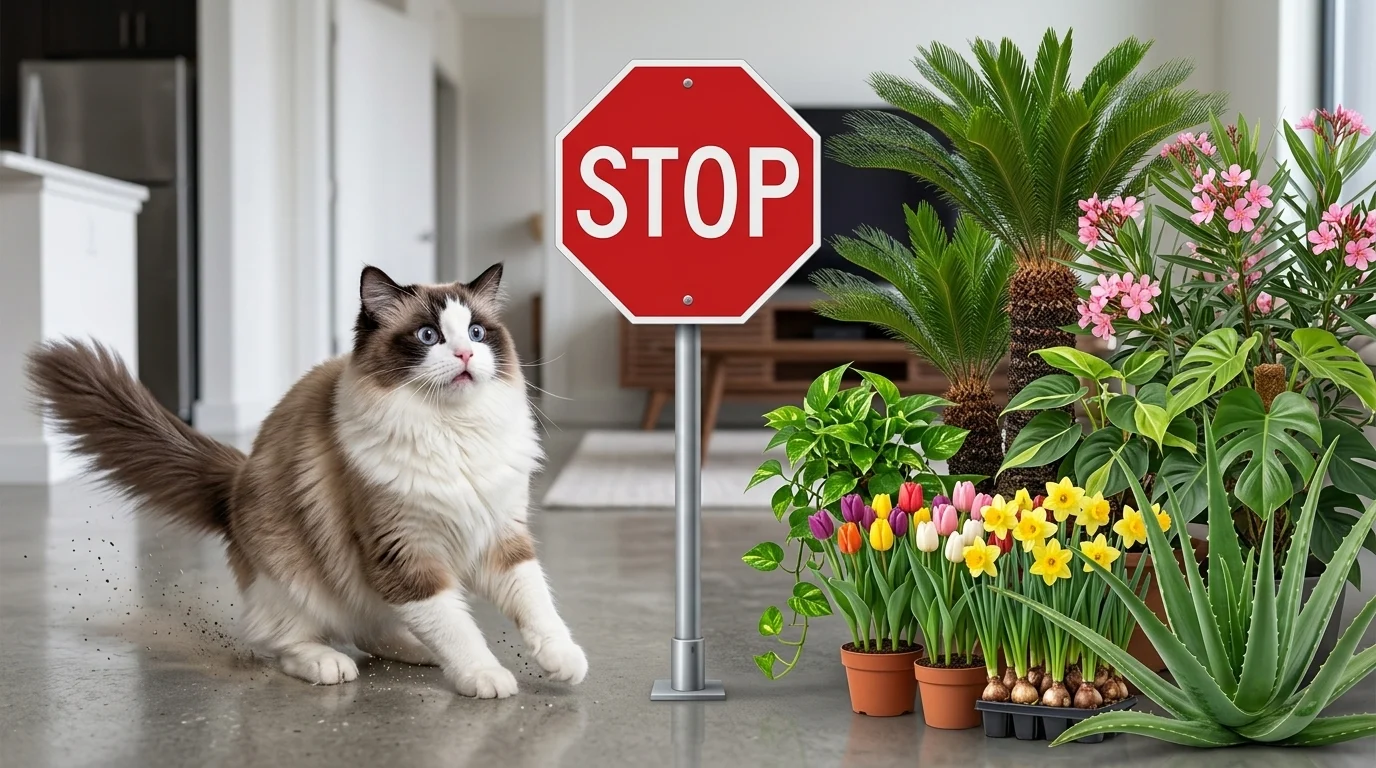
A beautiful houseplant or fresh bouquet can make a home feel brighter, but some common plants can be dangerous to cats. Ragdolls are no different from other cats when it comes to plant toxicity: their size, coat, or pedigree does not protect them from poisonous leaves, flowers, pollen, bulbs, or even contaminated vase water.
For families bringing home a Ragdoll kitten, plant safety is worth reviewing before the kitten arrives. Young cats are naturally curious, and a dangling leaf or bouquet on a table can quickly become something to sniff, paw, chew, or lick. This guide covers some of the most important toxic plants for Ragdoll cats, with special attention to plants and landscaping commonly seen in Southern California.
1. True lilies and daylilies: the plant danger cat owners should know first
True lilies in the Lilium family and daylilies in the Hemerocallis family are among the most dangerous plants for cats. Easter lilies, tiger lilies, Asiatic lilies, Oriental lilies, Stargazer lilies, and daylilies can cause severe kidney injury in cats.
The risk is not limited to chewing a flower. According to the U.S. Food and Drug Administration, the leaves, stems, flowers, pollen, and even the water from a vase can be dangerous. A cat may be exposed simply by brushing against pollen and later licking it from its coat while grooming. Because Ragdolls have a full coat and groom themselves frequently, keeping true lilies completely out of a cat household is the safest approach.
Read the FDA guidance on lilies and cats.
2. Sago palm
Sago palms and other cycads are popular ornamental plants in warm climates, including Southern California, but they are highly toxic to pets. All parts of the plant can be dangerous, and the seeds are especially concentrated. Exposure can cause serious gastrointestinal illness and potentially life-threatening liver failure.
If you have a Ragdoll that spends time on a patio, enclosed courtyard, or supervised outdoor space, check nearby landscaping for cycads rather than assuming an outdoor ornamental is pet-safe.
3. Oleander
Oleander is common in Southern California landscaping and along roads, fences, and property lines. It contains compounds that can interfere with normal heart function. Cats should not have access to the leaves, flowers, stems, or clippings. Be especially cautious after pruning or windy weather, when plant material can end up in areas your cat normally explores.
4. Azaleas and rhododendrons
Azaleas and rhododendrons can cause gastrointestinal, neurologic, and cardiovascular effects when ingested. Even if your Ragdoll is primarily indoors, cuttings, potted gift plants, and patio plants can create unexpected exposure opportunities.
5. Autumn crocus
Autumn crocus is different from the less dangerous spring crocus. It can cause severe gastrointestinal signs and may affect multiple organ systems. Because common plant names can be confusing, identify the exact plant rather than relying only on the word “crocus.”
6. Tulips and hyacinths
Tulips and hyacinths can irritate the mouth and gastrointestinal tract, and the bulbs contain the highest concentration of toxic compounds. Cats that dig in planters may reach bulbs even when they ignore the flowers above the soil.
7. Daffodils and paperwhites
Daffodils, including paperwhites and other Narcissus varieties, can cause vomiting, drooling, diarrhea, abdominal discomfort, and other effects. Like tulips and hyacinths, the bulbs are particularly concerning. Seasonal indoor bulb arrangements should be kept completely inaccessible to cats.
8. Pothos
Pothos, sometimes called Devil’s Ivy, is one of the most common houseplants. It contains insoluble calcium oxalate crystals that can irritate a cat’s mouth and gastrointestinal tract. A cat that chews pothos may drool, paw at the mouth, gag, vomit, or have difficulty swallowing.
Pothos exposure is generally different from true-lily poisoning, but it still deserves veterinary guidance, especially if swelling or trouble swallowing develops.
9. Philodendron and Monstera
Philodendrons and Monstera plants are popular in modern home décor and can also contain insoluble calcium oxalates. Large decorative leaves can be especially tempting to a curious kitten. Consider placing these plants in a room the cat cannot enter or replacing them with a cat-safe alternative.
10. Dieffenbachia
Dieffenbachia, also known as dumb cane, can cause intense oral irritation, drooling, vomiting, and difficulty swallowing. Even if a plant is placed on a shelf, remember that Ragdolls can climb and jump. “Out of reach” should mean genuinely inaccessible, not simply higher than the floor.
11. Aloe vera
Aloe is useful in many human households, but the plant is considered toxic to cats. Ingestion can cause gastrointestinal signs and lethargy. If you keep aloe for household use, a closed cabinet, cat-free room, or other secure location is safer than an open windowsill.
12. Cyclamen
Cyclamen is a popular flowering houseplant, particularly during cooler months. The roots and tubers contain higher concentrations of toxic compounds. Ingestion can cause significant gastrointestinal illness, and larger exposures can be more serious.
What about peace lilies?
Peace lilies are worth mentioning because the name causes confusion. They are not the same as the highly dangerous true lilies in the Lilium or Hemerocallis families and do not cause the same classic kidney failure syndrome. However, peace lilies contain insoluble calcium oxalates and can still cause painful mouth irritation, drooling, vomiting, and difficulty swallowing. They should still be kept away from cats.
How to make your home safer before bringing home a Ragdoll kitten
- Identify every plant in the home. If you do not know what a plant is, use a reliable plant-identification source before allowing a kitten access to it.
- Check bouquets before bringing them inside. Mixed flower arrangements can contain lilies even when lilies are not the main flower.
- Review patios and landscaping. Sago palms, oleander, azaleas, and other toxic plants are common outside as well as indoors.
- Remember the vase water. With true lilies, even water from the flower arrangement can be dangerous to cats.
- Do not rely on height alone. Cats can jump onto counters, shelving, refrigerators, and tall furniture.
- Keep plant clippings and fallen leaves contained. A leaf on the floor can be more interesting to a kitten than the intact plant.
- Use the ASPCA plant database. The ASPCA maintains searchable lists of plants that are toxic and non-toxic to cats.
Check the ASPCA’s toxic and non-toxic plant list for cats.
What should you do if your Ragdoll may have eaten a toxic plant?
Act quickly. Remove your cat from the plant, prevent additional exposure, and identify the plant if you can do so safely. Save a sample or take clear photographs of the plant and any label or packaging. Then contact your veterinarian, an emergency veterinary hospital, or a veterinary poison-control service.
Do not induce vomiting or give home remedies unless a veterinary professional specifically instructs you to do so. Some toxins can cause damage before obvious symptoms appear, which is why waiting to “see how the cat feels” can be risky.
Plant safety is part of preparing for a new kitten
Preparing for a Ragdoll kitten usually means thinking about food, litter boxes, scratching posts, carriers, and toys. Plant safety deserves a place on that checklist too. A few minutes spent identifying houseplants and landscaping can prevent a frightening emergency later.
For current guidance, consult your veterinarian and authoritative veterinary-toxicology resources. The ASPCA notes that lilies, sago palms, azaleas, rhododendrons, oleander, and other common plants can cause serious poisoning, while the FDA specifically warns that true lilies and daylilies can cause fatal kidney failure in cats.
Sources and further reading: ASPCA Toxic and Non-Toxic Plant List — Cats; ASPCA Animal Poison Control Center; FDA: Lovely Lilies and Curious Cats.