SOCAL RAGDOLLS JOURNAL
What to Buy for Your Ragdoll Kitten: A Complete Supply Checklist
Preparing for a Ragdoll kitten? Use this complete, brand-neutral supply checklist for carriers, litter boxes, food, grooming tools, toys, scratching posts, beds, travel supplies, and more.

Bringing home a Ragdoll kitten is exciting, but it is much easier when the essentials are already in place. Ragdolls are known for their soft semi-long coats, social personalities, playful kitten energy, and larger adult size, so a little preparation can make the transition smoother for both your family and your new kitten.
This Ragdoll kitten supply checklist focuses on the categories that matter most rather than specific brands. You do not need to buy everything at once, and the most expensive option is not automatically the best. Start with safe, appropriately sized basics, ask what your kitten is already accustomed to, and build from there as you learn your cat’s preferences.
1. A roomy carrier for vet visits and travel
A secure carrier is one of the first things to have ready. Ragdolls can grow into substantial adult cats, so choose a carrier with enough room for your kitten to stand, turn around, and lie comfortably. A sturdy soft-sided or hard-sided carrier with good ventilation works well for routine veterinary visits and travel.
Leave the carrier open at home before your kitten’s first appointment. Adding a familiar blanket or towel can help it become a normal resting place instead of something that appears only before a stressful trip.
2. Large, easy-to-access litter boxes
Ragdolls are a larger breed, so litter boxes that look roomy for a young kitten can become cramped later. Starting with a generously sized box can save you from replacing it quickly. High-sided boxes can help contain litter once a kitten is large enough to enter comfortably, while very young kittens may do better with a lower entry.
For multi-level homes, consider placing a litter box on more than one floor. In multi-cat households, having multiple boxes can also reduce competition and make good litter habits easier to maintain.
3. Familiar litter for an easier transition
Before your kitten comes home, ask what type of litter is currently being used. Keeping the same texture and general setup for the first few weeks can reduce unnecessary changes during an already busy transition.
If you want to switch litter later, make the change gradually. The goal is not to create the fanciest setup on day one; it is to give the kitten a clean, predictable place to eliminate.
4. Food and water bowls that are easy to clean
Stainless steel and ceramic bowls are popular choices because they are durable and easy to keep clean. Choose shallow, stable dishes that are difficult to tip. Many cats prefer water to be placed a short distance away from their food rather than directly beside it.
A cat drinking fountain can be useful for cats that prefer moving water, but it still needs regular cleaning. Whether you use bowls, a fountain, or both, fresh water should always be available.
5. The same food your kitten is already eating
A homecoming is not the ideal time for an abrupt diet change. Ask what food your kitten is currently eating and have enough on hand for the transition. If you and your veterinarian decide to change diets, do it gradually unless there is a medical reason to do otherwise.
Ragdoll kittens are still growing, so feeding decisions should reflect their age, body condition, activity level, and veterinary guidance. Avoid choosing food solely because of marketing claims; consistency, complete nutrition, and how well the individual kitten does on the diet matter more.
6. A sturdy cat tree and scratching surfaces
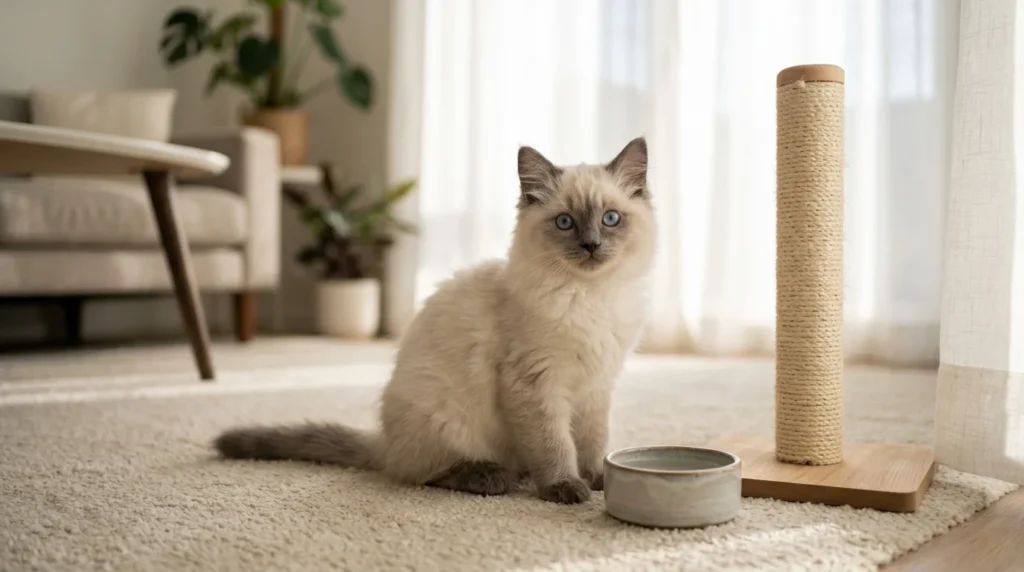
Ragdolls benefit from vertical space just like other cats. A stable cat tree gives a kitten somewhere to climb, scratch, observe the room, and rest. Because an adult Ragdoll can be large, look for a wide base, strong platforms, and posts that do not wobble.
Offer more than one type of scratching surface when possible. Some cats prefer tall vertical posts, while others enjoy horizontal cardboard or sisal scratchers. Providing good scratching options early can help direct normal scratching behavior away from furniture.
7. Comfortable beds and quiet resting areas
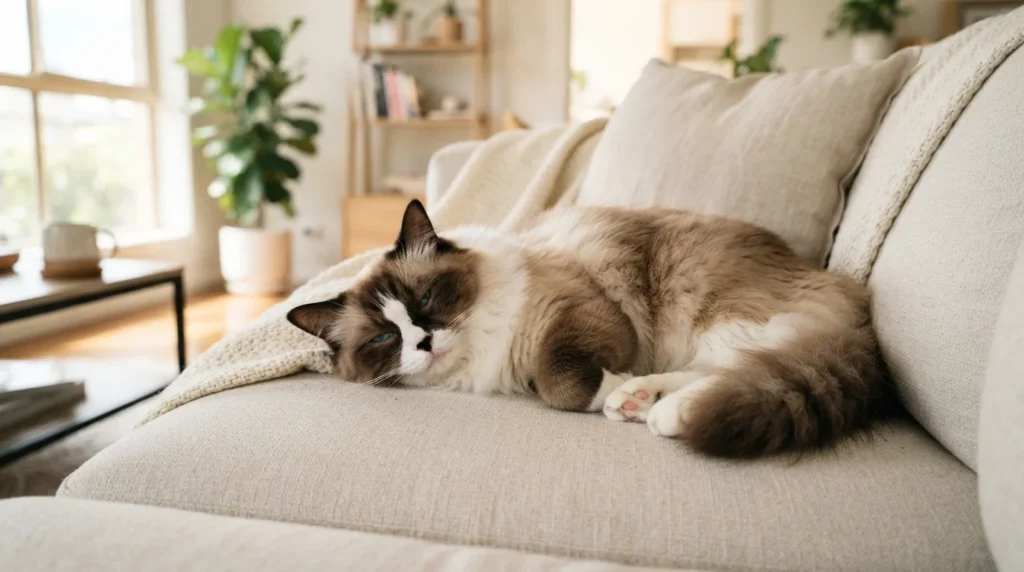
Your kitten may ignore a beautiful cat bed in favor of a cardboard box, a folded blanket, or a spot beside you—and that is completely normal. The important thing is to provide several safe places to rest, including at least one quiet area where the kitten can retreat without being disturbed.
Washable bedding is especially useful during kittenhood. A familiar blanket can also help during carrier trips or the first few nights in a new home.
8. Simple grooming tools
A Ragdoll’s semi-long coat benefits from regular grooming, but you do not need a cabinet full of equipment. A comfortable brush, a metal comb, and cat nail clippers cover many routine needs.
Start with very short grooming sessions and reward calm behavior. Pay special attention to areas where friction can create tangles, including behind the front legs, around the chest, and near the hindquarters. Early positive handling also makes nail trims, ear checks, and veterinary exams easier later.
9. Interactive toys for daily play
Kittens need opportunities to chase, pounce, climb, stalk, and problem-solve. Wand toys, lightweight balls, springs, tunnels, kicker toys, and simple puzzle toys can all encourage appropriate play.
Rotate toys instead of leaving everything out at once. A toy that disappears for a week often feels new again when it returns. Inspect toys regularly and discard damaged pieces, loose strings, or anything small enough to swallow.
10. A few independent-play options
Interactive play with people is important, but kittens also benefit from safe activities they can use independently. Track toys, tunnels, sturdy balls, window perches, and food puzzles can provide enrichment while you are working or occupied.
Avoid leaving string, ribbon, yarn, elastic bands, or wand toys with dangling cords out when no one is supervising. Items designed for interactive play should be put away after the session.
11. Safe transportation extras if you plan to travel
If your Ragdoll will accompany you beyond routine vet visits, consider travel supplies that match your plans: an absorbent carrier liner, collapsible bowls, a harness made for cats, identification, and a secure way to contain your cat at your destination.
Harness training should begin gradually indoors. Even a confident indoor cat can panic outside, so a harness and leash are not substitutes for a secure carrier during vehicle travel.
12. A pet-safe cleaning and fur-control routine
Ragdolls shed, and their light, soft fur can become especially noticeable on dark clothing and upholstery. A vacuum that handles pet hair, a washable lint tool, or a simple adhesive roller can make routine cleanup much easier.
Keep household cleaners, laundry products, essential oils, medications, and pest-control products safely stored. A kitten explores with paws and mouth, so cat-proofing the cleaning cabinet is just as important as buying toys.
13. Litter cleanup supplies
A durable scoop, waste container, and small mat outside the litter box are simple items that make daily maintenance easier. Regular scooping is one of the most important parts of keeping the box appealing to your cat.
Choose a system you will actually use consistently. A complicated setup is not better if it makes routine cleaning less convenient.
14. Optional calming support for the transition
Some kittens settle into a new home immediately; others need several days to feel secure. A quiet starter room, familiar bedding, predictable meals, gentle play, and patience are the foundation of a smooth transition.
Some households also use feline pheromone diffusers or sprays during introductions, travel, or environmental changes. If your kitten seems unusually fearful or stressed, discuss the situation with your veterinarian rather than relying on a product alone.
15. A scale if you like tracking growth
A pet scale is optional for most homes, but regular weight checks can be useful while a kitten is growing. Tracking weight over time can help you notice a change that may otherwise be hidden by a fluffy coat.
Do not become fixated on a single number. Growth rates vary, and body condition matters more than comparing your kitten with someone else’s cat. Your veterinarian can help you understand whether growth is appropriate.
16. A plan for monitoring when you are away
An indoor camera can be helpful if you want to see how a new kitten behaves when the house is quiet. It can show whether the kitten is eating, playing, sleeping, or repeatedly visiting the litter box. This is optional, but some families appreciate the reassurance during the first few weeks.
Keep power cords secured and position cameras where a curious kitten cannot knock them over.
What you do not need to overbuy
It is easy to purchase too much before you know what your kitten actually likes. Start with a few toys, one or two comfortable beds or blankets, basic grooming tools, a secure carrier, sturdy scratching options, and the same food and litter your kitten already knows. You can always add more later.
Expensive accessories will not replace the things a Ragdoll needs most: a safe indoor home, veterinary care, quality nutrition, regular grooming, daily play, affection, and time with the people they trust.
A simple new-Ragdoll shopping checklist
- Large secure carrier
- One or more roomy litter boxes
- Familiar litter and a sturdy scoop
- Current kitten food
- Stainless-steel or ceramic food and water bowls
- Stable cat tree and scratching surfaces
- Washable bed or blanket
- Brush, metal comb, and nail clippers
- Interactive toys and a few safe solo-play toys
- Pet-hair cleanup tools
- Veterinarian contact information and first appointment plan
Prepare the home, then let your kitten show you what they like
The best Ragdoll setup is not the one with the most products. It is the one that is safe, easy to maintain, and flexible enough to adapt to the individual cat. Once your kitten arrives, you will quickly learn which bed becomes the favorite, which toy gets carried around the house, and whether the expensive cat tree or the shipping box wins the first week.
Prepare the essentials before homecoming, keep the first days calm, and give your kitten time to settle in. The rest can grow naturally along with your new companion.