SOCAL RAGDOLLS JOURNAL
Ragdoll Cats in Apartments: Space, Play, and Enrichment for Smaller Homes
Ragdolls can live happily in apartments and condos when their space is used well. Learn how vertical space, play routines, scratching options, and quiet retreats help a Ragdoll feel at home.
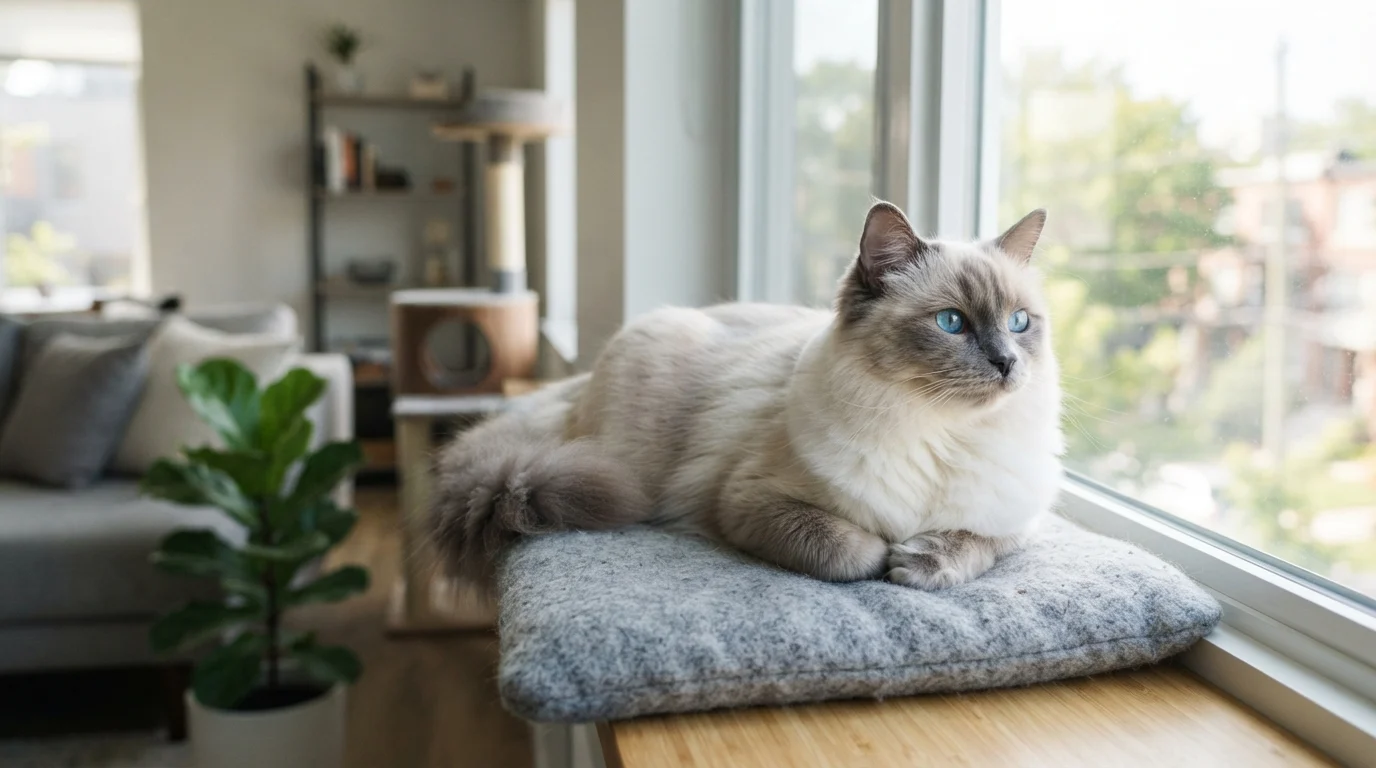
A smaller home doesn’t have to mean a smaller life for a cat. Ragdoll cats in apartments and condos can do very well, because the breed is generally known for being people-focused, adaptable, and content to live indoors. Still, a Ragdoll in a 700-square-foot space needs the room to be used thoughtfully. The goal isn’t more floor space. It’s more variety, more choices, and more shared time with you.
Every cat is an individual, so none of this is a guarantee. But if you’re weighing whether a Ragdoll suits your living situation, or you’ve just brought one home, the sections below walk through common apartment challenges and practical ways to solve them.
Are Ragdolls Actually Suited to Apartment Life?
Ragdolls are often described as gentle, relaxed, and affectionate, and many enjoy following their people from room to room. They tend to be moderately active rather than frantic, which can suit smaller homes. They’re also a larger breed, so a cat that is full grown may need sturdier furniture and more generous climbing and resting spaces than a small cat would. You can read more about how they develop in our guide to Ragdoll kitten growth stages.
Temperament varies, though. Some Ragdolls are playful climbers well into adulthood, while others prefer lounging near their favorite person. Watching your own cat’s habits will tell you more than any breed description.
The breed also does best as an indoor cat, which fits apartment living naturally. We cover this further in Why Ragdoll Cats Thrive Indoors.
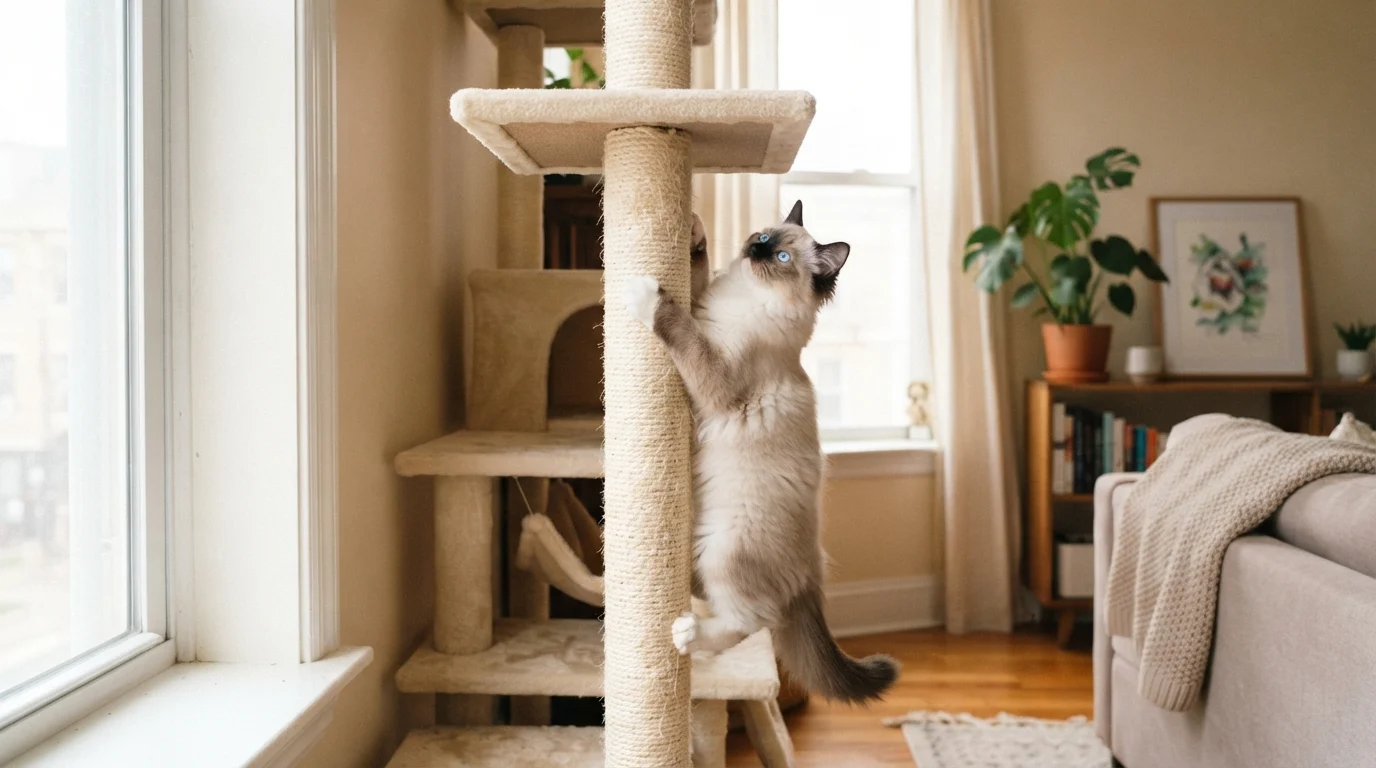
Problem: Limited Floor Space
Solution: Build Up, Not Out
Cats use height as well as floor area. In an apartment, vertical space is often the easiest way to double your usable territory.
- A sturdy cat tree. Look for a wide base, stable posts, and platforms large enough for a big-bodied cat to stretch out. Wobbly trees tend to go unused.
- Wall shelves or steps. If your lease allows mounting, secure shelves can create a climbing route. Always anchor them properly and check weight limits.
- Window perches. A secure perch at a window gives your cat something to watch, from birds to passing neighbors.
- Existing furniture. A bookshelf with a cleared, stable shelf or a cat-friendly spot on top of a low cabinet can do the job, as long as it’s safe.
Place climbing options near where you spend time. Many Ragdolls prefer to be close to their people, so a cat tree beside the sofa often gets more use than one tucked in a distant corner.
Problem: Not Enough Exercise
Solution: Short, Regular Play Sessions
Without a yard or hallways to roam, indoor cats rely on you for activity. Ragdolls often enjoy play but may not demand it as loudly as some breeds, which means it can be easy to skip. A simple routine helps.
- Aim for a few short interactive sessions each day, often in the morning and evening, adjusting to what your cat enjoys.
- Use wand toys that mimic prey movement: low to the ground, darting behind furniture, then slowing down.
- Let your cat “catch” the toy at the end so the game feels satisfying.
- Finish with a small meal or treat if your veterinarian is comfortable with that approach for your cat’s diet.
Rotate toys every week or so. A toy that’s been out for a month often loses its appeal, while one brought out after a break feels new. For kittens especially, supervise play and put away string-like toys when you’re not there, since these can be hazardous if swallowed.
Food Can Be Play, Too
Puzzle feeders, treat balls, and scattered kibble let your cat “hunt” for part of a meal. Ask your veterinarian how to adjust portions so that foraging games don’t lead to overfeeding.
Problem: Scratching Furniture You Can’t Replace
Solution: Offer Appealing Alternatives
Scratching is natural behavior, not misbehavior. Cats scratch to stretch, mark territory, and maintain their claws. In a small apartment, where furniture is both precious and visible, it helps to give your cat better options than your couch.
- Provide at least one tall, stable vertical post so your cat can stretch fully.
- Add a horizontal or angled scratcher, since cats often have different preferences.
- Place scratchers where your cat already scratches, such as near sleeping areas, entryways, or the arm of a favorite chair.
- Try sisal, cardboard, or other textures to see what your cat prefers.
Praise and gentle rewards when your cat uses the right spot work better than scolding. Regular nail trimming can also help, and our Ragdoll grooming tips include routine care that fits well into apartment life.
Problem: Noise, Neighbors, and Overstimulation
Solution: Create a Quiet Retreat
Apartments can be noisy: hallway footsteps, doors, delivery drivers, and neighbors’ music. Even a laid-back cat sometimes wants to get away from it all.
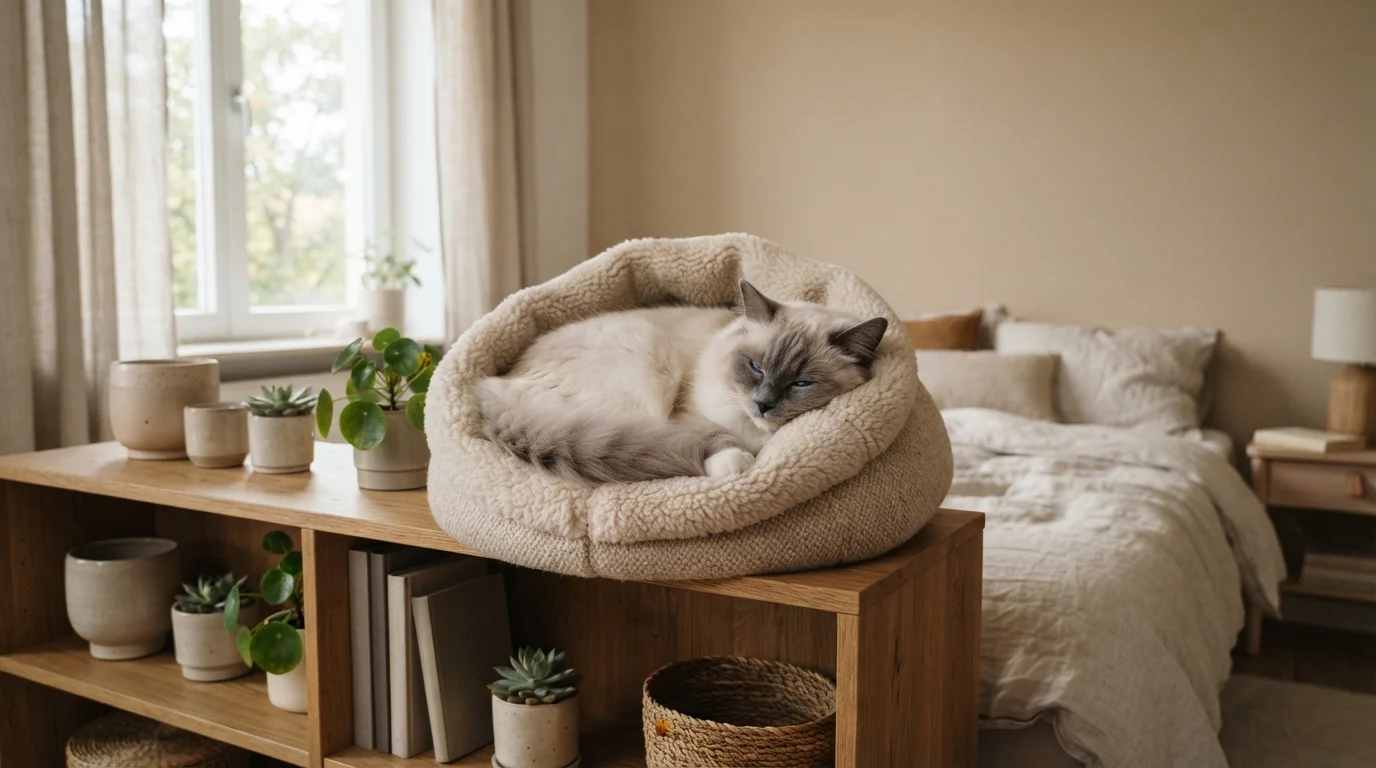
Set aside a calm spot with a covered bed or soft blanket, away from the front door and busy walkways. A low shelf, a quiet bedroom corner, or a bed beneath a table can work. Let your cat decide when to use it, and teach everyone in the household not to disturb a cat who has retreated there.
This is especially helpful for new kittens. A calm base and a predictable routine make adjusting easier, and you can learn what to expect in How Long Does It Take a Ragdoll Kitten to Settle Into a New Home?
Problem: Litter Box Placement and Odor
Solution: Plan the Layout Early
In small homes, the litter box often ends up in an awkward location. Try to choose a quiet, accessible spot that isn’t next to food and water, and avoid places where the box might be startled by noisy appliances. Because Ragdolls are large cats, a roomy box is usually more comfortable than a compact one.
Scoop daily and follow a regular cleaning routine. If you have more than one cat, ask your veterinarian or breeder about general guidance on how many boxes to provide. If your cat suddenly avoids the box or strains to urinate, contact a veterinarian promptly, since changes can signal a medical problem that shouldn’t wait.
Problem: Safety in a Small Space
Compact homes can still hide hazards. Walk through your apartment from a cat’s perspective.
- Windows and balconies. Use secure screens made for pets. Cats can fall from open windows or balcony railings even when they seem calm.
- Cords and small objects. Tuck away cables, hair ties, and string.
- Plants. Some common houseplants are toxic to cats. Check our list of toxic plants for Ragdoll cats before decorating.
- Doors. Because many Ragdolls are friendly and curious, make sure the front door is closed when guests, deliveries, or movers come through.
Our room-by-room guide to preparing your home goes into more detail, and the supply checklist can help you budget space for gear.
Warm Weather and Airflow
Many Southern California apartments get hot, especially upper-floor units with sun-facing windows. Make sure your cat has shaded places, fresh water, and good airflow, and be careful with open windows. We share more in Keeping an Indoor Ragdoll Comfortable During Southern California Heat Waves. If your cat shows signs of heat stress, such as heavy panting, lethargy, or drooling, seek veterinary care right away.
Time Alone and Companionship
Ragdolls often form strong bonds with their people, and some do not enjoy long stretches alone. If you work long hours away from home, consider leaving out puzzle toys, a window perch, and a few rotating activities. Some households choose to adopt a companion cat, but that decision depends on both animals’ personalities and a careful introduction. Our guide to introducing a Ragdoll kitten to an older cat or dog can help if you go that route.
Is an Apartment the Right Home for You?
The question isn’t only whether your apartment is big enough. It’s whether you can offer daily attention, safe enrichment, consistent routines, and long-term commitment. Check your lease for pet rules, deposits, and size or breed limits before committing, since larger cats can sometimes fall under weight restrictions.
If you’re researching a Ragdoll kitten, it’s worth asking breeders how they socialize kittens and what they recommend for your living situation. Our guide on what to ask a Ragdoll breeder is a good place to start.
Making a Small Home Feel Big
Ragdolls in apartments tend to thrive on connection: a tall perch near the window, a few minutes of play after work, a quiet bed when the building gets noisy, and a person who notices when they want company. Space helps, but thoughtful use of it helps more.
If you’re considering a Ragdoll in Southern California and want to learn more, SoCal Ragdolls welcomes questions from prospective families. You can browse the kitten listings to see current profiles, explore more articles, or contact us to talk through whether a Ragdoll fits your home.
Frequently asked questions
Are Ragdoll cats a good fit for apartment living?
Many Ragdolls adapt well to apartments because they are typically moderate-energy, people-oriented indoor cats. What matters most is enrichment: vertical space, daily play, scratching options, and companionship. Individual cats vary, so personality and energy level matter more than square footage alone.
How much space does a Ragdoll need in an apartment?
There is no single required square footage. A Ragdoll needs safe room to walk, climb, scratch, rest, and play, plus a litter box and quiet retreat. Using vertical space and rotating toys can make a smaller home feel enriching. Your veterinarian can advise on your individual cat.
How do I keep a Ragdoll from getting bored in a small home?
Offer short daily play sessions, rotate toys, add window perches, and provide puzzle feeders or foraging games. Ragdolls often enjoy human company, so interactive time with you matters. If you notice sudden behavior or appetite changes, consult your veterinarian.