SOCAL RAGDOLLS JOURNAL
How Long Does It Take a Ragdoll Kitten to Settle Into a New Home?
Most Ragdoll kittens begin to relax within days, but fully feeling at home can take weeks. Here is what to expect, what is normal, and how to help.
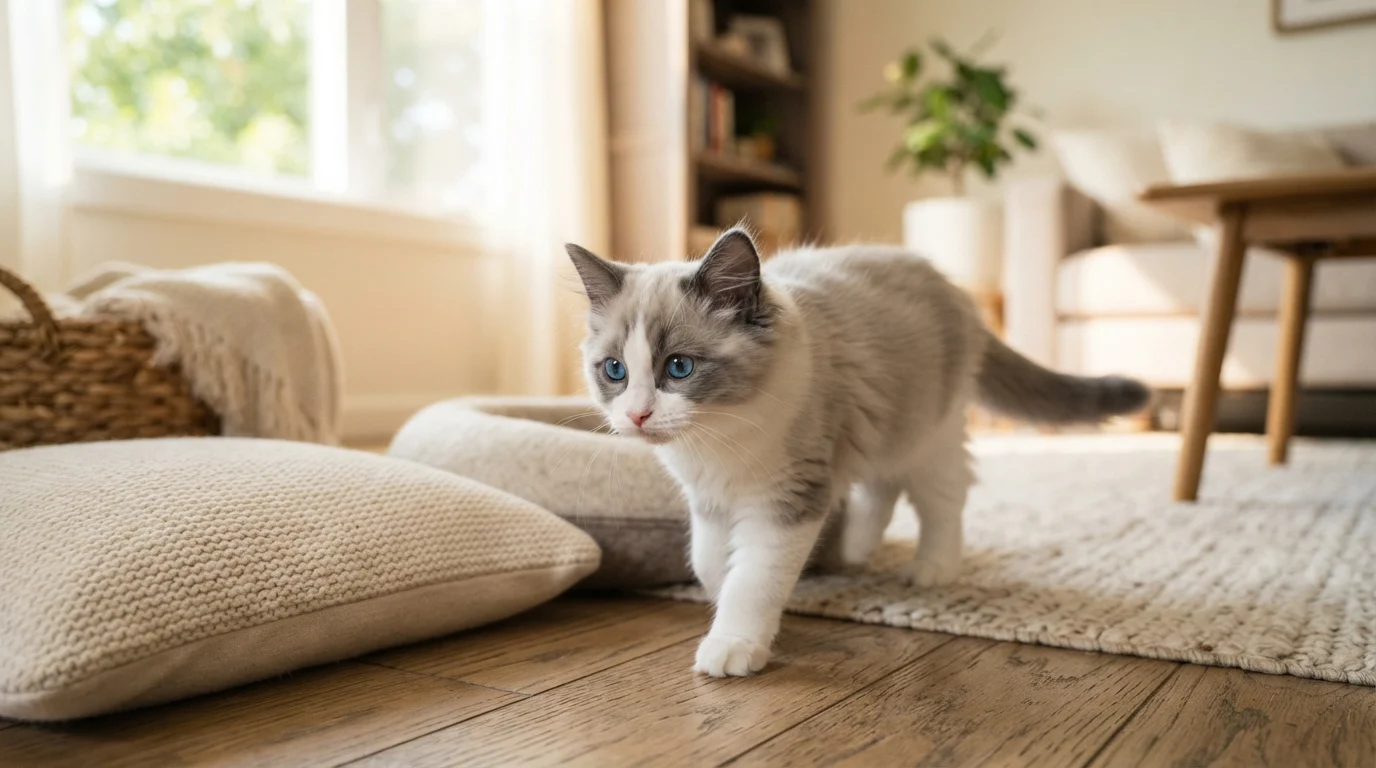
Bringing home a Ragdoll kitten is exciting, and it’s natural to wonder how quickly your new family member will feel at ease. The honest answer is that it varies. Some kittens are exploring and purring within hours; others spend the first few days watching from under the sofa. Most fall somewhere in between, and nearly all follow a gentle, recognizable pattern.
Understanding that pattern helps you tell ordinary adjustment from something worth a phone call to your veterinarian. If you’re researching ragdoll kitten settling into new home timelines, here is a realistic look at the first days, weeks, and months.
A General Timeline, With Room for Individual Differences
Think of these stages as rough guideposts rather than deadlines. A kitten who is slow in week one may be your most confident companion by month two, and the reverse can happen too.
The first 24 to 72 hours
Everything is new: the smells, the sounds, the floors, the people. Your kitten has also just left the only home, littermates, and routine they’ve known. It’s common to see hiding, cautious exploring, a smaller appetite, or a kitten who sticks close to you and meows more than expected.
Many kittens eat and use the litter box within the first day, but a few need extra time. Keep things calm, quiet, and predictable while they get their bearings.
Days 3 to 7
This is often when personality begins to peek through. Your kitten may start venturing farther from their safe spot, playing with toys, and accepting gentle petting. Sleep is still a big part of the day, which is normal for a growing kitten.
Weeks 2 to 4
Routines start to make sense to your kitten. They’ll often anticipate mealtimes, follow you from room to room, and play more boldly. Many families feel the real bond forming during this stretch.
One to three months
By now, most kittens treat the home as theirs. Confidence continues to grow with consistent handling, play, and positive experiences. Some shy kittens take the full stretch of this period to feel completely secure, and that’s still within the range of normal.
Why Some Kittens Settle Faster Than Others
Several factors shape the pace:
- Temperament: Some kittens are naturally bold, while others are more reserved.
- Early socialization: Kittens used to gentle handling and household sounds often adapt more easily.
- Household energy: A calm home with a few people is usually easier than a loud one with constant visitors.
- Other pets and children: These can be wonderful additions, but introductions need to be gradual.
- Age: SoCal Ragdolls does not release kittens to new homes before 12 weeks of age, and kittens that age are typically more prepared for the transition than very young ones.
Ragdolls are widely described as gentle and people-oriented, and many do bond closely with their families. Still, breed tendencies are not guarantees. If you’d like to explore this further, our article on Ragdoll temperament and affection goes into what’s typical and what varies.
Set Up a Small Starter Space
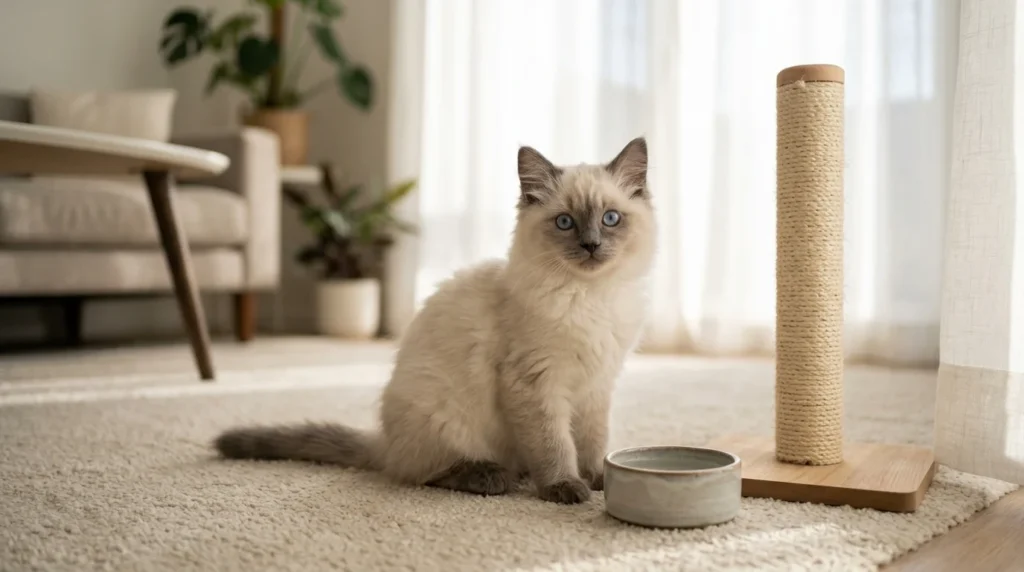
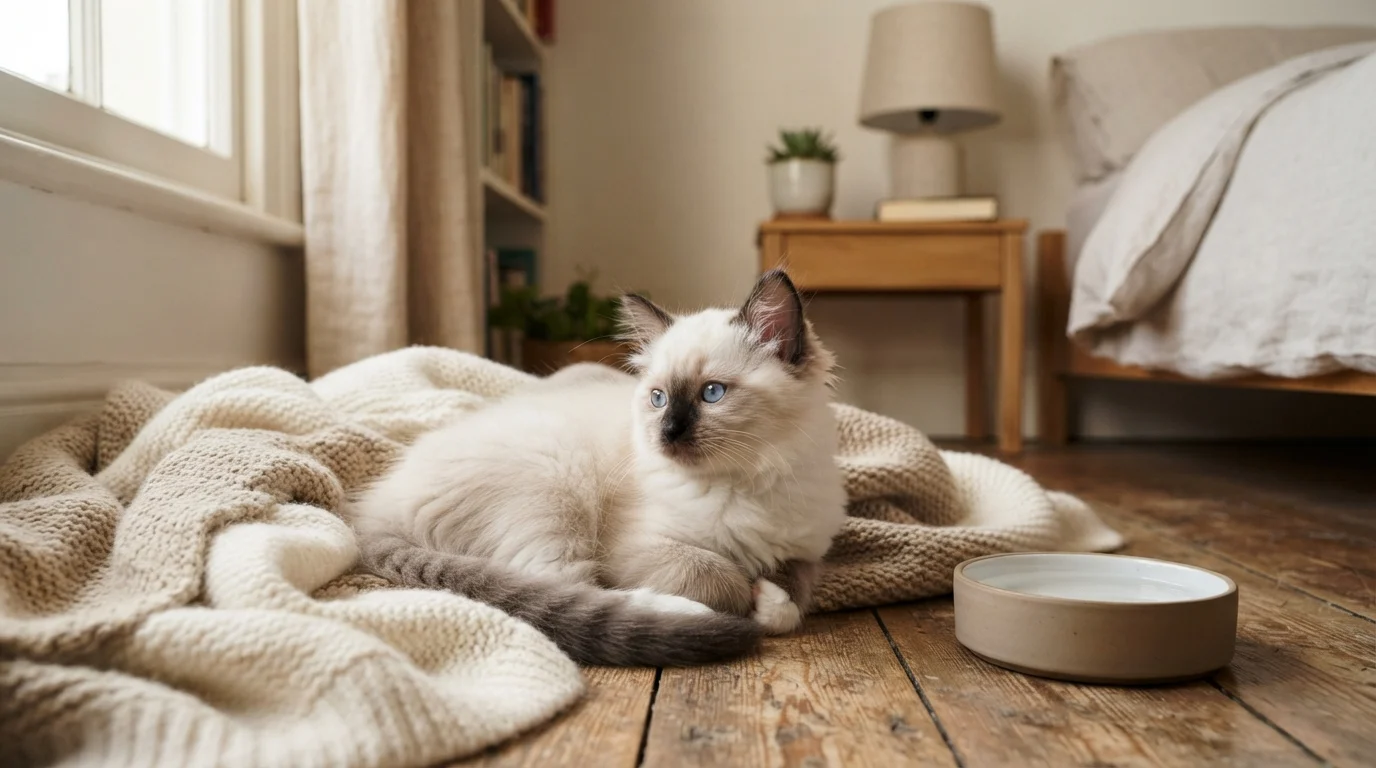
One of the most helpful things you can do is begin with a single, quiet room, such as a spare bedroom or bathroom. A whole house can feel enormous to a small kitten. A smaller space lets them learn where essentials are and builds confidence step by step.
Include:
- A litter box placed away from food and water
- Fresh water and food in a separate spot
- A soft bed or blanket and a hiding spot, like a covered bed or a box on its side
- A few toys and a scratching post
Before your kitten arrives, check the room for hazards such as loose cords, small items they could swallow, and gaps behind furniture. Our room-by-room guide to preparing your home and our kitten supply checklist can help you get ready. It’s also worth reviewing common toxic plants before kitten curiosity kicks in.
Routines That Build Confidence
Kittens feel secure when life is predictable. A few simple habits go a long way.
Keep feeding consistent
Offer meals at regular times, and ask the breeder or your veterinarian about the food your kitten has been eating. Keeping the same food at first can help avoid stomach upset. If you plan to change diets, do it gradually and talk with your vet about the best approach.
Use short, gentle play sessions
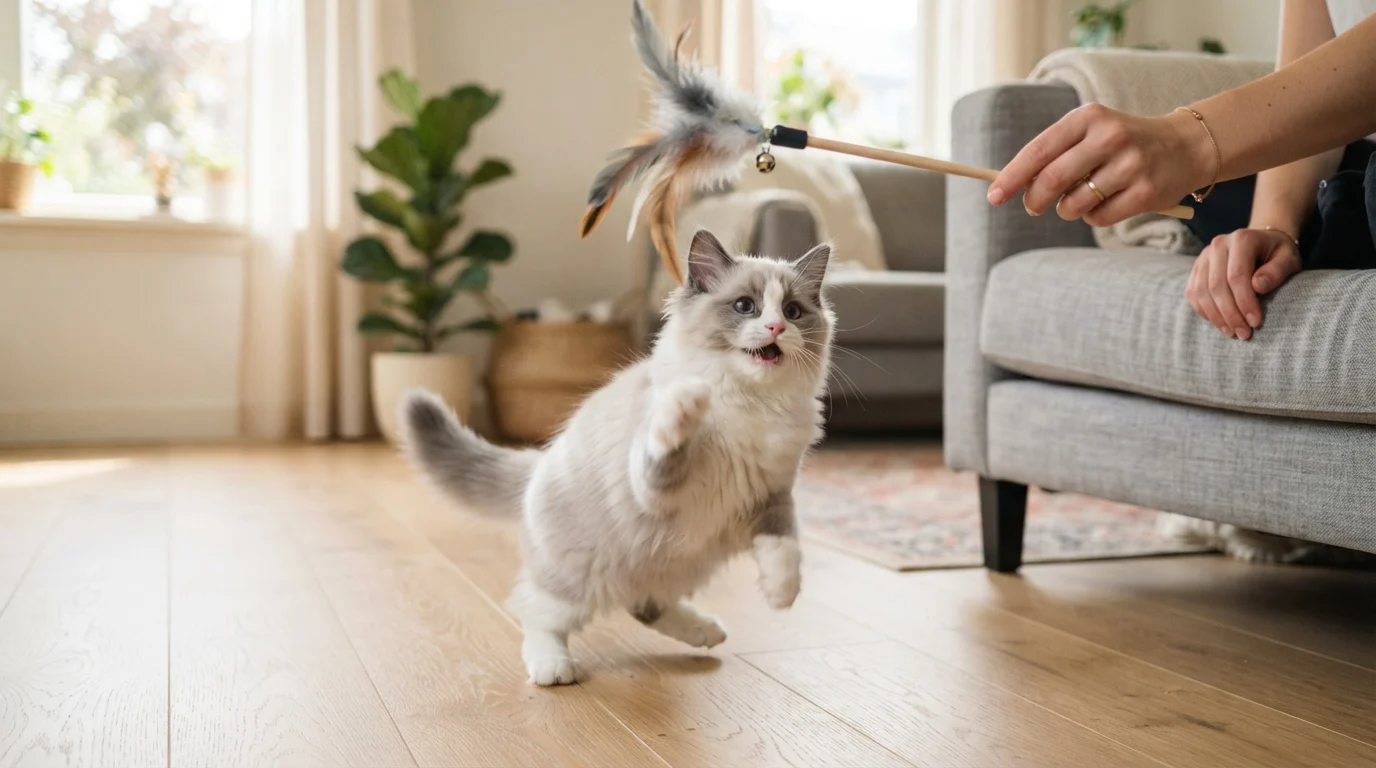
Wand toys and soft balls are great for building trust. Several brief sessions a day usually suit a kitten better than one long one. Avoid using your hands as toys, so your kitten learns healthy play habits from the start.
Let your kitten set the pace
Sit on the floor, speak softly, and let your kitten approach you. Offering a treat or a toy can encourage curiosity. Forcing cuddles or pulling a kitten out of hiding can set back trust.
Handle them a little every day
Gently touching paws, ears, and the base of the tail, followed by praise, makes later grooming and vet visits easier. Ragdolls have soft, semi-long coats that benefit from regular care, and our Ragdoll grooming tips explain how to introduce brushing comfortably.
What’s Normal in the First Weeks
Some behaviors can look worrying but are often part of adjusting:
- Hiding for much of the first day or two
- Eating less on the first day
- Crying at night while adjusting to a new sleeping space
- Sleeping deeply and often
- Clinging to one person
- Occasional litter box misses in an unfamiliar space
For nighttime fussing, a warm, soft bed, a tired kitten after an evening play session, and a consistent bedtime routine can help. Some families keep the kitten’s room close to where they sleep so the kitten feels less alone.
Introducing Children and Other Pets
Give your kitten a few days to settle before introductions. Keep children calm and teach them to pet gently and let the kitten walk away when they want. With resident cats or dogs, start by letting them smell each other’s bedding through a closed door, then move on to short, supervised meetings. Every animal moves at its own speed, so patience matters more than a schedule.
When to Check In With Your Veterinarian
Shyness is usually not a medical problem, but some signs call for professional attention. Schedule a visit with a licensed veterinarian soon after bringing your kitten home for a wellness exam, and bring any records you’ve received.
Contact your vet promptly if you notice:
- Refusing food for a day or longer
- Repeated vomiting or ongoing diarrhea
- Unusual lethargy or weakness
- Sneezing, eye discharge, or coughing that persists
- Straining in the litter box or no urination
Difficulty breathing, collapse, or inability to urinate is an emergency. Seek veterinary care right away rather than waiting. When you’re unsure, calling your vet is always reasonable, because they know how to evaluate your individual kitten.
Keep the Environment Safe and Enriching
As your kitten gains confidence, widen their territory one room at a time. Add climbing spaces, window perches, and puzzle feeders to keep a growing mind busy. Ragdolls generally do well as indoor companions, and you can read more in our article on why Ragdolls thrive indoors.
Give It Time, and Enjoy the Process
Most Ragdoll kittens show real signs of comfort within the first week or two, and many feel completely at home by the end of the first month or two. The kittens who take longer are not doing anything wrong; they simply need a bit more patience and routine.
If you’re beginning your search for Ragdoll kittens in Southern California, you can browse the Available Kittens section to view current profiles, learn about upcoming litters, or contact SoCal Ragdolls with questions about preparing for a kitten’s arrival. For more on the breed itself, our complete Ragdoll breed guide is a good next read.
Frequently asked questions
How long does it take a Ragdoll kitten to feel at home?
Many Ragdoll kittens start showing curiosity and relaxing within a few days, and feel more settled after two to four weeks. Full confidence can take a couple of months. Every kitten is different, and age, personality, and household activity all influence the pace.
Should I keep a new Ragdoll kitten in one room at first?
Starting in one quiet, kitten-safe room is a common and helpful approach. It lets your kitten learn the litter box, food, and bed locations without feeling overwhelmed. You can expand access gradually as your kitten becomes confident and relaxed.
When should I call the vet about a new kitten's behavior?
Contact a veterinarian if your kitten refuses food for a day, has ongoing vomiting or diarrhea, seems unusually lethargic, or has trouble breathing. Shyness alone is often normal, but any sudden or worrying change deserves professional guidance.