SOCAL RAGDOLLS JOURNAL
Ragdoll Shedding and Matting: What to Expect Through the Seasons and Life Stages
Ragdolls shed, and their coat changes a lot from kitten fluff to full adult plush. Here is what to expect at each stage, and the brushing habits that keep tangles from forming.
Ragdolls are known for their plush, silky coats, and the first question many prospective owners ask is how much work that fur will be. The honest answer is that ragdoll shedding is real, but it is usually manageable, and it changes quite a bit over a cat’s life. Knowing what to expect at each stage makes it much easier to stay ahead of loose hair and tangles.
One note before we start: Ragdolls are not non-shedding and they are not hypoallergenic. Any cat with fur sheds, and people with cat allergies should spend time with the breed before committing. What you can do is understand the pattern and build a simple routine.
Why Ragdoll Shedding Looks the Way It Does
Ragdolls have a semi-long coat that is often described as silky. Many have less dense undercoat than some other long-haired breeds, which is one reason their fur can feel softer and sometimes seems to shed less dramatically. That is a general breed tendency, not a guarantee. Individual cats differ, and some Ragdolls have a cottony or fluffier texture that behaves differently from a sleeker one.
Shedding itself is normal. Cats lose old hair continuously and replace it with new growth. What you notice at home depends on a few things:
- Coat texture: Silkier coats tend to release hair quietly, while woollier, denser coats may leave more visible tufts.
- Season and indoor climate: Light, temperature, and heating or air conditioning can all influence when a cat sheds more.
- Life stage: Kittens, adolescents, adults, and seniors all have different coats and grooming needs.
- Overall health and diet: Skin and coat condition often reflect general wellbeing.
- Hormones and stress: Changes such as maturity, a move, or a new pet can affect the coat.
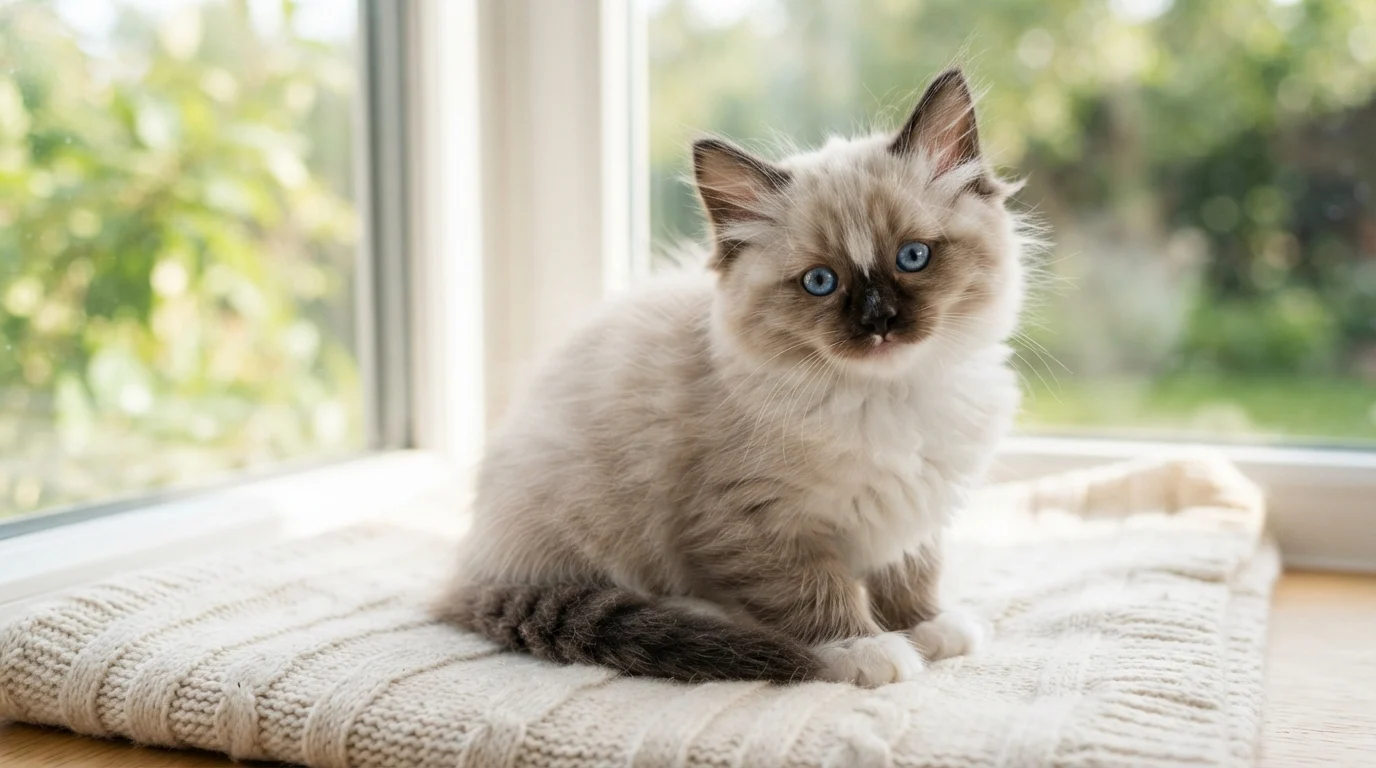
Kitten Fluff: The First Months
Young Ragdoll kittens have a short, soft, fine coat that looks fluffy rather than long. Mats are rare at this age because the hair simply isn’t long enough to tangle much. This is a good time to introduce grooming as a pleasant routine rather than a chore.
Keep early sessions very short. A few gentle strokes with a soft brush, followed by a treat or play, teaches a kitten that handling is safe. Touch the paws, the tail, and the belly gently, since those are the areas you will need to groom later. Our article on how Ragdoll kittens grow explains how the coat develops alongside size and behavior.
If you are bringing home a kitten, remember that SoCal Ragdolls does not release kittens to new homes before 12 weeks of age, so you will be starting your grooming routine with a kitten who has already had time to grow and become comfortable with gentle handling. A supply checklist can help you choose a soft brush and a wide-toothed comb before they arrive.
The Adolescent Coat Change: Where Matting Often Begins
The stage that catches many new owners off guard is adolescence, often somewhere between several months and a year or so of age, though timing varies. The soft kitten coat begins to give way to longer adult hair. For a while, the cat can carry a mix of fine kitten fluff and coarser new growth, and that combination tangles easily.
This is when tiny knots can appear behind the ears, in the armpits, along the belly, and in the britches at the back of the legs. They often start small and form close to the skin, which makes them easy to miss unless you part the fur and look.
During this phase, a few extra minutes of combing several times a week usually pays off. It is far easier to work out a small tangle with a comb than to deal with a tight mat later.
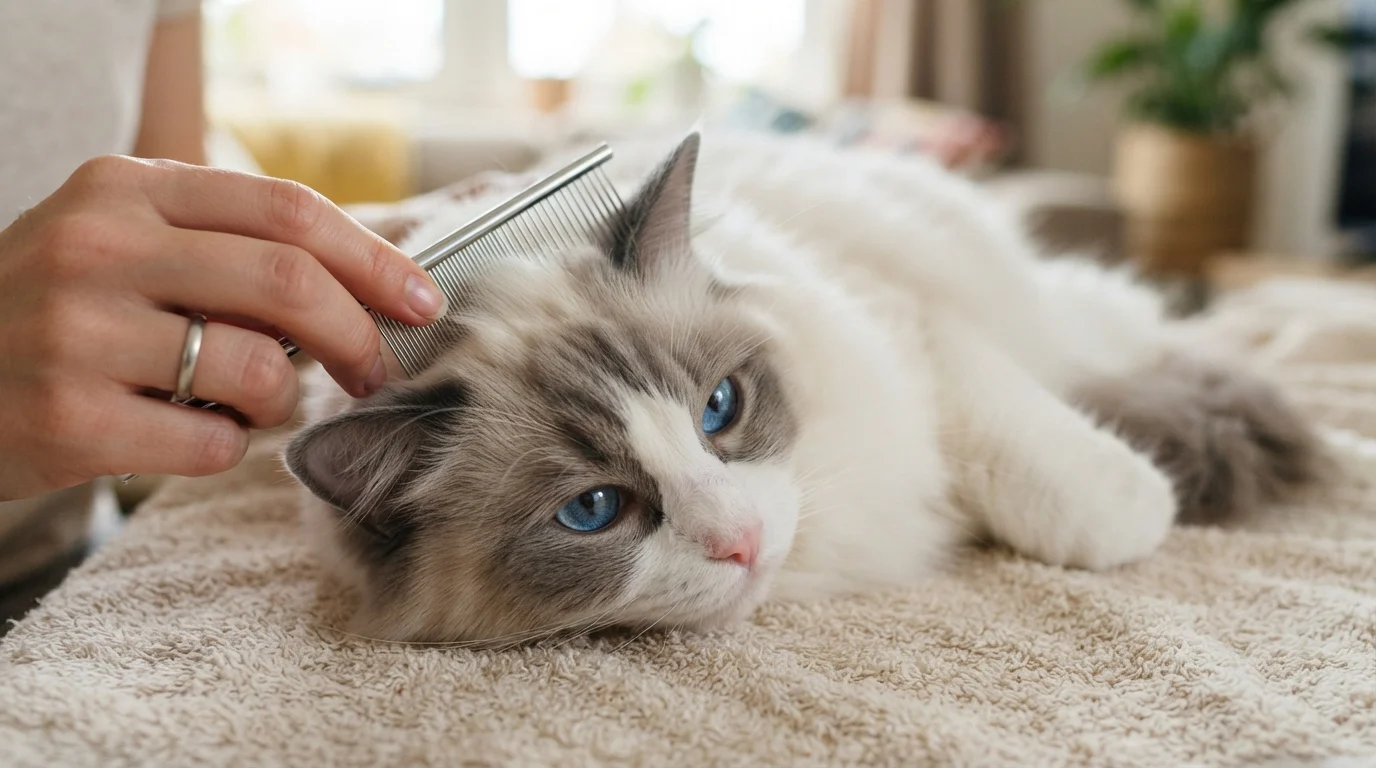
The Adult Coat: Steady but Seasonal
Once a Ragdoll has its full coat, the fur is usually at its most impressive, especially around the neck ruff, the tail plume, and the britches. Shedding at this stage tends to be steady, with periods when you notice more hair on the couch or on your clothes.
Southern California’s mild climate means the seasons are subtler than in colder regions, and many indoor cats live in a fairly consistent temperature all year. Even so, some owners notice a heavier release of hair as the weather warms and the days lengthen, and again at other times of year. If your home gets hot during summer, our guide to keeping an indoor Ragdoll comfortable during heat waves covers how to help your cat stay cool, and a clean, well-brushed coat is part of that picture.
Neither pattern is a rule. Some adult Ragdolls shed lightly all year; others have noticeable bursts. Watching your own cat over a few months will tell you more than any general schedule.
Senior Cats: Coat and Grooming Changes
As Ragdolls get older, they may groom themselves less thoroughly, particularly if arthritis, dental discomfort, or general stiffness makes twisting and reaching harder. You may see more tangles along the back, hips, or tail base, or a coat that looks duller than before.
Gentle, regular brushing becomes even more helpful, and shorter, calmer sessions are often better. A sudden change in coat quality, new bald patches, or a cat who stops grooming altogether deserves a veterinary check rather than a guess, since coat changes can sometimes signal an underlying issue.
A Practical Brushing Routine for Ragdoll Shedding and Matting
Ragdoll coats don’t need an elaborate process. Consistency matters more than fancy tools.
Choose a few simple tools
- A wide-toothed or combination steel comb for checking the coat all the way down to the skin
- A soft slicker brush for removing loose hair, used gently
- A gentle detangling tool for small knots, if your cat tolerates it
Brush in layers
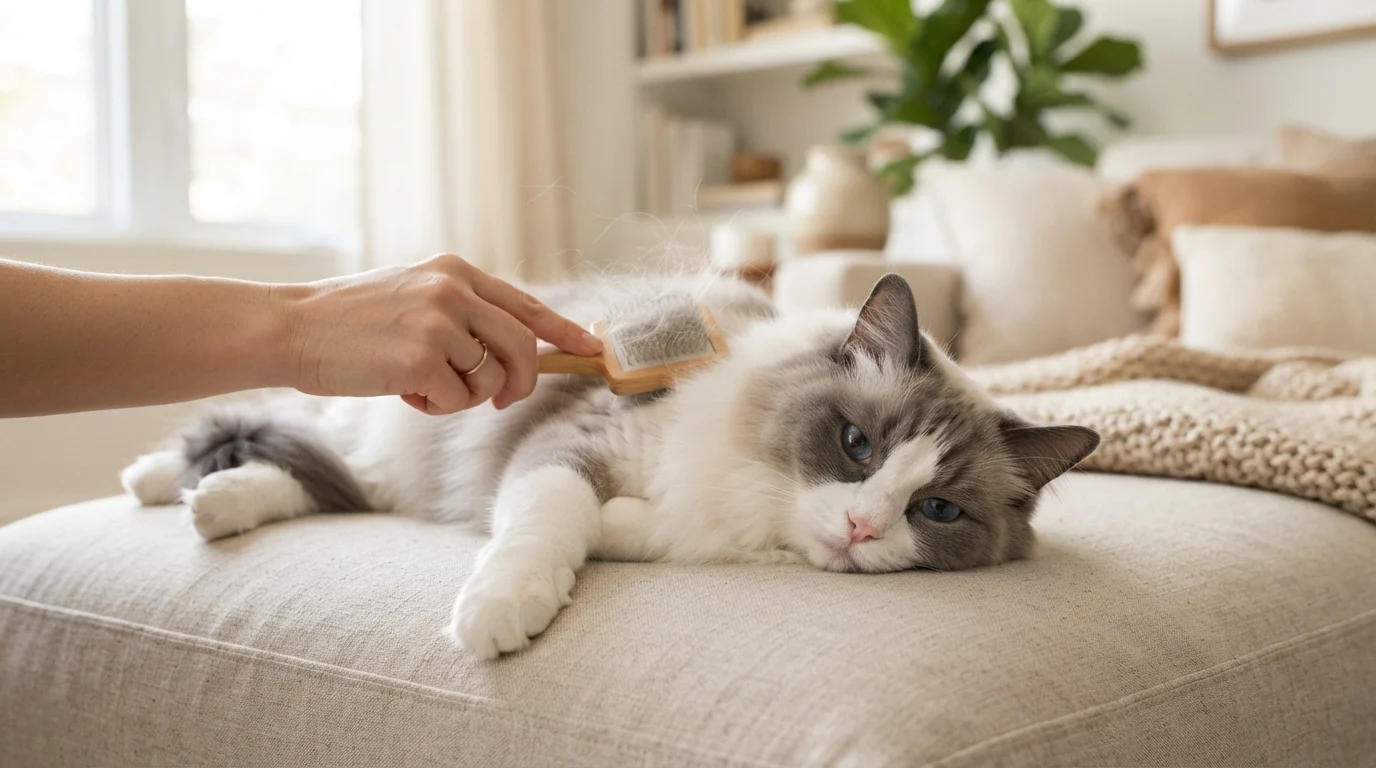
Rather than skimming the top of the coat, part the fur and work in sections. Comb from the skin outward, and finish by smoothing the top layer. A brush that only glides over the surface can leave tangles hiding underneath.
Focus on the trouble spots
Mats typically form where there is friction or moisture, so check these areas first:
- Behind the ears
- Under the front legs and armpits
- The belly and inner thighs
- The britches and the base of the tail
- Around the collar area if your cat wears one
Keep it calm and rewarding
Many Ragdolls are relaxed about handling, but patience still matters. Stop before your cat gets annoyed, use treats or a favorite toy afterward, and return to difficult areas in a later session. Our 10 Ragdoll grooming tips go into more detail on technique and tools.
What to Do If You Find a Mat
Small, loose tangles can often be teased apart gently with your fingers and a comb, starting at the outer edge and working inward. Holding the fur near the skin helps prevent pulling.
Be cautious with scissors. A cat’s skin is thin and can fold into a mat, which makes accidental cuts a genuine risk. If a mat is tight against the skin, large, painful to touch, or near sensitive areas like the belly and armpits, it is safer to ask a professional groomer or your veterinarian to remove it. Skin that looks red, irritated, or sore beneath a mat should be examined by a veterinarian.
Habits That Help the Coat Overall
- Balanced nutrition: A complete, appropriate diet supports healthy skin and fur. Your veterinarian can advise on what fits your cat.
- Parasite prevention and routine checkups: Itchy skin and excessive hair loss warrant a vet visit instead of home guesswork.
- Clean litter and living space: Soiled fur around the britches can mat quickly, so keep an eye on that area.
- Weight management: Cats who find it hard to reach certain areas may groom less effectively.
- Regular vacuuming and washable throws: These simply make living with a shedding cat easier.
A small caution about hairballs: occasional hairballs can happen in cats who groom themselves, but frequent vomiting, gagging without producing anything, or loss of appetite should be checked by a veterinarian.
Is Ragdoll Shedding Manageable for Your Household?
For most families, it is. A few brief brushing sessions each week, a vacuum, and a bit of awareness during coat changes are usually enough. If you live in a smaller space, our article on Ragdoll cats in apartments offers practical ideas for keeping a home comfortable for both of you.
If you are weighing grooming time as part of the decision, it can also help to ask a breeder about the coat type of the parents and what grooming looks like in practice. Our list of questions to ask a Ragdoll breeder is a good starting point. For a wider look at the breed, see The Ragdoll Cat Breed: Personality, Care, and Complete Guide.
Starting Out With a Ragdoll Kitten
If you are exploring Ragdoll kittens in Southern California, you can browse the Available Kittens section to see kitten profiles and current availability information, or contact SoCal Ragdolls with questions about coat, care, or what to expect. Families in Los Angeles, Orange County, the Inland Empire, and surrounding areas are welcome to reach out.
Shedding and matting are part of life with any long-coated cat. With a soft brush, a good comb, and a little regular attention, a Ragdoll’s coat can stay comfortable and tangle-free from kitten fluff through the senior years.
Frequently asked questions
Do Ragdoll cats shed a lot?
Ragdolls do shed. Their semi-long coat has little dense undercoat, so many owners find it less intense than some other long-haired breeds, but amounts vary by cat, season, and life stage. Regular brushing helps manage loose hair. No Ragdoll is non-shedding or hypoallergenic.
How often should I brush a Ragdoll to prevent matting?
Many Ragdoll owners brush a few times a week, with extra attention during heavier shedding periods. Areas behind the ears, under the legs, and the belly and britches tangle most easily. Your breeder or veterinarian can suggest a routine that suits your individual cat.
Why is my young Ragdoll suddenly getting mats?
Mats often appear when a kitten's soft coat is changing to the longer adult coat, usually during adolescence. The mix of coat textures tangles easily. Gentle, consistent combing during this phase helps. If a mat is tight against the skin, ask a groomer or veterinarian for help rather than cutting it yourself.