SOCAL RAGDOLLS JOURNAL
What to Ask a Ragdoll Breeder Before You Reserve a Kitten
A practical, organized list of questions to ask a Ragdoll breeder about kitten care, socialization, health records, contracts, and policies, so you can compare catteries with confidence.
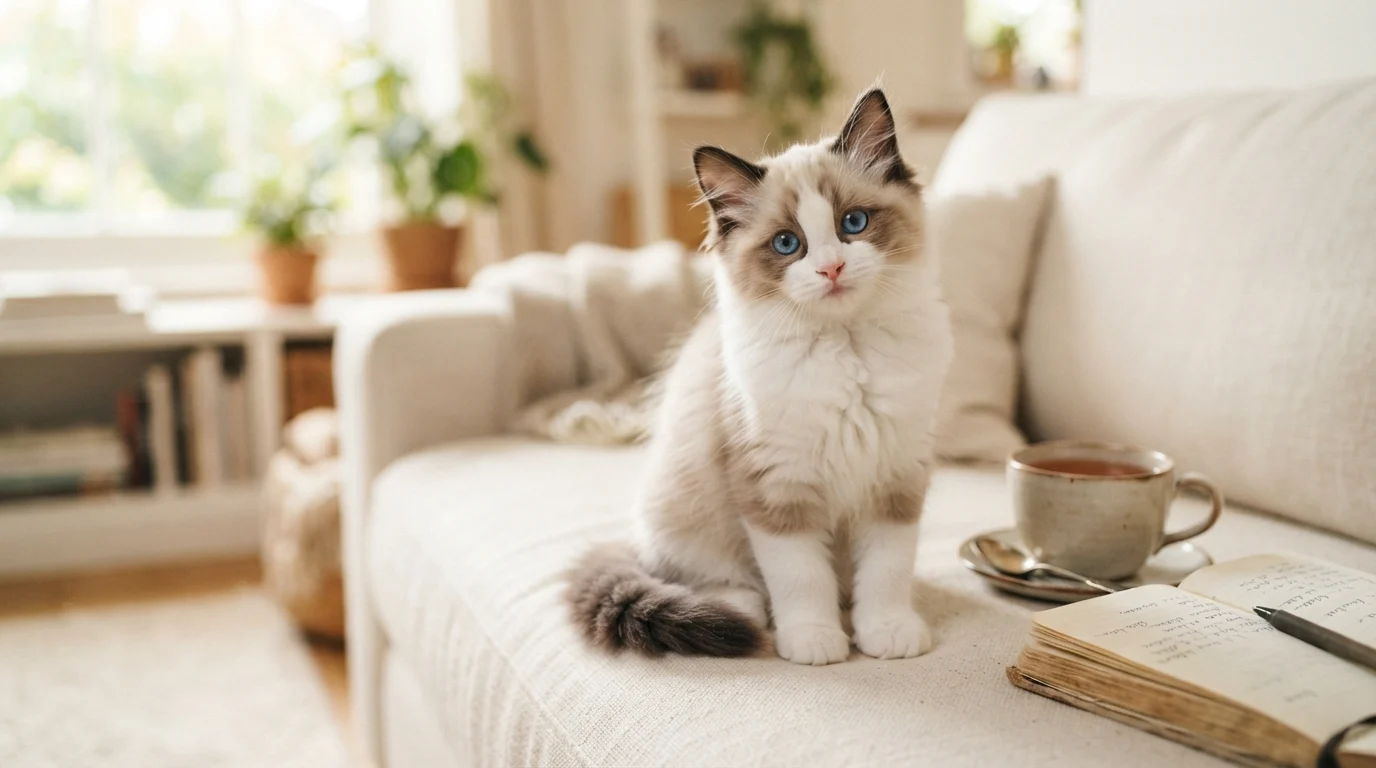
Reserving a kitten is exciting, and it is easy to let the photos do the deciding. Those big blue eyes and that soft, semi-long coat are hard to resist. But the kitten you bring home may share your life for many years, so the conversation you have with the breeder matters as much as the picture on the screen.
This guide gives you a practical set of questions to ask a Ragdoll breeder, organized by topic. Use it whether you are comparing catteries across Southern California or simply trying to understand what a thoughtful, transparent breeder should be able to explain. You do not need to ask every question in one sitting, but you should feel comfortable getting clear answers to the ones that matter most to you.
Start With the Basics: Who Is Raising Your Kitten?
Before you get into details, get a sense of how the cattery operates day to day. A responsible breeder is usually happy to talk about their program in plain language.
- Where are the kittens raised? In the home, or in a separate space?
- How many litters do you raise at a time?
- Can I see the kittens and their mother, either in person or through a live video visit?
- Can I meet or learn about the parent cats?
Seeing the environment, even by video, tells you a lot. Look for clean, calm surroundings and kittens that are active, curious, and comfortable around people. If a breeder cannot or will not show you the kittens in their actual setting, that is worth noticing.
SoCal Ragdolls offers Virtual Kitten Visits, which can be helpful if you live a distance away or want to see a kitten before making a decision. You can also meet the cattery’s breeding cats in the Kings & Queens section of the website.
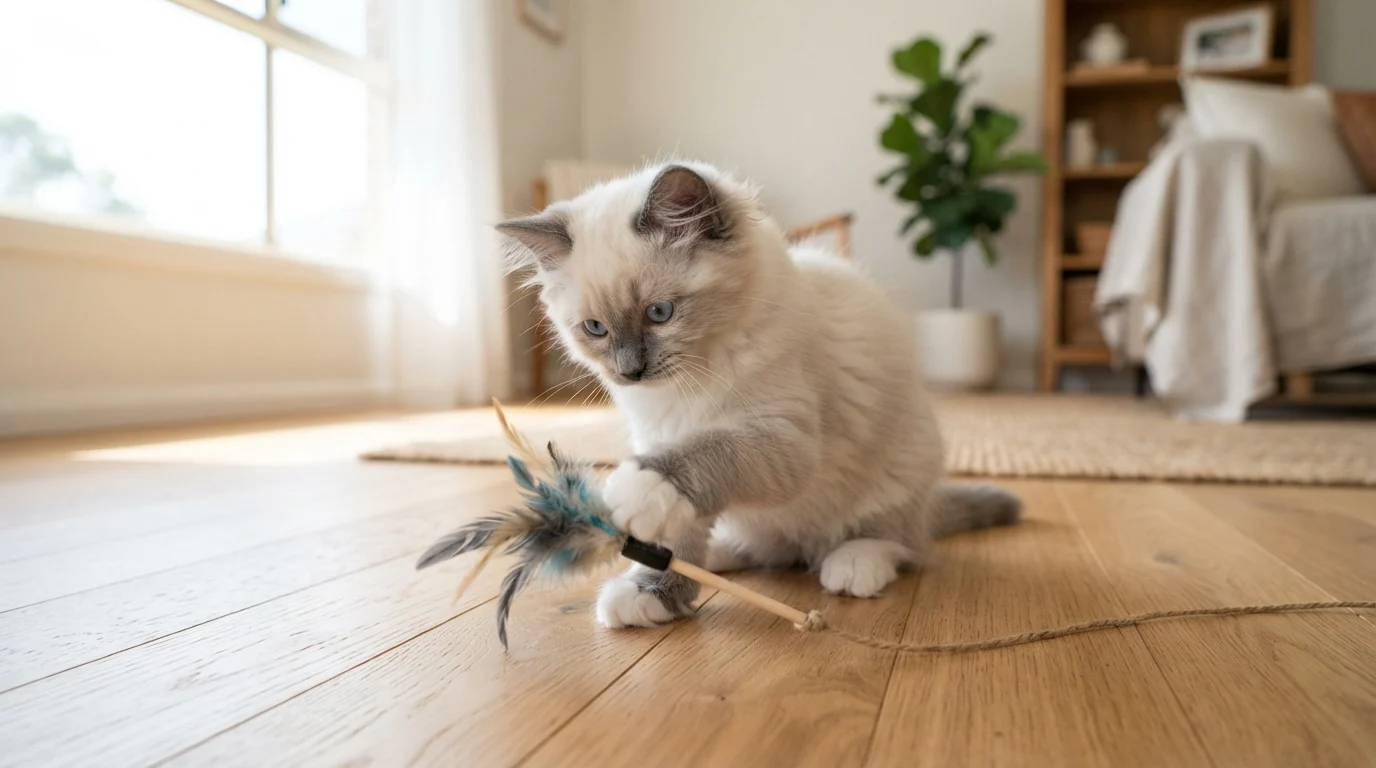
Questions About Health
Health is where you should be most careful, and where you should expect documentation rather than just reassurance. No breeder can honestly promise that a kitten will never develop a health problem, and Ragdolls are not free from hereditary conditions. What you can ask for is transparency about what has been done and what is known.
What to ask
- What veterinary care have the kittens received so far, and can I see the records?
- What vaccinations and deworming have been given, and what remains for me to schedule with my own vet?
- Do you screen your breeding cats for hereditary conditions, and what testing is done? Can I see results?
- What does your health agreement cover, and for how long?
- What should I do if my vet finds a concern after I bring the kitten home?
Pay attention to how specific the answers are. Vague statements like “all of our cats are healthy” are less useful than clear information about what was tested, when, and by whom. Your own veterinarian is the best person to interpret health records, and many new owners schedule a first checkup within the first few days after bringing a kitten home. Ask the breeder whether they recommend or require that.
Ragdolls are commonly discussed in connection with heart health, so it is reasonable to ask how the breeder approaches cardiac screening. Ask what they do and what they cannot guarantee, and bring your questions to a qualified veterinarian if you want an independent perspective.
Questions About Socialization and Temperament
Ragdolls are known for a gentle, people-oriented nature, but temperament varies from cat to cat, and early experiences help shape how a kitten handles the world. If you want to understand the breed more broadly first, our article on Ragdoll temperament and affection is a good starting point.
- How are the kittens handled and socialized from an early age?
- Are they exposed to everyday household sounds, such as vacuums, doorbells, and conversation?
- Have they met children, other pets, or visitors?
- Have the kittens started litter training and eating solid food?
- How would you describe each kitten’s personality: confident, mellow, playful, or shy?
That last question is especially useful. A breeder who spends time with the kittens can often tell you which one might suit a busy family, which might prefer a quieter home, and which might do well with a resident dog or cat. Be honest about your household so they can help you find a good fit. If you already have pets, you may also want to read about introducing a Ragdoll kitten to an older cat or dog.
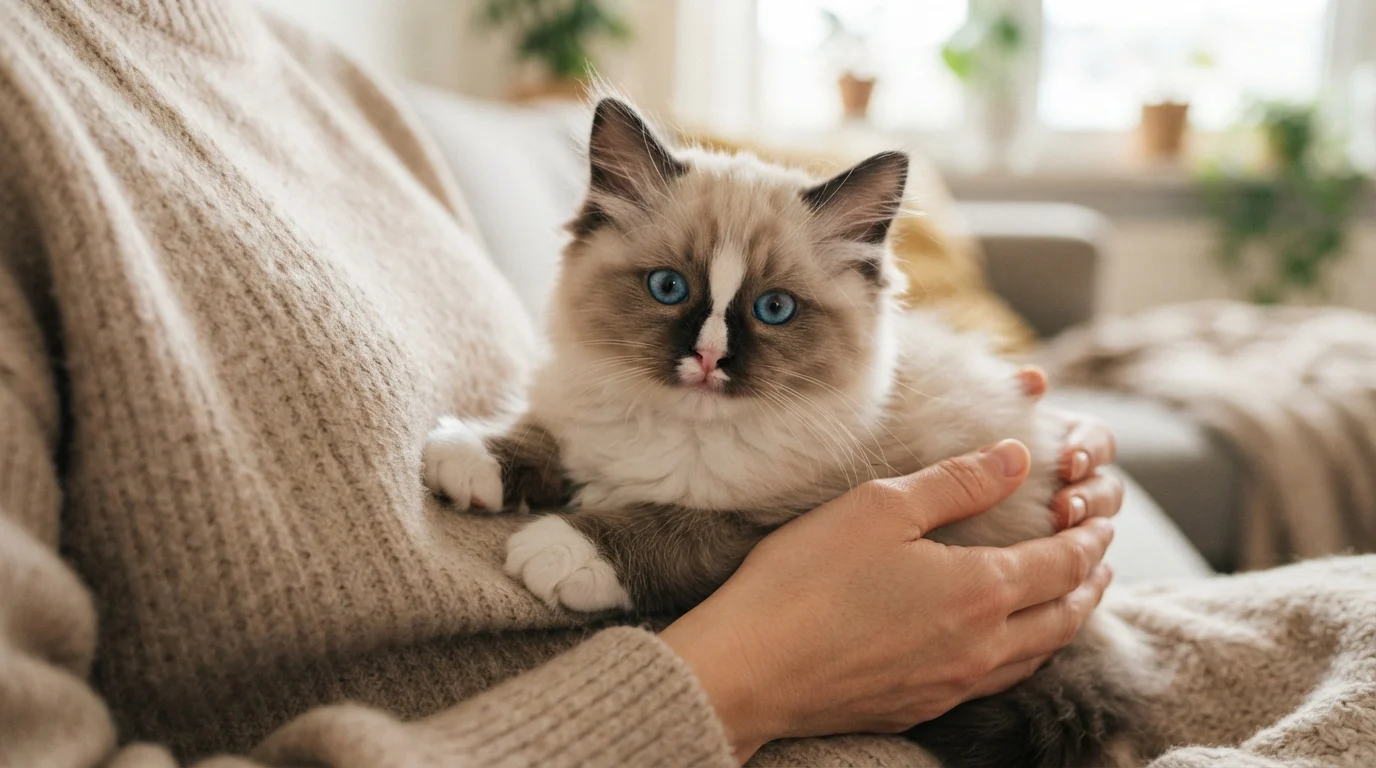
Questions About Age and Timing
How long a kitten stays with its mother and littermates affects its social development and its readiness for a new home. This is one area where you should never be flexible on the kitten’s welfare.
- At what age do your kittens go home?
- Will my kitten have had its first vaccinations and a vet exam before leaving?
- How does pickup or handoff work?
SoCal Ragdolls does not release kittens to their new homes before 12 weeks of age. Whatever cattery you choose, be wary of any breeder who offers to send a very young kitten home early to suit your schedule.
Questions About Appearance, Color, and Pattern
Ragdolls come in several colors and patterns, and coat color can change as kittens mature. If you are drawn to a particular look, such as a blue bicolor or seal bicolor, ask the breeder what to expect as the kitten grows.
- How will this kitten’s coat and markings likely change over time?
- What are the parents’ colors and patterns?
- At what age do eye color and coat color become more settled?
It also helps to understand the differences yourself. Our guides on seal bicolor vs blue bicolor kittens and Ragdoll colors and patterns can help you ask better questions. Keep in mind that personality does not depend on color, and appearance should not outweigh health and temperament when choosing.
Questions About Contracts, Deposits, and Policies
Paperwork can feel dull next to the excitement of a new kitten, but it protects both you and the breeder. Ask to see the written agreement before you pay anything, and read all of it.
- How much is the deposit, is it refundable, and what happens if plans change?
- What is the total price, and what is included?
- How does the waitlist or reservation process work?
- Does the contract require spaying or neutering, and on what timeline?
- Is the kitten sold as a pet or for breeding, and what registration paperwork comes with it?
- What happens if I can no longer keep the cat at any point in its life?
That last question is a good indicator of a breeder’s values. Many responsible breeders ask that a cat be returned to them rather than rehomed elsewhere or surrendered to a shelter, but policies vary, so make sure you understand the specifics.
For SoCal Ragdolls specifically, the best way to get current details on reservations and future-litter waitlists is to look at the website or contact the cattery directly. Rather than assuming how any breeder handles deposits or terms, always ask and get it in writing.
Questions About Support After You Bring Your Kitten Home
The first weeks can raise plenty of questions, from feeding to litter box habits to how long it takes a kitten to relax. A breeder who cares about their kittens will usually want to stay in the picture.
- What food is the kitten eating now, and how should I transition to a new diet if I choose to?
- Do you send the kitten home with any supplies or familiar-smelling items?
- Can I contact you with questions after the kitten comes home?
- Do you provide care or grooming guidance for new owners?
If you want to be ready, our guides on preparing your home, a kitten supply checklist, and how long a kitten takes to settle in cover the practical side.
Questions a Good Breeder May Ask You
Do not be surprised if the breeder has questions of their own. Thoughtful breeders often want to know about your home, your experience with cats, your other pets, your schedule, and whether the cat will live indoors. That is a good sign. It suggests they care where their kittens end up.
Ragdolls are generally best suited to indoor life, and you can read more in why Ragdoll cats thrive indoors. Be ready to talk about your plans for exercise, enrichment, grooming, and veterinary care too.
Signs to Slow Down
Some answers, or lack of them, are worth pausing over:
- Pressure to pay a deposit immediately or claims of artificial urgency
- Unwillingness to share health records or explain testing
- No written contract, or reluctance to let you read it beforehand
- Offers to release very young kittens
- Guarantees that a kitten will be free of all health problems, hypoallergenic, or a certain temperament
- Refusing video visits or any view of the kittens’ living space
No single item proves anything on its own, but together they help you build an honest picture.
Choosing a Breeder You Feel Good About
The best breeder for you is one who answers questions clearly, documents their care, and treats the kitten’s welfare as the first priority. Write your questions down, compare answers between catteries, and trust your instincts when something feels unclear.
If you are looking for a Ragdoll breeder serving Southern California, including the greater Los Angeles area, you are welcome to view the Available Kittens section, learn about upcoming litters and the future-litter waitlist on the website, or reach out to SoCal Ragdolls with your own questions. The site also lists availability details directly, so check there for current information rather than assuming anything.
Frequently asked questions
How many questions should I ask a Ragdoll breeder?
There is no set number. Focus on the topics that matter most: the kitten's health records, socialization, the breeder's contract, release age, and what support continues after you bring your kitten home. A good breeder should welcome thoughtful questions and answer them openly.
Should I ask a Ragdoll breeder for a written contract?
Yes, it is reasonable to ask to read the contract before you pay a deposit or reserve a kitten. Review what it says about health, returns, spay or neuter requirements, and deposits so you understand every term before agreeing.
At what age can a Ragdoll kitten go to a new home?
This varies by breeder, so ask about their policy. SoCal Ragdolls does not release kittens to their new homes before 12 weeks of age. Staying with the mother and littermates that long supports social development and gives time for early veterinary care.