SOCAL RAGDOLLS JOURNAL
Keeping an Indoor Ragdoll Comfortable During Southern California Heat Waves
A practical seasonal guide to helping your indoor Ragdoll stay comfortable when temperatures climb, from cool resting spots and fresh water to coat care and signs that call for a vet.
Anyone who has lived through a September heat wave in Los Angeles, the Inland Empire, or inland Orange County knows how quickly a house can turn stuffy. Your Ragdoll is spending those days in a fur coat, and while this breed is known for being easygoing, an easygoing cat can still be an uncomfortable one. Understanding how Ragdoll cats and Southern California heat interact helps you make small changes that matter.
This guide focuses on indoor Ragdolls and practical comfort measures. It isn’t a substitute for veterinary advice, and there’s no single temperature at which every cat becomes unsafe. Age, health, weight, coat condition, and humidity all play a part, so the best approach is to watch your own cat closely.
Why Heat Can Be Harder Than It Looks
Cats don’t cool themselves the way people do. They have limited sweat glands, mostly in places like the paw pads, and they rely heavily on behavior: seeking shade, stretching out on cool surfaces, resting more, and grooming. That means your home setup does a lot of the work for them.
Ragdolls have a soft, semi-long coat that is often less dense than people expect, but it still adds insulation. Large, heavier-bodied cats, kittens, seniors, and cats with medical conditions may be less tolerant of warm rooms. None of this means a Ragdoll can’t live happily in a warm region. Indoors, with a little planning, many do very well.
Create Cool Resting Spots
Cats choose where to rest based on comfort, so give your Ragdoll options rather than one forced location.
Use the coolest parts of your home
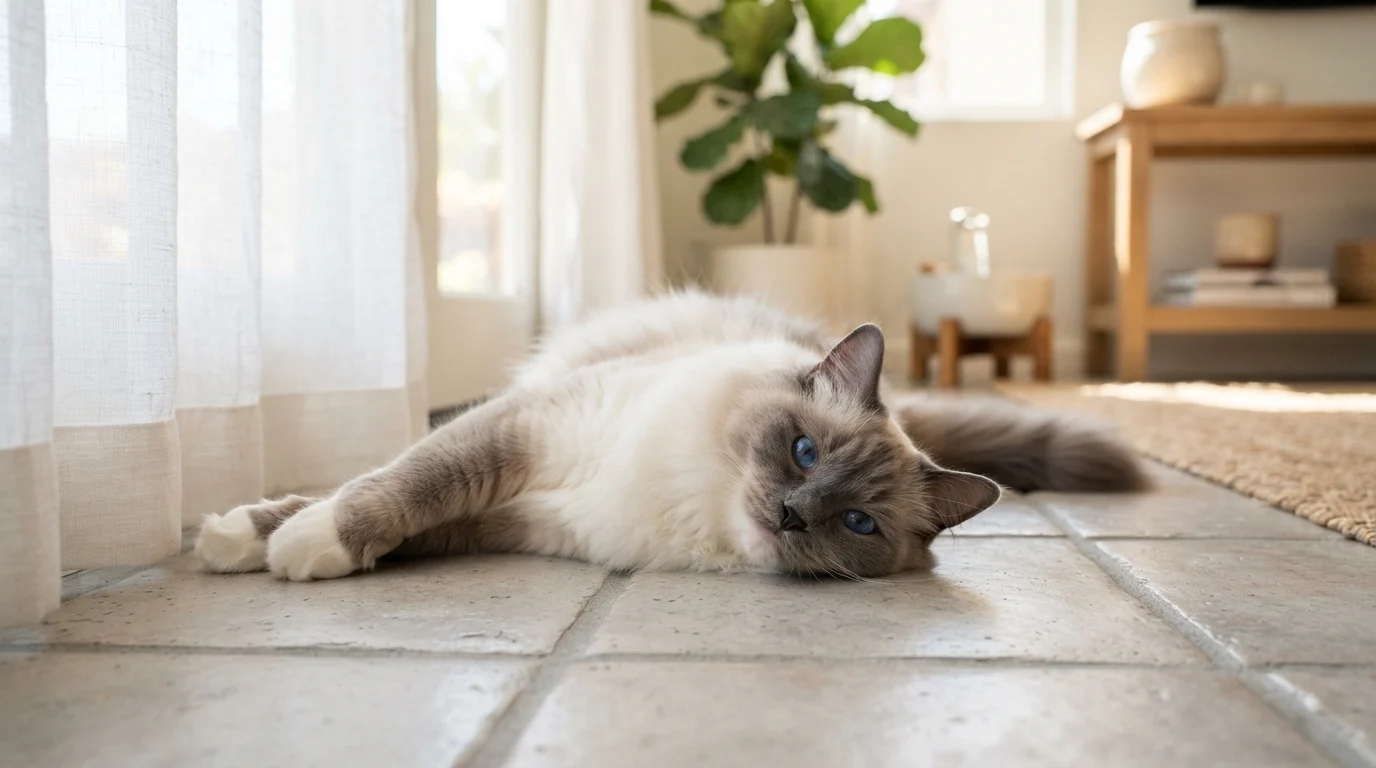
Tile, stone, and hardwood floors usually stay cooler than carpet or upholstered furniture. Many cats will stretch out on a bathroom or kitchen floor on a warm afternoon. Leave doors open so your cat can move freely to find the best spot.
Manage sun and window heat
Sunny windows are a favorite perch, but afternoon sun through glass can heat up quickly. Close blinds or curtains on west- and south-facing rooms during the hottest hours, and make sure a shaded alternative is always available nearby.
Offer cooling surfaces carefully
Some owners offer a ceramic tile, a cooling mat made for pets, or a damp towel in a shaded corner. Let your cat decide whether to use them. Don’t confine a cat to a cooling item, and watch for chewing on any mat, since swallowed material can be dangerous. Skip anything that is torn or that your cat tries to eat.
Keep Fresh Water Easy to Find
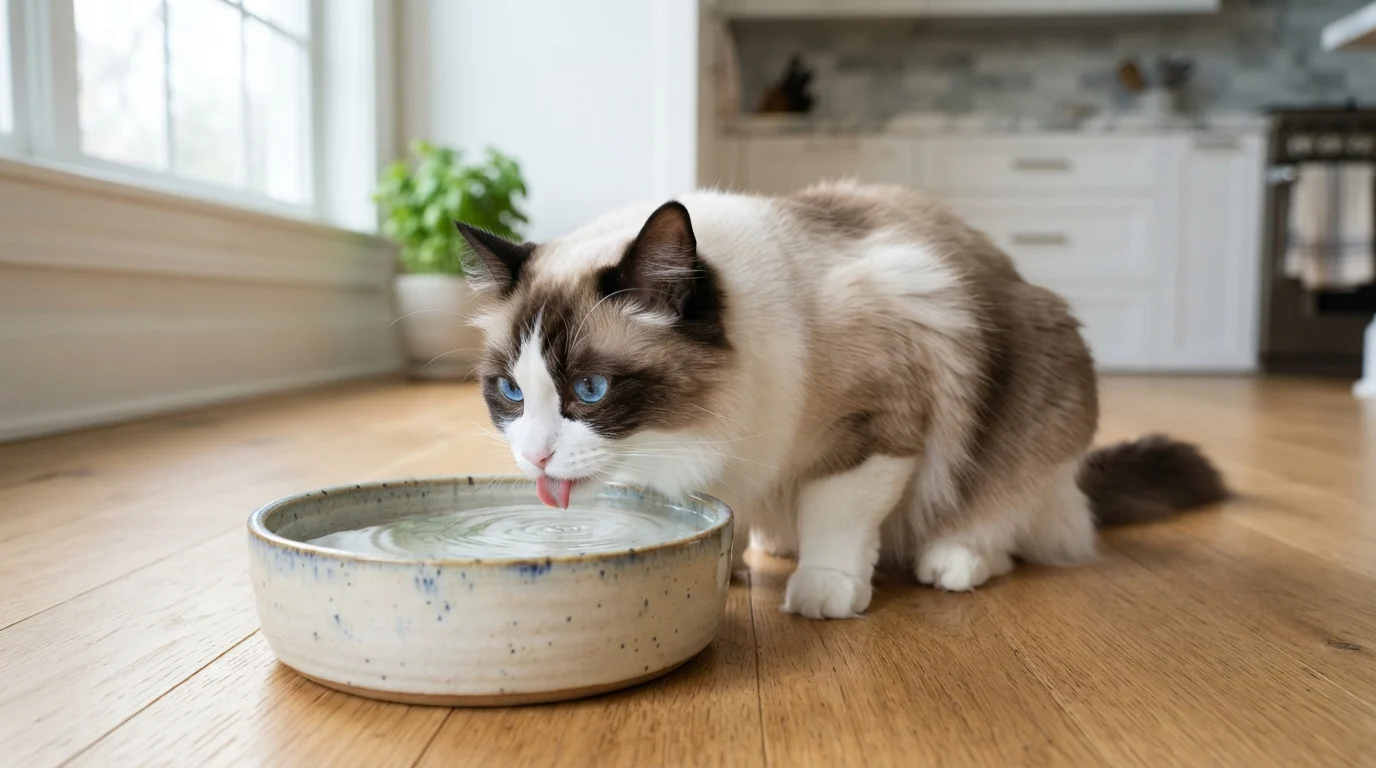
Hydration matters more in warm weather. Place several bowls around the house rather than only one, and refresh them often so the water stays cool and clean. Wide, shallow bowls are comfortable for cats with long whiskers, and many cats enjoy a circulating fountain.
Some owners add a few ice cubes to a bowl on hot days, which is a harmless way to keep water cooler for a while. If your cat eats wet food, that adds moisture to the diet, but ask your veterinarian before making any changes to feeding, especially if your cat has a health condition. Also let your vet know if you notice a sudden change in drinking habits, since both increased and decreased thirst can be worth a conversation.
Airflow Without Risk
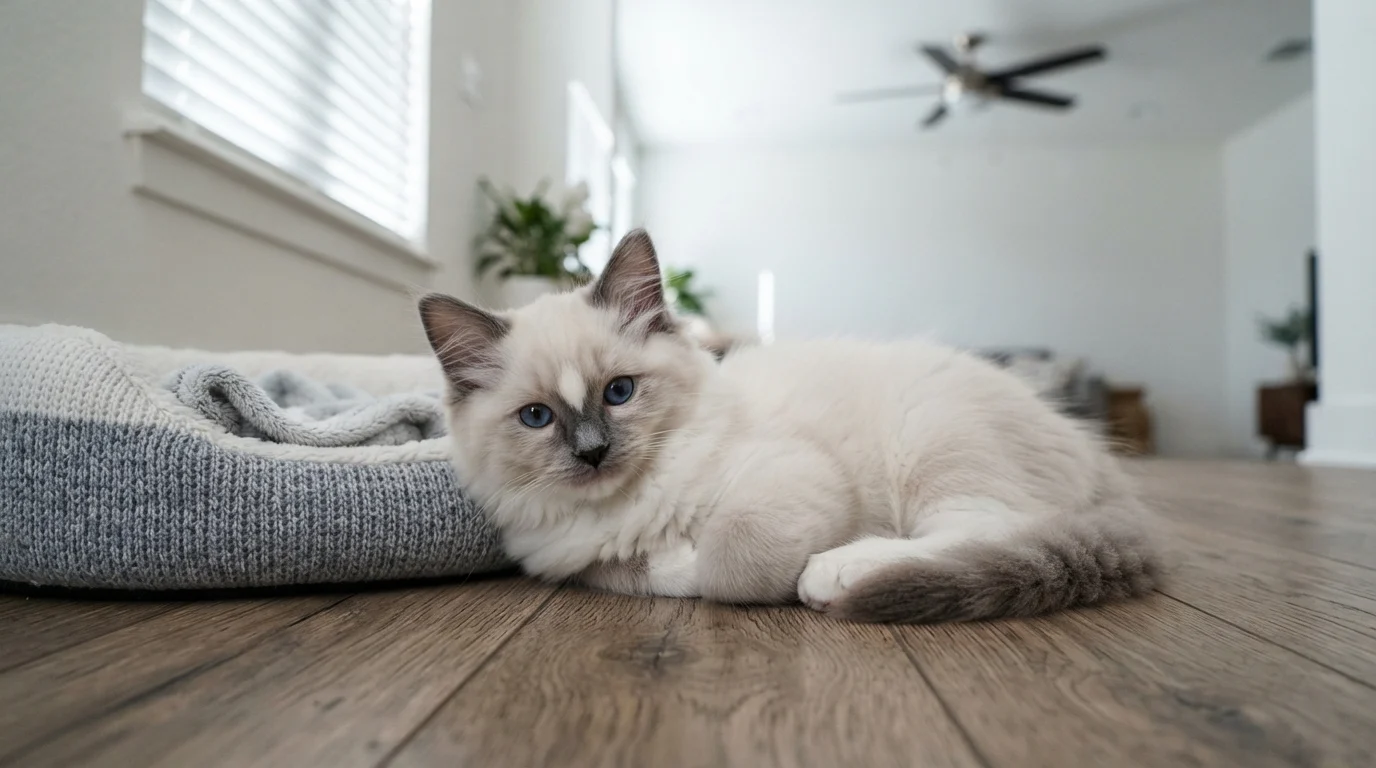
Moving air makes a room feel more comfortable, and ceiling fans or a floor fan on a safe setting can help. A few cautions apply:
- Use fans with guarded blades and keep cords out of reach.
- Let your cat move out of the airflow if they want to; avoid pointing a fan directly at a confined cat.
- Crack interior doors to encourage cross-ventilation.
- If you use air conditioning, don’t assume your cat will be fine if it fails or is off while you’re away. Consider how the house will feel in the afternoon.
Windows and screens
Opening windows can cool a home in the evening, but only with secure, well-fitted screens. Cats can push through loose screens, and falls from upper floors are a real risk. Ragdolls are known for being gentle and often less adventurous, but any cat can be startled by a bird or insect. Our article on why Ragdoll cats thrive indoors covers how to keep that indoor life safe and enriching.
Never leave a cat in a parked car
Even a short errand can be dangerous when a vehicle heats up, and cracking a window doesn’t make it safe. On hot days, leave your cat at home unless the trip is necessary, such as a vet visit, and keep the air conditioning on during transport.
Coat Comfort and Grooming
A well-maintained coat is more comfortable than a tangled one. Mats trap heat and can pull on the skin, so regular brushing is one of the most useful summer habits. Removing loose undercoat can help your cat feel lighter, and many Ragdolls tolerate brushing well. A comb that reaches the skin, used gently around the armpits, belly, and behind the ears, helps catch tangles early. For a full routine, see our 10 Ragdoll grooming tips.
Shaving is usually not the best shortcut. A coat can help protect skin from sun and temperature swings, and shaved cats may still overheat or get irritated skin. If your cat has serious matting, ask a veterinarian or experienced groomer what is safest instead of trimming at home with scissors.
Don’t rely on baths to cool a cat down; many cats find them stressful, and stress itself can raise body temperature.
Adjust Play and Routine
On warm days, keep activity gentle. Move play sessions to early morning or late evening when the house is cooler, and keep them short. Ragdolls often enjoy interactive toys, but they’ll tell you when they’ve had enough. Let them rest without pressure.
Kittens deserve a little extra watchfulness. They are small, energetic, and still learning their limits. If you’re preparing a home for a new kitten, our room-by-room preparation guide is a helpful starting point.
Preparing for Power Outages and Hot Days Away
Heat waves can strain the electrical grid. It’s wise to think ahead:
- Identify the coolest room in your home and keep it accessible.
- Have extra water ready in stable bowls.
- Know where your nearest emergency veterinary clinic is and how to reach it after hours.
- If you travel, arrange a sitter who understands what hot-weather problems look like.
Signs of Overheating That Warrant a Call to Your Vet
Cats often hide discomfort, so it helps to know what can signal trouble. Possible warning signs include:
- Open-mouth breathing or panting, which is not normal in most resting cats
- Drooling or wet fur around the mouth
- Unusual restlessness, or the opposite: weakness and lethargy
- Skin or ears that feel very hot
- Vomiting, wobbliness, or unsteady walking
- Collapse or unresponsiveness
If you see any of these, move your cat to a cooler, shaded space and contact a veterinarian or emergency clinic right away. Heat-related illness can become serious quickly, so it’s better to call early than to wait and see. Follow the veterinary team’s directions for first aid on the way rather than improvising cooling methods that could do harm.
Remember, cats with respiratory or heart conditions, older cats, and very young kittens may need extra care. Your veterinarian knows your cat’s health history and is the best source of advice for your particular situation.
A Calm, Cool Home Goes a Long Way
For most indoor Ragdolls, summer comfort comes down to simple habits: shade, cool floors, plenty of water, gentle airflow, a brushed coat, and attention to changes in behavior. You don’t need elaborate gear, just a home where your cat can make good choices on their own.
If you’re researching the breed and wondering how a Ragdoll fits into life in this region, our guide to the Ragdoll breed’s personality and care is a good next read. When you’re ready to learn more about Ragdoll kittens from SoCal Ragdolls, you can browse the Available Kittens section to see current profiles, or contact us with questions about bringing a Ragdoll home.
Frequently asked questions
Can Ragdoll cats handle Southern California heat?
Indoor Ragdolls can generally be comfortable in Southern California with shade, fresh water, airflow, and cool resting spots. Their semi-long coats and individual differences mean some cats feel the heat more than others. If your cat seems distressed or unwell in hot weather, contact your veterinarian.
What are signs a cat may be overheating?
Possible signs include open-mouth panting, drooling, unusual restlessness or lethargy, very warm skin, vomiting, weakness, or collapse. Cats rarely pant, so it deserves attention. Move the cat to a cooler space and call a veterinarian or emergency clinic promptly rather than waiting.
Should I shave my Ragdoll in summer?
Generally, shaving is not recommended as a cooling shortcut, because a cat's coat can help protect the skin. Regular brushing to remove loose hair is a gentler approach. If matting is severe, ask a groomer or veterinarian how to handle it safely.