SOCAL RAGDOLLS JOURNAL
How Much Daily Playtime Does a Ragdoll Cat Need?
Ragdolls are known for being easygoing, but they still need regular play. Learn how playtime needs differ for kittens, adults, and seniors, and how to build a simple routine.
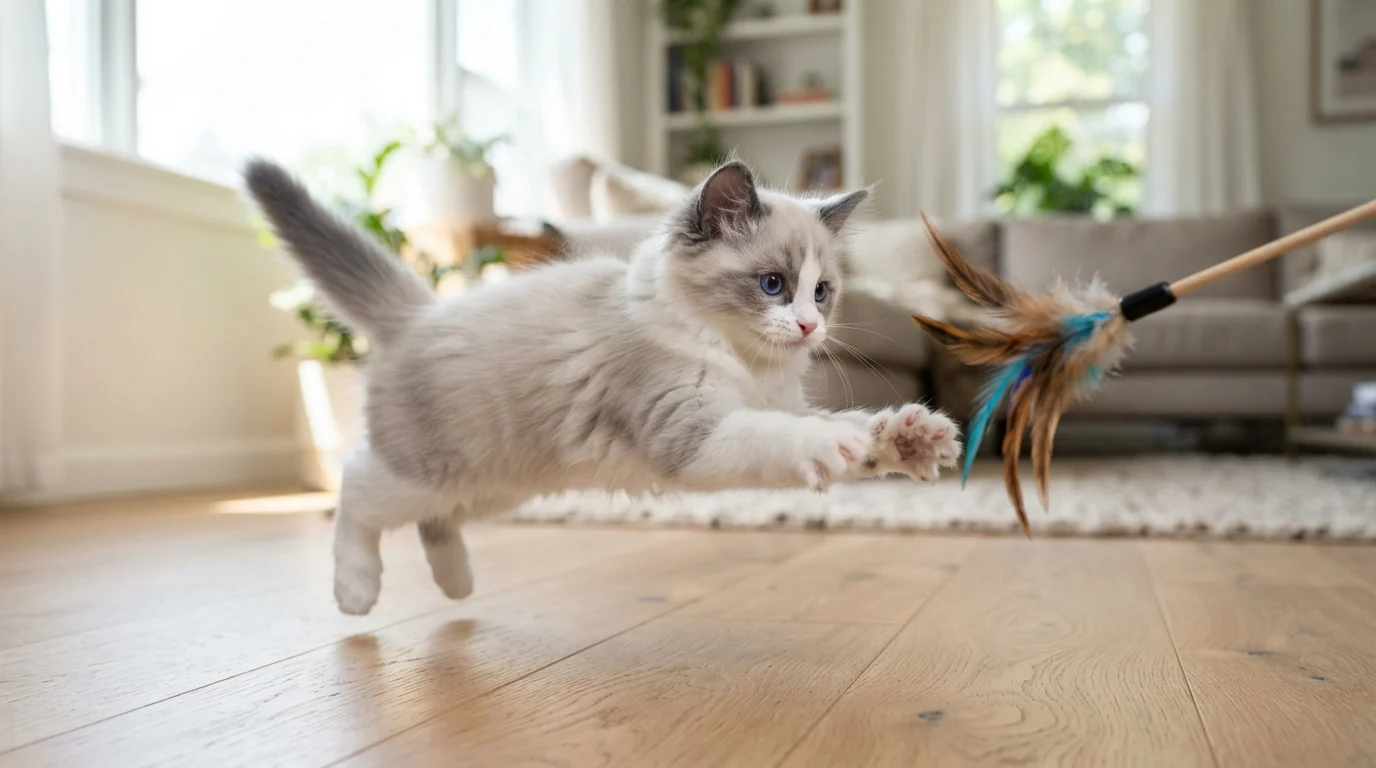
Ragdolls have a reputation for being calm, cuddly, and happy to drape themselves across your lap. That reputation is deserved for many of them, but it can also lead to a quiet mistake: assuming a relaxed cat doesn’t need much activity. Ragdoll cat playtime matters just as much as it does for any other indoor cat, and it often looks a little different from the zoomies you might expect from a more high-strung breed.
There’s no magic number of minutes that suits every cat. What works for a ten-week-old kitten is not what suits a settled adult or a twelve-year-old who prefers the sunniest cushion. Below, we’ll look at how play needs change with age, what a realistic daily routine looks like, and how to tell whether your cat is getting enough.
Why Play Matters for a Laid-Back Breed
Ragdolls are generally known for a gentle, people-oriented temperament, and many are content to follow you from room to room. Because they are so agreeable, it’s easy for a day to pass with plenty of lounging and little movement. Individual cats vary, and not every Ragdoll fits the stereotype, but most benefit from planned play.
Regular play does several useful things:
- Encourages movement. Chasing, stretching, and jumping keep an indoor cat physically active.
- Provides mental stimulation. Stalking and problem-solving satisfy natural hunting instincts.
- Strengthens your bond. Play is shared time, and Ragdolls tend to enjoy being with their people.
- Gives energy a healthy outlet. A cat with an appropriate play routine is less likely to invent its own entertainment with your curtains or ankles.
Because Ragdolls are large, slow-maturing cats, play should also be sensible for their bodies. Gentle, controlled movement is usually better than encouraging repeated high-impact leaps, especially for heavier or older cats.
A General Guideline for Adult Ragdolls
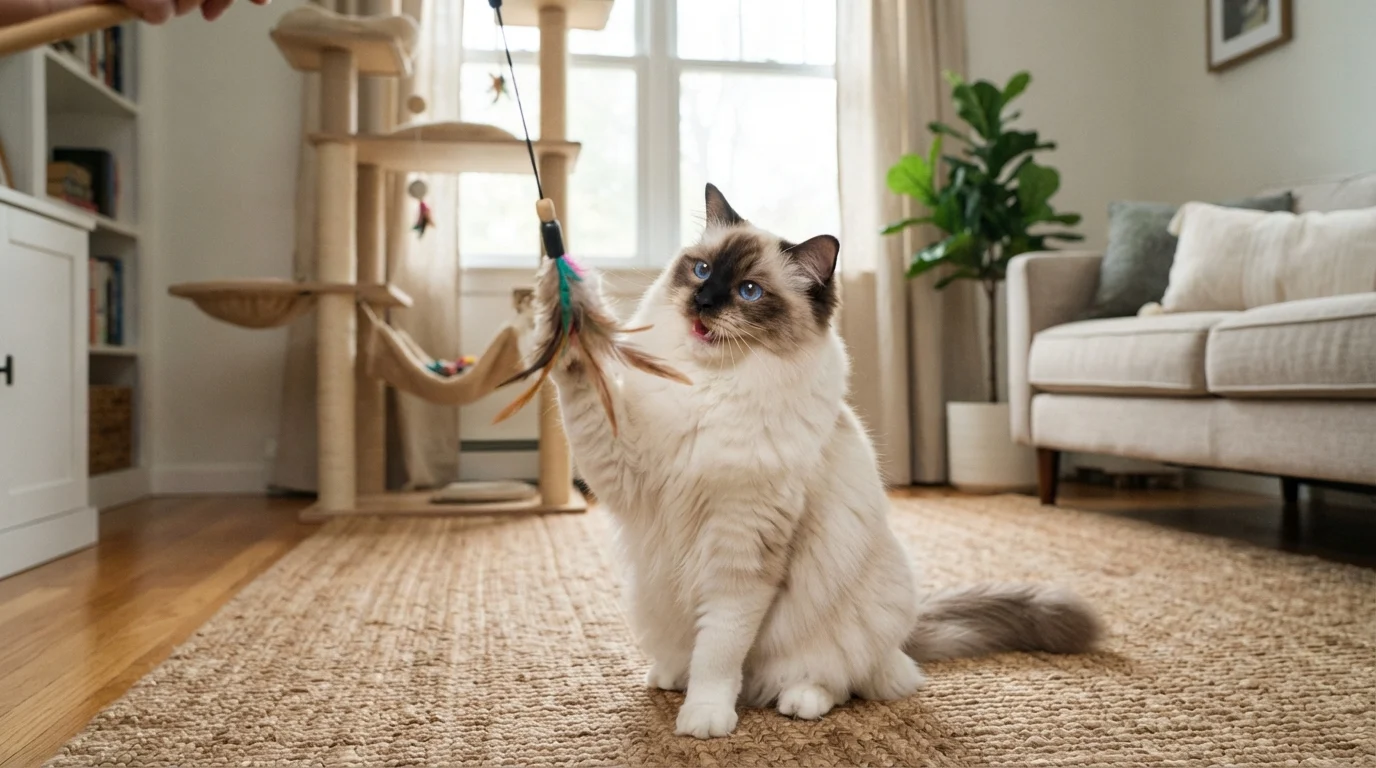
For a healthy adult, a practical starting point is two or three short sessions a day, roughly 5 to 15 minutes each. This is a general rule of thumb, not a veterinary requirement, and your cat’s own energy level is the better guide. Some adults happily play for a full ten minutes twice a day; others do best with several brief bursts.
Short sessions often work better than one long one. Cats are natural ambush hunters, and their play tends to come in intense little flurries followed by rest. If your cat walks away, starts panting, or loses interest, that’s a sign to end the session, not to push on.
Timing helps, too. Many cats are more interested in play in the early morning and evening, so a session before breakfast or dinner fits their rhythm and gives you a natural routine.
Playtime for Ragdoll Kittens
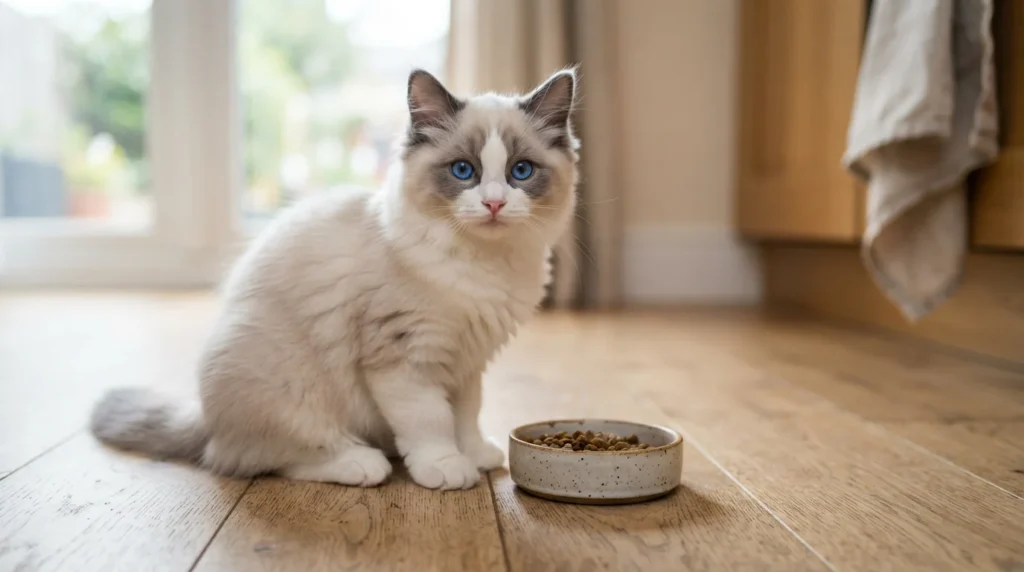
Kittens run on a different engine. A Ragdoll kitten typically alternates between bursts of enthusiastic play and long, deep naps, and they usually want more frequent sessions than adults. Several short play periods throughout the day, with plenty of rest in between, suit most kittens well. If you’re curious how behavior shifts as they grow, our guide to Ragdoll kitten growth stages walks through the milestones from weeks to years.
Kitten play is also how they learn. Pouncing, grabbing, and kicking help them develop coordination and bite control. A few habits make this stage go smoothly:
- Use toys, not hands or feet, as play targets. Kittens who learn to bite fingers become cats who bite fingers.
- Offer a variety of textures and sizes so play stays interesting.
- Keep sessions calm and finish with something rewarding, like a small treat or meal.
- Let your kitten rest when tired. Overtired kittens can get cranky and overstimulated.
A new kitten also needs time to adjust before routines settle. If your kitten is shy at first, how long it takes a Ragdoll kitten to settle into a new home is a helpful read. Kittens at SoCal Ragdolls are not released to their new homes before 12 weeks of age, so by the time they join you, they’re typically already curious and ready for gentle play.
Playtime for Senior Ragdolls
As cats age, many slow down. That’s normal, but it isn’t a reason to stop playing. Senior cats often enjoy shorter, gentler sessions: a slowly dragged wand toy, a soft toy to bat at, or a treat hidden for them to find. Keep movements low to the ground and avoid encouraging big jumps.
Pay attention to changes. If your cat suddenly stops playing, seems stiff, hesitates to jump, breathes heavily after mild activity, or shows a noticeable change in appetite or behavior, those are worth mentioning to your veterinarian. Reduced play can sometimes be a sign of discomfort or illness, and only a vet can tell what is behind it.
Building a Simple Daily Routine
You don’t need an elaborate schedule. A realistic routine for many households might look like this:
- Morning: A quick wand-toy session before breakfast.
- Daytime: A puzzle feeder, a window perch, or a few toys left out for independent play.
- Evening: A longer, calmer session when you’re home, ending with a meal or small snack.
- Before bed: A gentle wind-down to help an evening-active cat settle.
Consistency matters more than perfection. A cat that knows play happens at predictable times often becomes calmer between sessions.
Toys and Activities That Suit Ragdolls
Wand toys
A wand toy is the most useful play tool for most cats. It lets you mimic prey, keeps your hands out of the action, and gives you control over pace. Move the toy away from your cat rather than toward them, let it disappear behind furniture, and let your cat catch it now and then so play stays satisfying. Put wand toys away after each session, since strings and feathers can be hazardous if chewed or swallowed.
Puzzle feeders and foraging
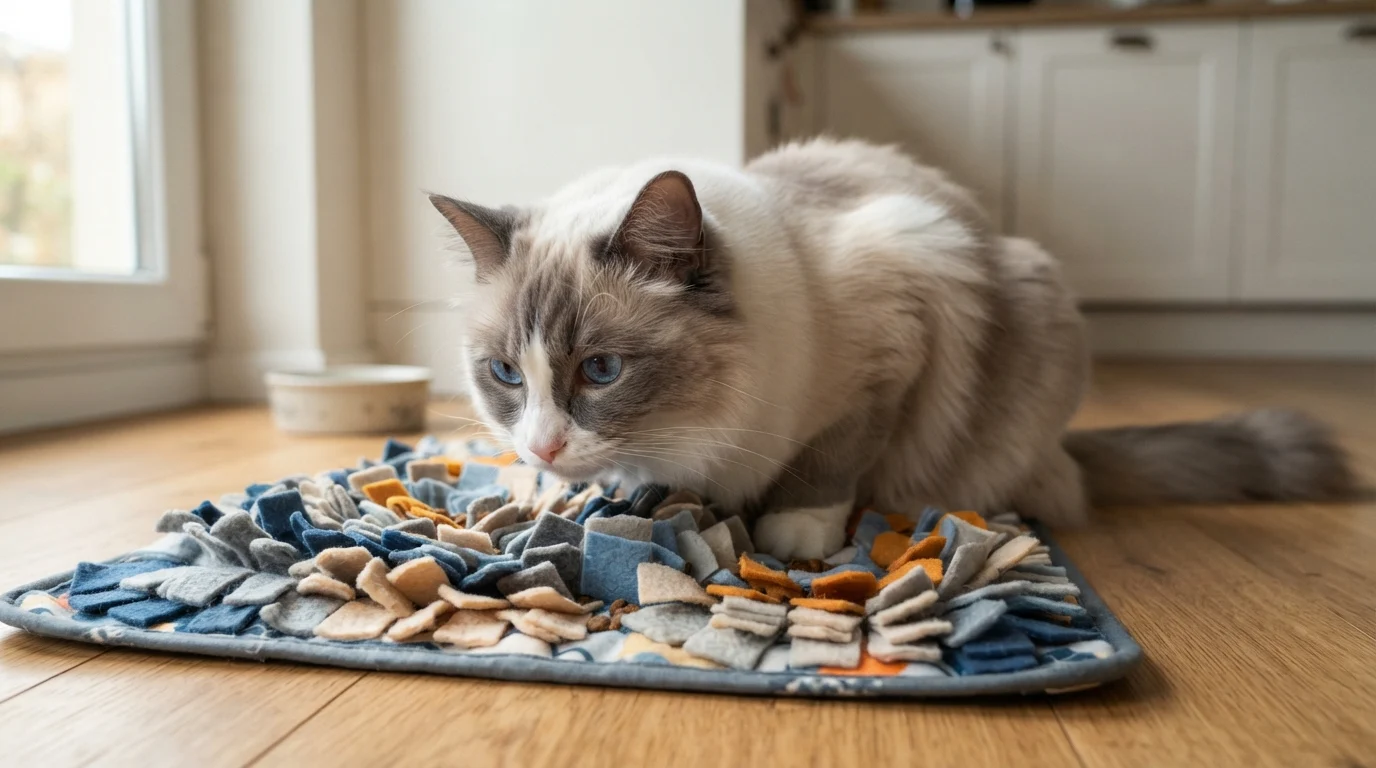
Puzzle feeders turn mealtime into a small challenge. They work well for cats who aren’t highly active, because they add mental and physical effort without requiring much space. Start with an easy setup so your cat isn’t frustrated, and increase difficulty gradually. If you’re adjusting food or portions, talk with your veterinarian, and see our Ragdoll kitten feeding basics for gentle transition ideas.
Vertical space and perches
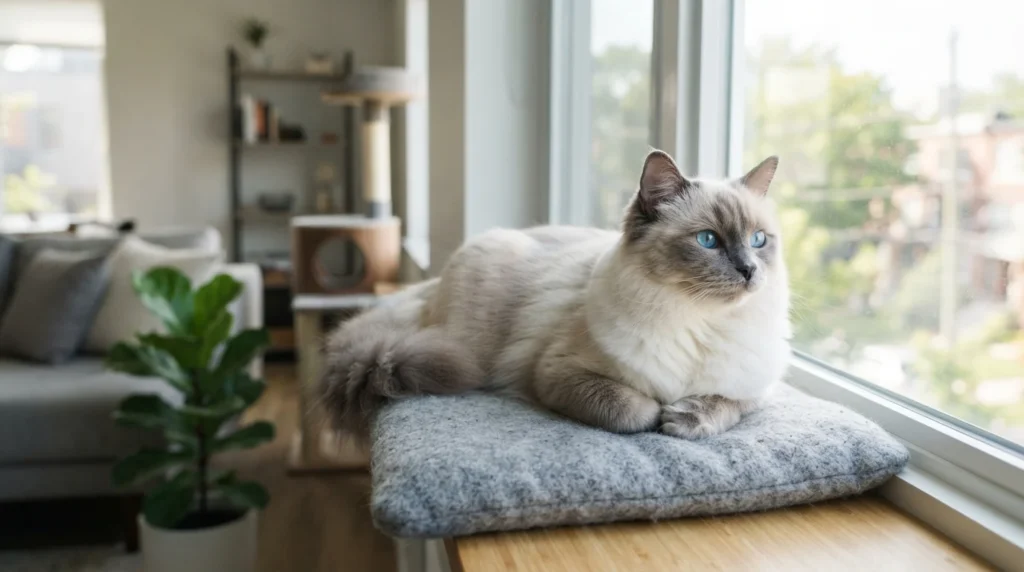
A sturdy cat tree, a window perch, and safe climbing spots give cats places to watch, stretch, and explore. Choose stable furniture sized for a large cat. Ragdolls are substantial, so flimsy towers can wobble.
Soft toys and kick toys
Many Ragdolls enjoy hugging and kicking a soft toy. Check these regularly for loose parts, and replace any that start to fall apart.
Small Homes and Warm Weather
You don’t need a large house to keep a Ragdoll active. Apartment living can work well with vertical space, rotating toys, and scheduled play; our article on Ragdoll cats in apartments covers this in more detail.
In Southern California, warm afternoons can make midday play uncomfortable. Early morning and evening sessions are often easier, and indoor play keeps your cat safe from heat. Our guide to keeping an indoor Ragdoll comfortable during heat waves offers more ideas, and why Ragdolls thrive indoors explains how to enrich an indoor life.
Signs Your Ragdoll Is Getting the Right Amount of Play
Instead of watching the clock, watch your cat. A cat with a good balance of activity and rest often:
- Shows interest in toys and responds to invitations to play
- Settles into relaxed naps after sessions
- Maintains a steady, healthy-looking body condition as judged by your vet
- Doesn’t seem bored, destructive, or restless
Signs that your cat might need more stimulation include nighttime yowling, attention-seeking mischief, or constant pestering at odd hours. On the other hand, signs of too much, such as heavy panting, hiding, or avoiding play, mean it’s time to slow down.
Weight, Health, and Your Veterinarian
Ragdolls are large cats, and weight is worth keeping an eye on. Play can support a healthy body condition, but it’s only one piece alongside diet and individual health. Your veterinarian is the best person to say what weight and activity level are right for your cat, especially if your Ragdoll is a kitten, a senior, or has any health concerns. Breathing difficulty, sudden lethargy, limping, or collapse during or after play calls for prompt veterinary attention.
Making Play Part of Life With Your Ragdoll
Ragdoll cat playtime doesn’t have to be complicated. A few short, well-timed sessions, a couple of good toys, and attention to your cat’s signals will cover the basics for most households. Kittens want more frequent bursts, adults do well with steady routines, and seniors appreciate gentle, low-impact fun.
If you’re thinking about welcoming a Ragdoll into your family, you can browse the Available Kittens page to see current listings, or read our room-by-room guide to preparing your home. Questions about Ragdoll life? You’re welcome to contact SoCal Ragdolls.
Frequently asked questions
How many minutes a day should I play with my Ragdoll?
There is no single official number. Many owners aim for a few short sessions daily, roughly 5 to 15 minutes each, adjusting for age, energy, and health. Kittens often want more frequent play, while seniors may prefer gentler, shorter sessions. Your veterinarian can advise for your individual cat.
Are Ragdolls lazy cats that don't need play?
Ragdolls are often described as relaxed and easygoing, but that doesn't mean they don't need activity. Regular play supports healthy movement, mental stimulation, and a good bond with you. Individual cats vary, so watch your cat's interest and energy rather than relying on the breed label.
What are the best toys for Ragdoll cat playtime?
Wand toys, soft kick toys, small lightweight balls, and puzzle feeders are popular choices. Wand toys let you control the movement and keep play safe. Always supervise, put string-like toys away after play, and replace any toy that is breaking apart.