SOCAL RAGDOLLS JOURNAL
How to Get a Kitten Used to a Carrier Before the First Vet Visit
A practical, step-by-step plan for helping a Ragdoll kitten feel safe in a carrier, from choosing the right one to calm practice car rides before the first vet appointment.
The first trip to the veterinarian is one of the earliest tests of trust between you and a new kitten. If the only time the carrier appears is when it’s time to leave the house, a kitten can quickly decide it means trouble. If the carrier has been part of the furniture for a couple of weeks, the same trip can feel far less strange.
Learning how to get a kitten used to a carrier is mostly a matter of patience and good timing. Ragdoll kittens are often described as easygoing and people-oriented, but that’s a general tendency, not a promise. Every kitten reacts differently to new sounds, motion, and confinement, so a gradual plan helps whatever the personality.
Why Carrier Comfort Matters Early
Kittens are learning constantly, and their early experiences with handling and travel can shape how they respond later. A calm carrier routine makes vet visits easier on your kitten and on you. It also matters in less routine moments, such as a heat-related evacuation, a wildfire alert, or an unexpected trip to an urgent care clinic. In Southern California, where many households plan for earthquakes and wildfire season, a cat who already accepts a carrier is a real safety advantage.
If your kitten is still settling in, give them a little time before starting. Our article on how long it takes a Ragdoll kitten to settle into a new home can help you judge when your kitten is ready for new routines.
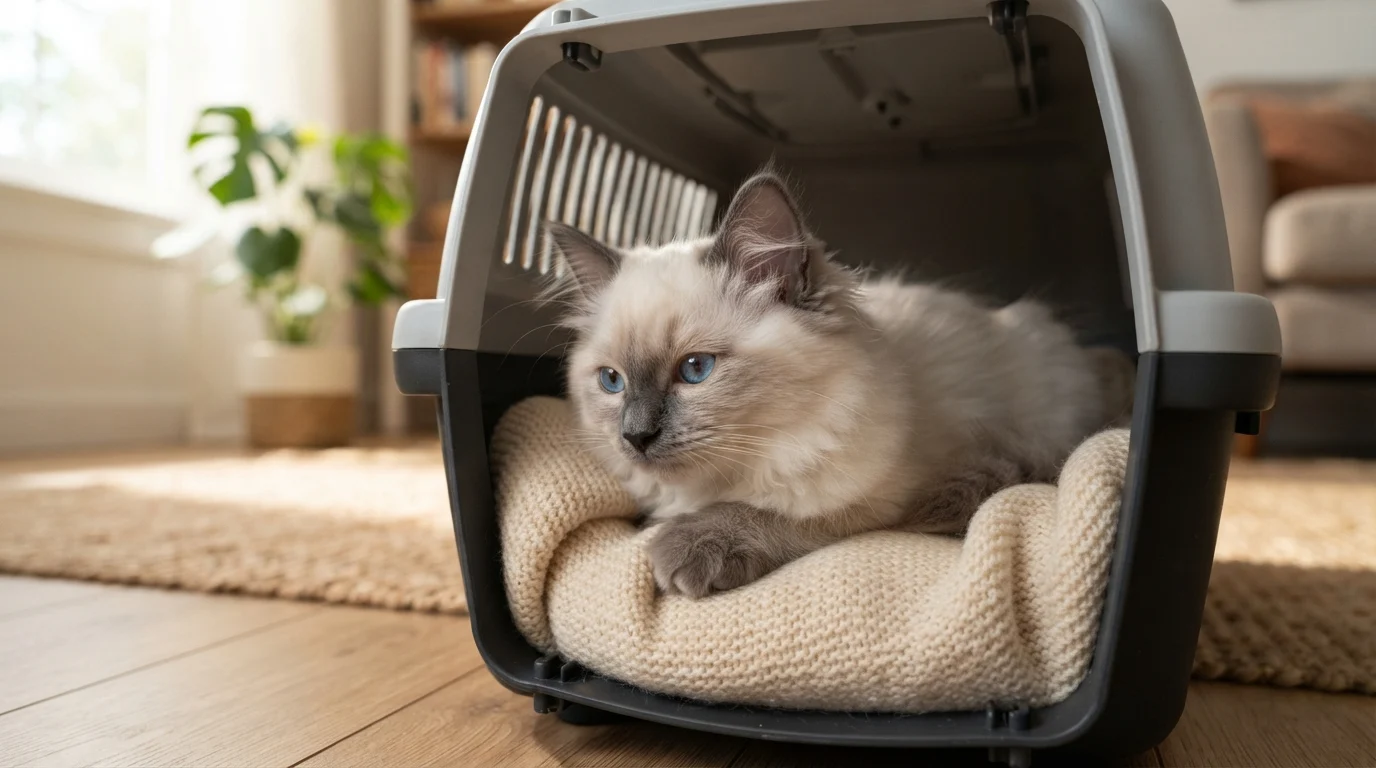
Choosing the Right Carrier
The best carrier is one your kitten can enter easily, feel secure in, and travel in safely. A few features are worth looking for:
- Top and front openings. Being able to lift the kitten out from above, or let them walk out on their own, avoids pulling them out of a small door.
- A removable top or a sturdy two-piece design. This lets your vet examine the kitten in the bottom half, which can be less frightening.
- Secure latches and good ventilation. Check that doors close firmly and that there are enough air openings.
- Room to stand and turn around. Kittens grow quickly, and Ragdolls are a larger breed, so avoid a carrier that your kitten will outgrow within a few months. You can read more in our guide to Ragdoll kitten growth stages.
- Easy-to-clean surfaces. Accidents and motion sickness can happen.
Hard-sided and soft-sided carriers can both work. Hard-sided models tend to be sturdier and are often easier to clean, while soft-sided ones can be lighter and more comfortable to carry. Whichever you choose, it should hold its shape and close securely. For a broader look at essentials, see What to Buy for Your Ragdoll Kitten.
Step 1: Make the Carrier a Normal Part of the Room
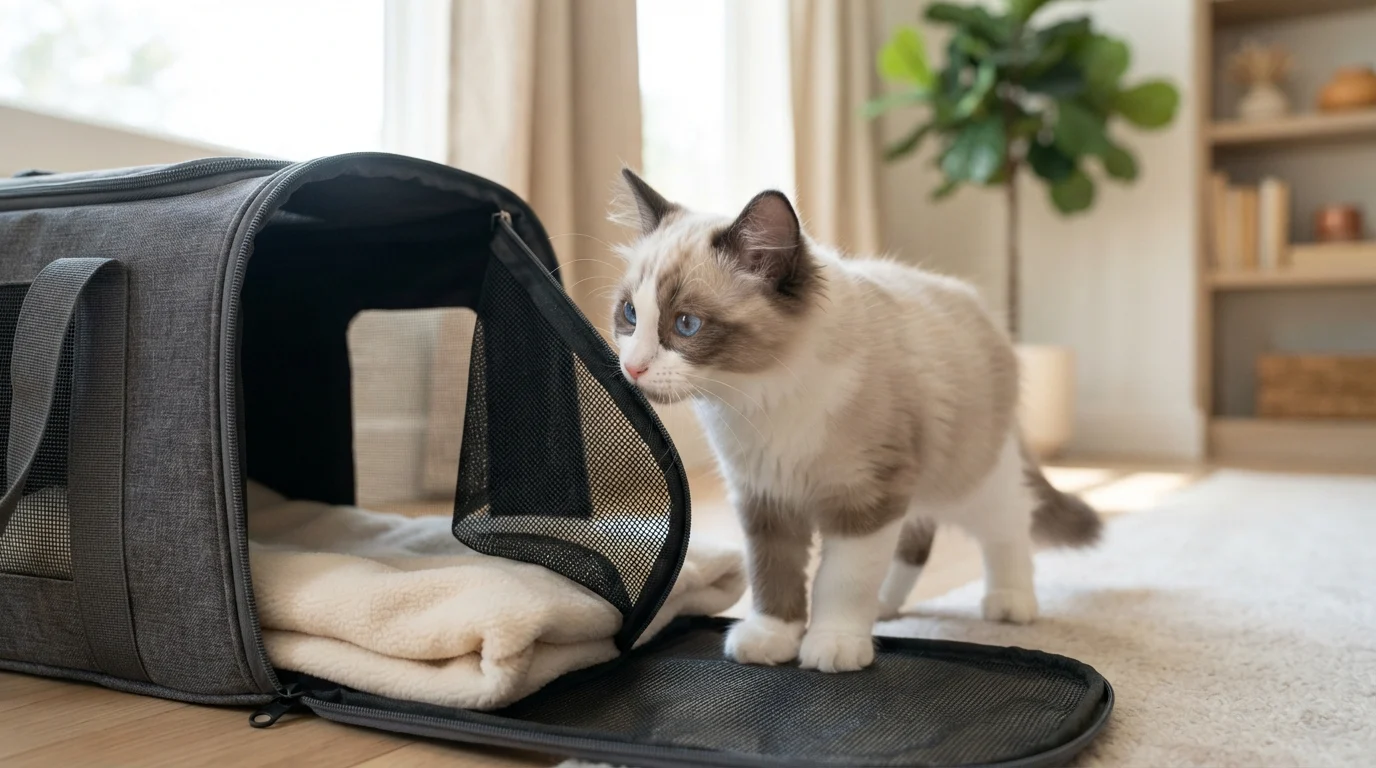
Set the carrier out in a quiet spot where your kitten spends time, and leave it there. Take the door off, or tie it open so it can’t swing shut. Place it on a stable surface, such as the floor, and make sure it won’t slide or tip.
Line the bottom with a soft towel or small blanket. A piece of fabric that smells like home, such as a washed blanket your kitten already uses, can add familiarity. Then leave it alone for a day or two. Let your kitten sniff it, walk past it, and decide it isn’t a threat.
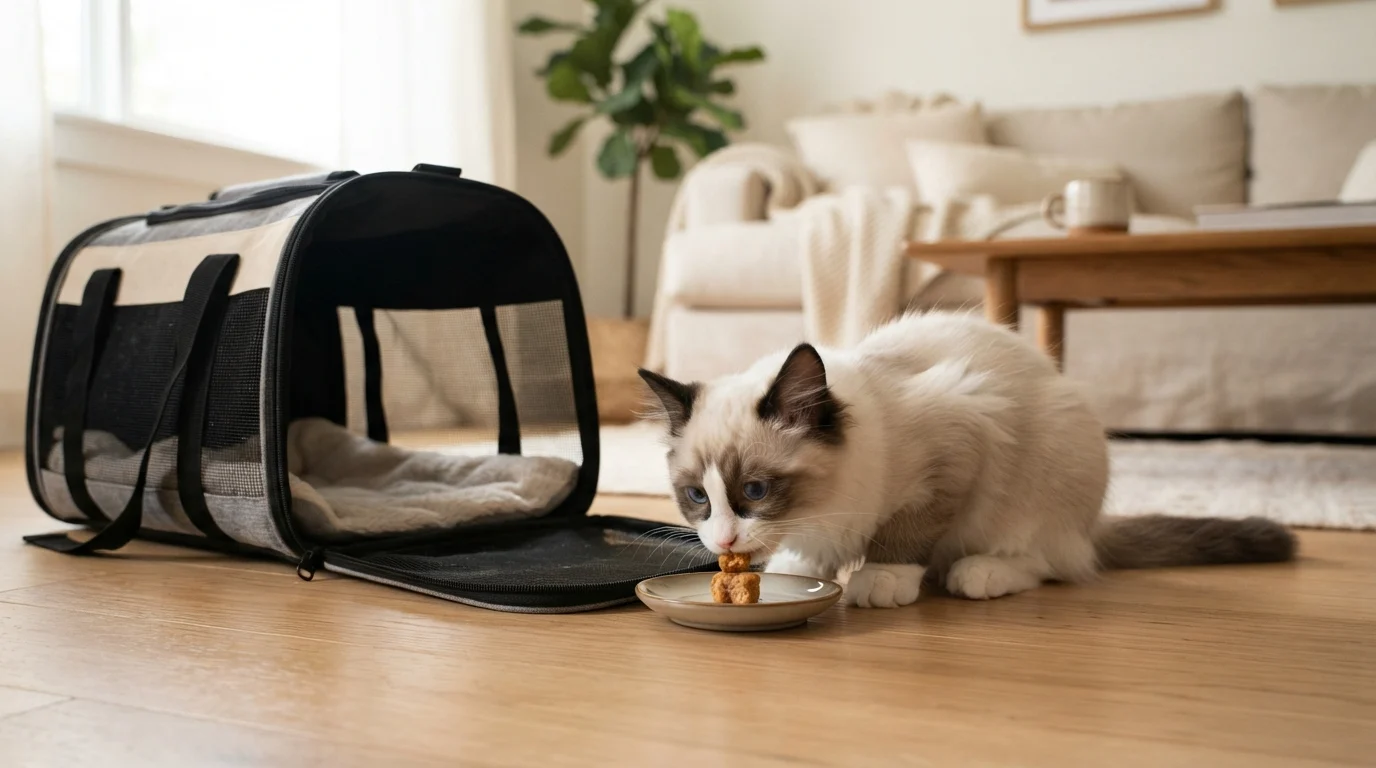
Step 2: Add Good Things Inside
Once your kitten is comfortable near the carrier, start making it rewarding. Toss a few small treats near the entrance, then just inside, then toward the back. Some kittens prefer a favorite toy or a few pieces of their regular kibble.
Don’t push or lift your kitten into the carrier at this stage. The goal is for them to choose to go in. If they take a treat and leave, that’s still progress. Keep sessions short, a few minutes at a time, and end while your kitten is still relaxed.
Using mealtime to help
If your kitten is food-motivated, you can move their food bowl closer to the carrier, then just inside the entrance over several days. Move it only as fast as your kitten is comfortable with. If they hesitate, go back a step.
Step 3: Practice Closing the Door
When your kitten is regularly walking in and resting inside, reattach the door. Start by closing it for just a second or two while your kitten eats a treat, then open it again. Gradually extend the time to several seconds, then a minute or two, always letting them out before they get upset.
If your kitten begins to cry or scratch at the door, you moved too fast. Return to an easier step and build back up more slowly. Letting a kitten out only when they’re panicking can teach them that panic works, so aim to open the door while they’re still calm.
Step 4: Practice Lifting and Carrying
Next, with your kitten inside and the door closed, lift the carrier a few inches and set it down again. Reward your kitten, then repeat. Over several sessions, carry it across the room, then to another room, and then to the front door and back.
Support the carrier from underneath when you can, and keep it level. Avoid swinging it or bumping it against doorframes. Smooth, steady movement is far less alarming for a small cat.
Step 5: Introduce Calm Car Practice
Many kittens find the car stranger than the carrier itself. Start with the carrier secured in the car, with the engine off, for a minute or two. Then try turning the engine on, and later a short drive around the block. Gradually build up to a few minutes of travel, always ending on a positive note with a treat or a calm return home.
For safety, secure the carrier so it can’t slide or tip, such as on the floor behind a front seat or buckled in with a seat belt. Never leave a kitten alone in a parked car, especially during warm weather. Interior temperatures can climb dangerously fast even on mild days, a particular concern across much of Southern California, Orange County, and the Inland Empire. Our article on keeping an indoor Ragdoll comfortable during heat waves covers this in more detail.
Cover the carrier with a light blanket or towel, leaving some ventilation, if your kitten seems to prefer a darker, quieter space. Keep your voice calm and the radio low.
Preparing for the Day of the Vet Visit
On the day of the appointment, a few small habits help things go smoothly:
- Place the carrier out early so it isn’t a surprise.
- Line it with a familiar blanket or towel.
- Ask your veterinarian’s office whether your kitten should skip or have a smaller meal beforehand, since some cats travel better on a lighter stomach.
- Bring any paperwork you were given when you took your kitten home.
- Keep the carrier covered in the waiting room, and place it on a chair or your lap rather than the floor if possible, away from other animals.
Your veterinarian’s staff can also tell you how they handle nervous kittens. Many clinics are used to helping young animals have a calmer first visit.
When to Talk to Your Veterinarian
Some fussing in a carrier is common, especially at first. But if your kitten shows ongoing distress despite gradual practice, it’s worth bringing up with your veterinarian. Signs to mention include persistent crying, drooling, repeated vomiting, panting, or intense fear that doesn’t ease with time. Your vet can check whether something else is contributing and talk through safe options. Please don’t give medications, supplements, or calming products unless a veterinarian has recommended them for your individual kitten.
Common Mistakes to Avoid
- Bringing out the carrier only for vet trips. This builds a negative association.
- Forcing the kitten inside. Pushing or dumping a kitten in can undo your progress.
- Skipping steps. Moving to car rides before the carrier is comfortable usually backfires.
- Using punishment. Scolding makes travel more stressful, not less.
- Starting too late. Even a few days of practice helps, but a couple of weeks is better when possible.
A Calm Start for a Lifetime of Trips
A carrier doesn’t have to be a source of dread. With a gentle routine of sniffing, treats, short door-closing practice, and slow introductions to car travel, many kittens learn to accept it as just another cozy place. Those habits will carry over into grooming appointments, travel, and emergencies later in life.
If you’re planning for a new Ragdoll, you may also find our guides on preparing your home for a Ragdoll kitten and questions to ask a Ragdoll breeder useful. SoCal Ragdolls kittens are not released to their new homes before 12 weeks of age, which gives families time to prepare. When you’re ready, you can browse the Available Kittens section, read more in our Articles, or contact SoCal Ragdolls with any questions.
Frequently asked questions
How long does it take to get a kitten used to a carrier?
It varies by kitten. Some warm up within several days of short, positive sessions, while others need a couple of weeks or more. Go at your kitten's pace, and begin well before the first vet appointment so the carrier is familiar rather than a sign that something stressful is coming.
Should I leave the carrier out all the time?
Yes, for most kittens that works well. A carrier that stays out with a soft blanket and occasional treats becomes just another cozy spot. Keep it in a calm area, secure it so it can't tip, and remove any hazards or loose items inside.
What if my kitten cries or seems very distressed during car rides?
Some mild vocalizing can happen early on, but persistent crying, panting, drooling, vomiting, or signs of intense fear are worth discussing with your veterinarian. They can check for causes and suggest safe options. Don't give any medication or supplement unless a veterinarian recommends it.