SOCAL RAGDOLLS JOURNAL
Seal Bicolor vs Blue Bicolor Ragdoll Kittens: How to Tell the Difference
Seal and blue bicolor Ragdolls share the same white-marked pattern but differ in point color. Learn how to tell them apart, what to expect as kittens mature, and how to choose with confidence.
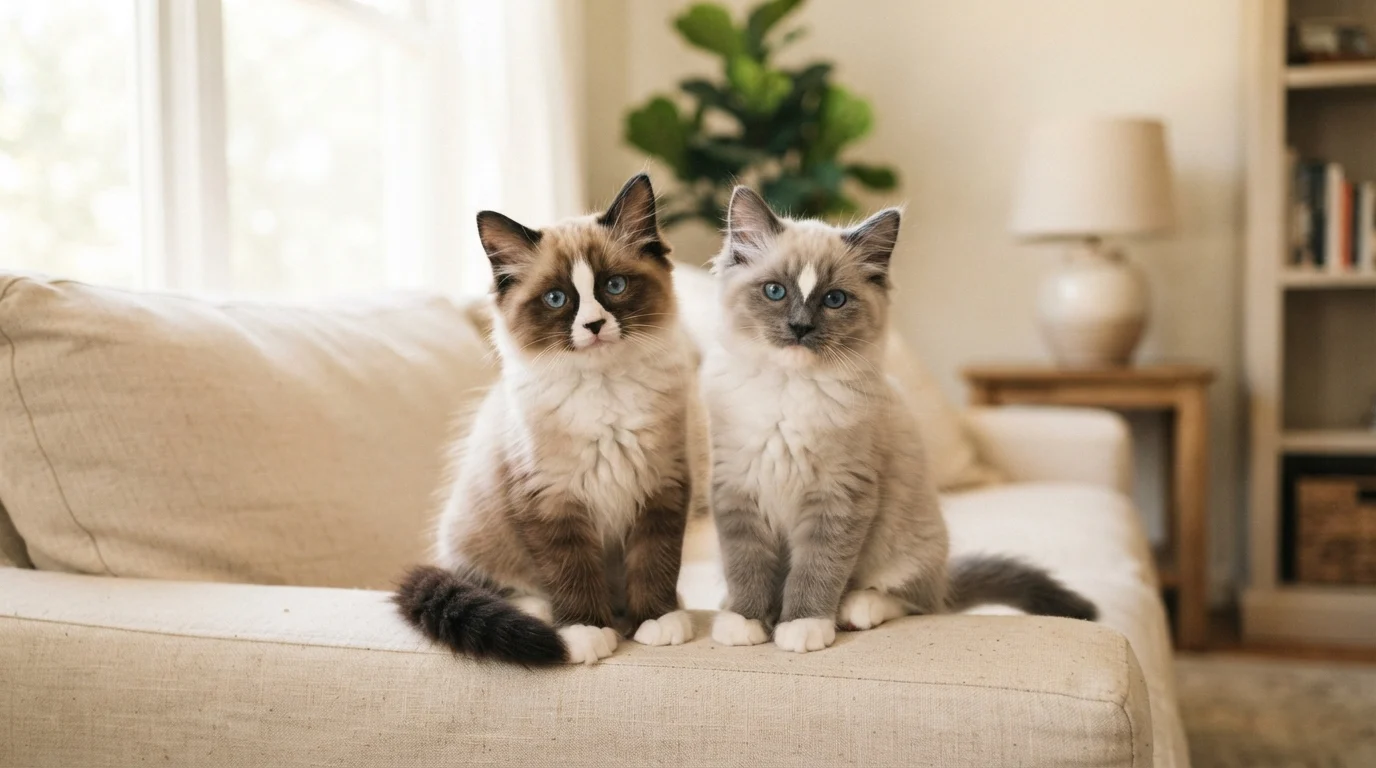
When families start looking at Ragdoll kittens, the color names can feel like a secret language. Seal, blue, mitted, bicolor, lynx: each describes something specific, and two of the most popular combinations, seal bicolor and blue bicolor, look surprisingly similar in photos. Understanding how they differ makes it much easier to read kitten profiles, ask good questions, and appreciate what you’re seeing as a kitten grows.
The short version is that the pattern is the same and the point color is different. The rest of this article explains what that means in practice.
Two Separate Ideas: Pattern and Color
Ragdoll coats are described using two things at once. The pattern tells you where white and color appear on the cat. The color tells you which pigment shows up in the darker areas, called points.
All Ragdolls are colorpoint cats, meaning the ears, face mask, legs, and tail are darker than the body. Within that, the breed recognizes three main patterns: colorpoint, mitted, and bicolor. Seal and blue are two of the point colors that can appear in each pattern. If you’d like a broader overview, our guide to Ragdoll cat colors and patterns covers the full range.
What Makes a Ragdoll a Bicolor?
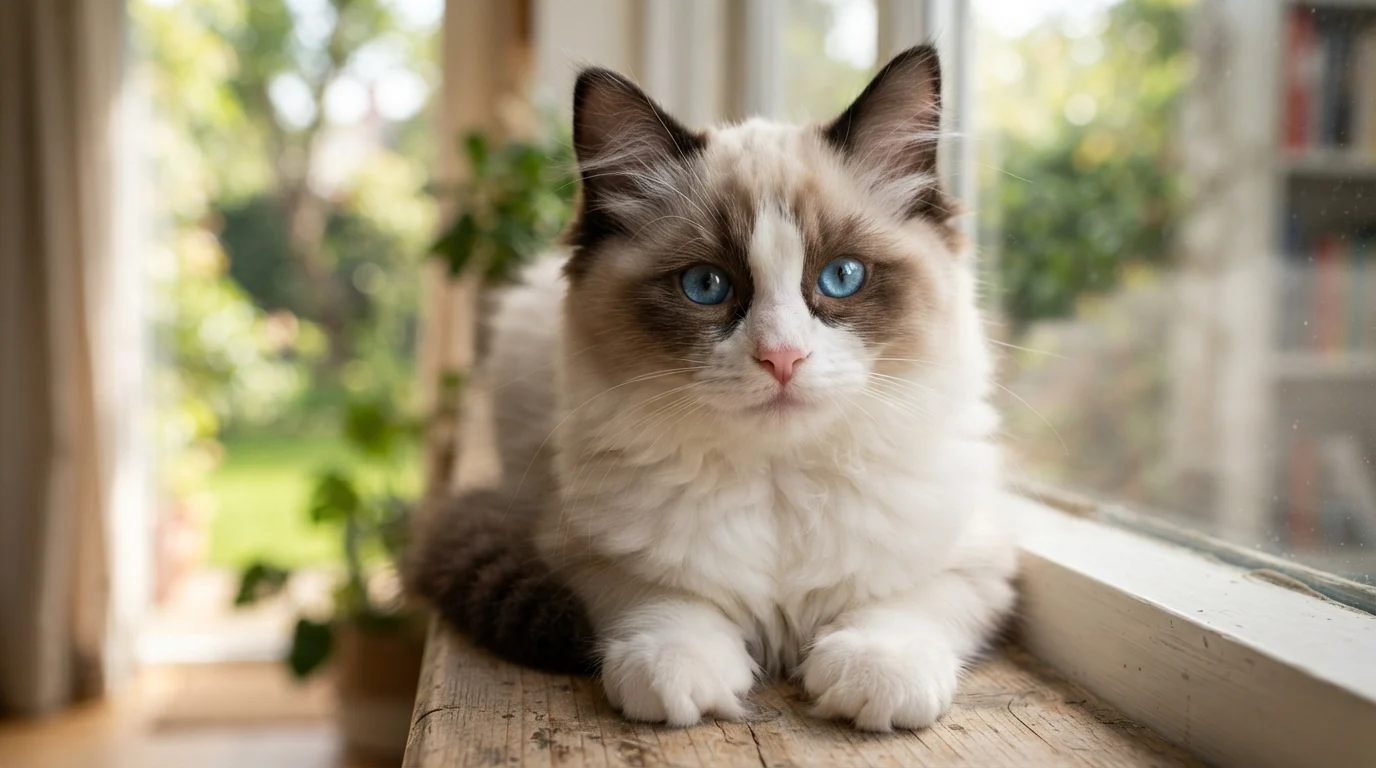
Bicolor Ragdolls are the ones with the most visible white. The hallmarks of the pattern include:
- An inverted white “V” on the face, running between the eyes and widening toward the muzzle
- White legs and paws
- A white chest and belly
- Colored ears, mask, and tail, with a body that is lighter in tone, sometimes with a touch of color on the back
The amount of white varies from cat to cat. Some bicolors have a bold, symmetrical V and crisp white paws, while others show a slightly different distribution. That’s normal variation, and it is part of why no two bicolors look exactly alike.
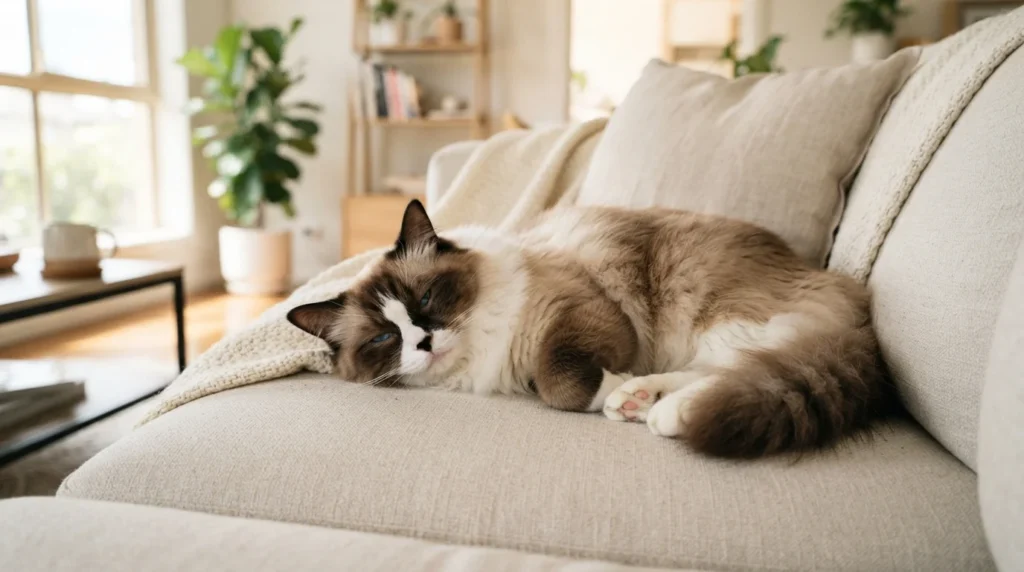
Seal Bicolor Ragdolls
Seal is the original and darkest Ragdoll point color. On a seal bicolor, the ears, mask, and tail are a deep, rich brown, often described as dark chocolate or sepia. The paw pads and nose leather typically show pink tones where white fur is present, and the body is usually a soft cream or fawn shade that darkens gently with age.
The visual effect is contrast. The deep brown points sit against crisp white markings, which gives seal bicolors a striking, defined look, especially as kittens when the white is brightest.
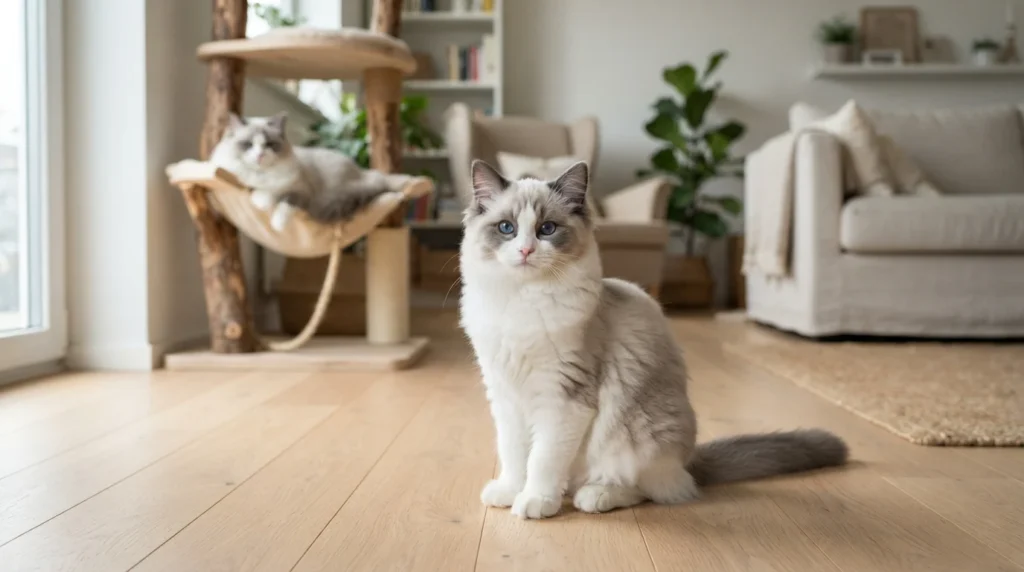
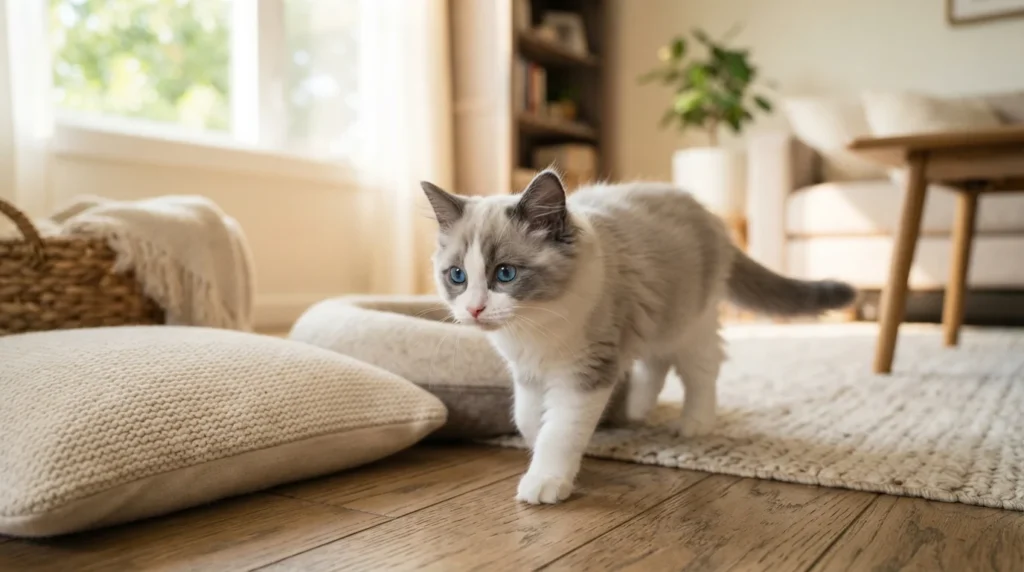
Blue Bicolor Ragdolls
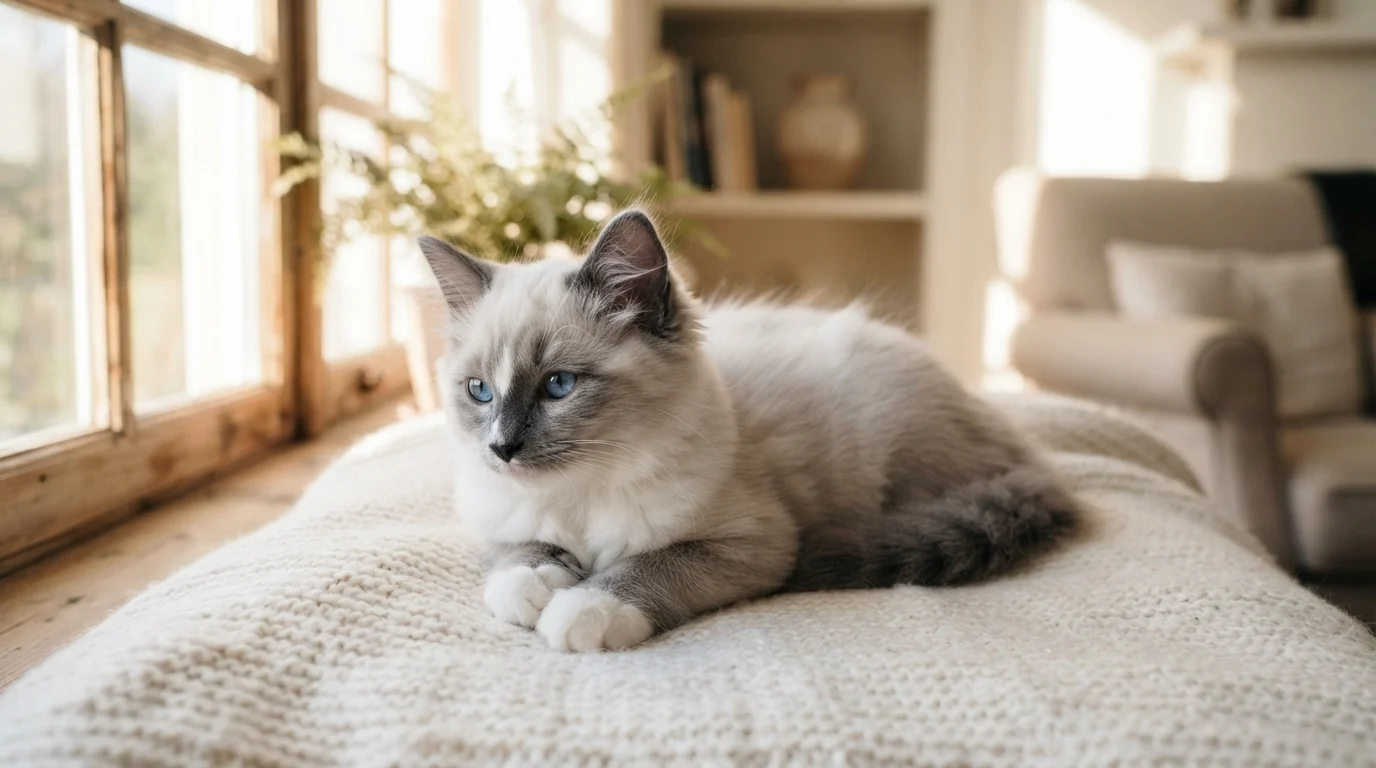
Blue is a diluted form of seal. Genetically, a dilution gene softens the dark brown into a cool slate or bluish gray. On a blue bicolor, the points look gray rather than brown, and the body tends toward a pale, silvery or bluish-white tone, sometimes with a slightly warmer undertone.
The overall impression is softer and lighter than a seal bicolor. Many people find blue bicolors especially gentle-looking, though that is a matter of aesthetics, not personality.
Seal Bicolor vs Blue Bicolor Ragdoll Kittens: Side-by-Side
Point color
Seal points are deep brown. Blue points are gray with a cool cast. In bright daylight the difference is clear, but under warm indoor lighting a dark blue can look brownish, and a light seal can look softer than expected.
Body shading
Seal bicolors often develop a warmer fawn or cream body tone. Blue bicolors usually stay in the pale gray-white range. Both tend to deepen gradually as the cat matures.
Nose and paw pads
Nose leather and pads on colored areas follow the point color: darker brown-toned on seals, slate-toned on blues. On the white areas, pink is common for both.
Eyes
Both colors have blue eyes, which is a breed requirement. Eye shade can range from lighter to deeper blue, but it isn’t a reliable way to distinguish seal from blue.
Why Kitten Coats Change
Ragdoll kittens are born mostly white. Their color appears gradually over the first weeks of life, which is why very young kittens can be hard to judge. Points become clearer as the weeks pass, but the coat keeps developing well beyond kittenhood.
Expect these shifts:
- Points may deepen. Color on the ears, mask, and tail can become richer with age.
- Body color often darkens. A pale kitten body can take on more shading over time, and this is often gradual over a couple of years.
- White markings stay white. The bicolor pattern itself doesn’t typically change, though the V and paws can look more defined once the coat is fuller.
- Coat length and texture change. The soft semi-long adult coat develops as the kitten grows, and its density can affect how color appears.
Temperature, genetics, and individual variation all influence how much a cat darkens, so it’s best to treat any prediction as an estimate rather than a promise.
Does Color Change Personality or Health?
No reliable evidence ties seal or blue coloring to temperament. Ragdolls are widely known for being gentle and people-oriented, and you can read more in our article on how affectionate Ragdolls really are. Still, personality varies from cat to cat, and a kitten’s social experiences matter at least as much as coat color.
The same goes for health. Color is not a measure of health, and no color is automatically healthier than another. If you have specific questions about a cat’s wellbeing or hereditary conditions in the breed, a licensed veterinarian and the breeder’s own health information are the right places to turn.
Choosing Between Seal and Blue Bicolor
If you’re torn, a few practical thoughts may help:
- Look at photos in natural light. Colors can shift under warm bulbs or camera filters.
- Ask about the parents. Seeing the adult cats gives you a better sense of how a kitten’s coat may mature.
- Consider the whole kitten. Temperament, health, and the fit with your household matter far more than shade of point.
- Be open to surprises. The kitten you fall for may not match the color you first pictured, and that’s fine.
Reading about the parents is one reason many people enjoy exploring a cattery’s breeding cats. At SoCal Ragdolls, you can meet our Misty and Malowlow profiles to see how adult Ragdoll coloring looks in real cats.
Finding Ragdoll Kittens in Southern California
If you live in Los Angeles, Orange County, the Inland Empire, or elsewhere in Southern California, you can browse the Available Kittens section to view kitten profiles, photographs, and availability information. Availability changes, so check the listings for current details rather than assuming any color is on hand. You can also read about upcoming litters and the future-litter waitlist on the site, or contact SoCal Ragdolls with questions. Kittens are not released to their new homes before 12 weeks of age.
Once you’ve settled on a kitten, our guides on preparing your home and helping a kitten settle in can help the first weeks go smoothly.
The Takeaway on Seal and Blue Bicolors
Seal and blue bicolor Ragdolls share the same charming pattern: the white V, white paws, and soft, pale body. What separates them is the tone of their points, deep brown versus cool gray. Both will keep changing as they grow, and both can make wonderful companions. Choose the kitten whose personality and health feel right for your family, and let the color be a lovely bonus.
Frequently asked questions
What is the main difference between seal bicolor and blue bicolor Ragdolls?
Both share the bicolor pattern, with an inverted white V on the face and white on the legs, chest, and belly. The difference is point color: seal bicolors have deep brown points, while blue bicolors have cool gray-blue points with a lighter, softer overall look.
Can you tell a kitten's final coat color when it is very young?
Not always precisely. Ragdoll kittens are born white and color gradually appears over the first weeks. Point color becomes clearer with time, but body shading continues to develop for up to a few years, so the adult coat can look different from the kitten coat.
Does color affect a Ragdoll's personality?
There is no reliable evidence that seal or blue coloring determines temperament. Ragdolls are generally known for gentle, people-oriented personalities, but each cat is an individual shaped by genetics, socialization, and home environment.