SOCAL RAGDOLLS JOURNAL
Why Ragdoll Cats Thrive Indoors — and How to Enjoy the Outdoors Safely
Ragdolls are famously gentle and trusting companions. Learn why a protected indoor lifestyle is a smart fit for the breed and how catios, secure enclosures, and harness walks can provide safe outdoor enrichment.
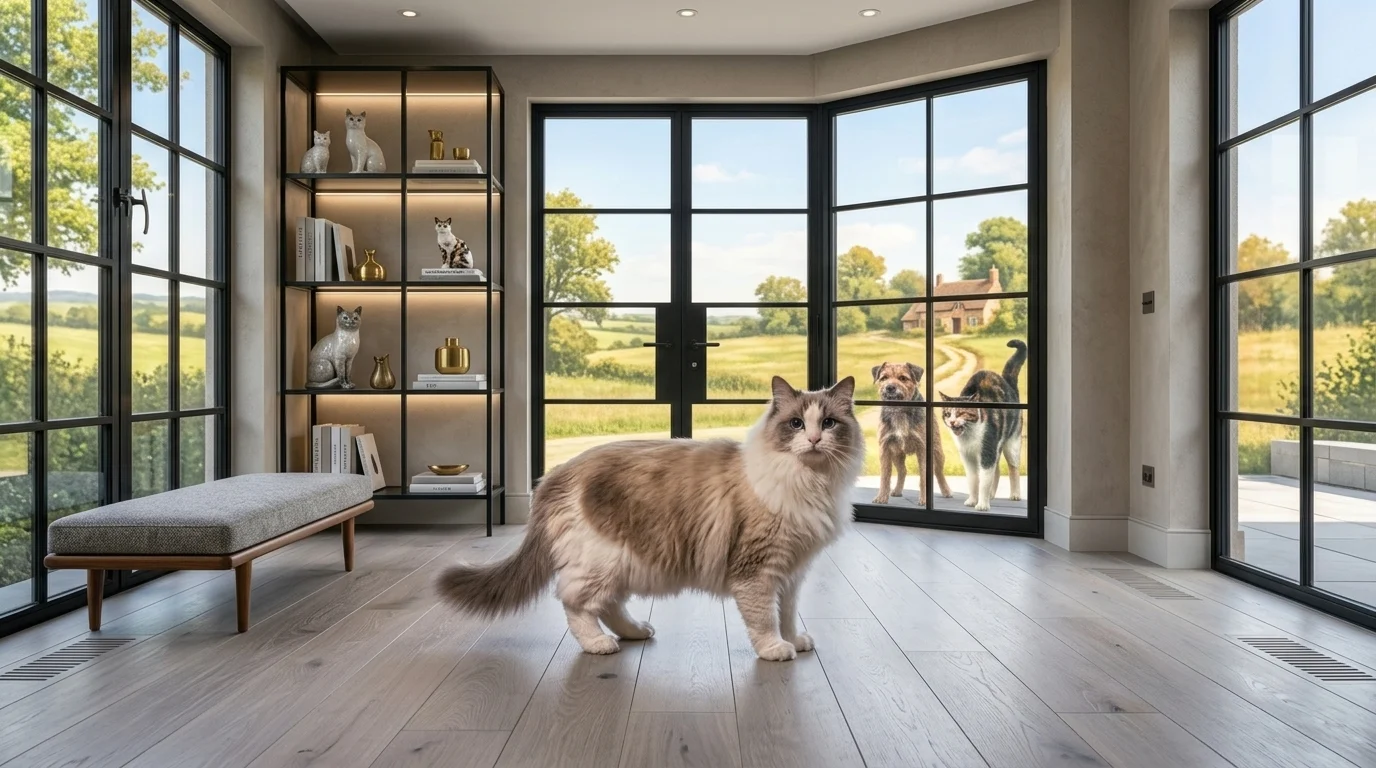
One of the qualities families love most about the Ragdoll is the breed’s gentle, people-oriented temperament. Ragdolls are widely known for being calm, affectionate, social companions that often prefer staying close to their people. That easygoing personality is also one reason we believe a Ragdoll is best suited to a protected indoor lifestyle.
If you are preparing for a Ragdoll kitten in Southern California, you may have heard a stronger claim: that Ragdolls have no sense of danger or cannot defend themselves from predators. There is not good evidence that Ragdolls biologically lack normal feline defensive instincts. They are still cats. The more accurate point is that major breed organizations consistently describe Ragdolls as unusually docile, placid, trusting, tolerant, and rarely aggressive. That temperament is wonderful in a family companion, but it is not something we want to test against traffic, loose dogs, coyotes, unfamiliar cats, or other uncontrolled outdoor hazards.
A trusting temperament deserves a protected environment
Ragdolls were developed as companion cats, and generations of selective breeding emphasized the relaxed, affectionate personality for which the breed is known today. Many Ragdolls would rather follow a person from room to room than patrol a large outdoor territory. Individual cats vary, of course, but the breed’s reputation is built around sociability rather than suspicion or aggression.
That does not mean a Ragdoll is helpless. It does mean that a very trusting cat may not be the ideal candidate for unsupervised free roaming. A protected home lets the cat enjoy the traits we value without asking them to navigate risks they cannot control.
Outdoor risks are bigger than predators
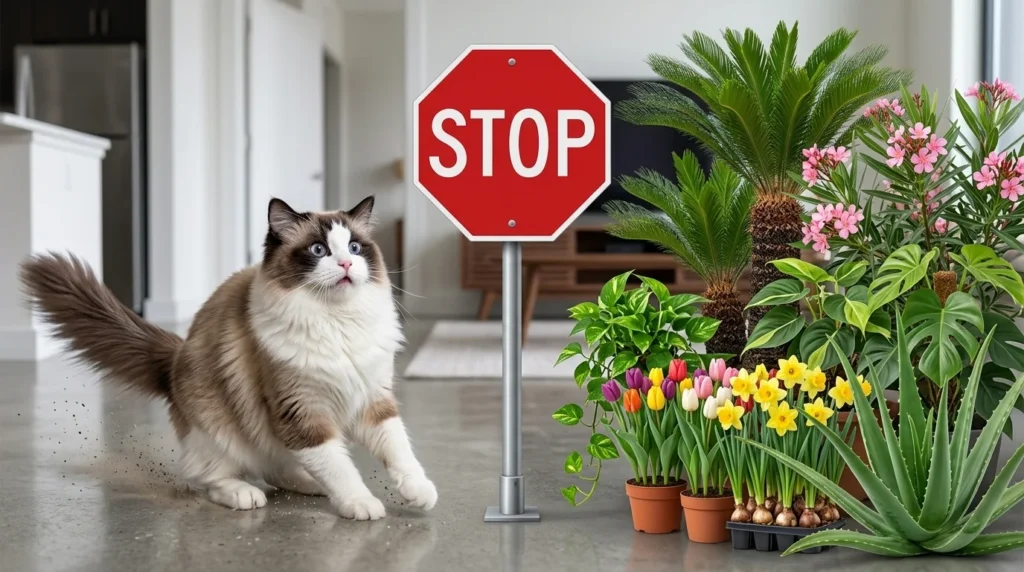
Predators are only one concern. Free-roaming cats can encounter vehicles, loose dogs, territorial cats, parasites, infectious disease, toxic plants and chemicals, extreme weather, theft, and accidental confinement in garages or sheds. In Southern California, wildlife and busy streets can exist only a short distance from otherwise quiet neighborhoods.
Keeping a Ragdoll indoors substantially reduces exposure to many of those hazards. It also makes it easier for you to notice changes in appetite, litter-box habits, behavior, coat condition, and overall health.
Indoor life should still be interesting
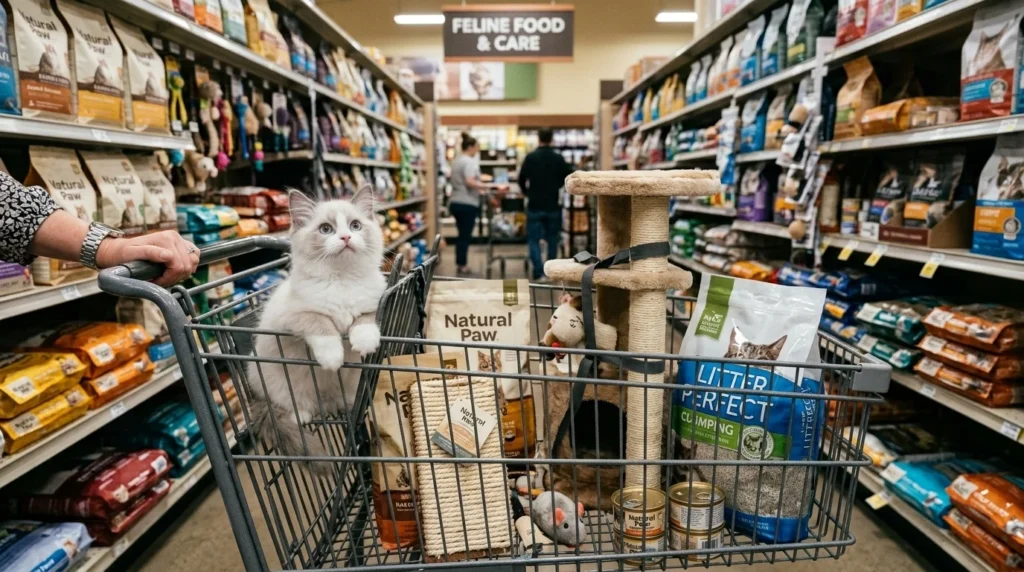
Indoor safety works best when it is paired with enrichment. A cat should have opportunities to climb, scratch, hide, watch, chase, investigate, and rest. For a Ragdoll, that can include tall stable cat trees, window perches, scratching posts, tunnels, puzzle feeders, rotating toys, and daily interactive play.
Ragdolls are often moderately active rather than constantly busy, but kittens can be energetic. A few focused play sessions every day help provide exercise and let a young cat practice normal hunting behaviors in a safe way.
Can a Ragdoll go outside safely?
Yes. We are not opposed to outdoor experiences; we are opposed to uncontrolled outdoor roaming. Current feline-veterinary guidance recognizes controlled outdoor access as a way to add stimulation while reducing risk.
A secure catio is one of our favorite options. It allows a Ragdoll to enjoy sunlight, fresh air, birds, breezes, and new smells without giving the cat unrestricted access to streets or neighboring properties. A properly enclosed cat-safe yard can serve a similar purpose when it is designed to prevent climbing, squeezing through gaps, or digging out.
Some Ragdolls also learn to enjoy a well-fitted cat harness and leash. Start harness training indoors, keep early sessions short, and never assume a calm cat cannot suddenly startle. A leash is for supervised exploration, not for tying a cat outside unattended.
Vaccinations and parasite prevention matter before outdoor time
Before introducing outdoor access, make sure your cat is current on the age- and lifestyle-appropriate vaccinations recommended by your veterinarian. Outdoor exposure can change a veterinarian’s risk assessment, so discuss your plans before the first outing. Ask about flea, tick, and other parasite prevention appropriate to your area as well.
Microchipping is also wise even for an indoor cat. Doors are left open, screens fail, and unexpected escapes happen. Keep the microchip registration and contact information current.
Supervision changes the equation
Outdoor time is very different when a person is present and the environment is controlled. A catio, enclosed patio, secure cat-safe yard, or harness walk lets you intervene if another animal approaches, the weather changes, or your cat becomes frightened.
Supervision also lets you learn what your individual Ragdoll actually enjoys. Some cats love sniffing plants and watching insects for twenty minutes. Others step outside, hear one truck, and decide the sofa was better all along. Both reactions are perfectly normal.
Southern California makes safe outdoor enrichment tempting
Our climate can make patios and outdoor spaces enjoyable for much of the year, which is one reason catios work so well for many Southern California homes. Still, watch temperature, sun exposure, hot surfaces, insects, landscaping, and nearby wildlife. Always provide shade and a direct way back indoors.
A full life does not require free roaming
A Ragdoll can have a rich, stimulating life without wandering the neighborhood. Safety, companionship, play, comfortable territory, veterinary care, and controlled enrichment matter far more than unrestricted access to the outdoors.
Give your Ragdoll windows to watch, furniture to climb, toys to chase, and people to love. If your cat enjoys the outdoors, offer it thoughtfully: fully supervised, in a secure enclosure or on a properly fitted harness and leash, and with veterinary preventive care up to date.
For a breed known for being gentle and trusting, that balance gives them the best of both worlds.